
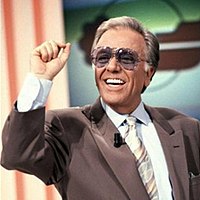
Gianfranco Funari was one of Italy’s most iconic television personalities, known for his sharp wit, satirical commentary, and fearless approach to hosting talk shows. Born on March 21, 1932, in Rome, Funari’s life was a remarkable journey through the evolving landscape of Italian media and entertainment. His unique ability to connect with the public and address societal issues with humor and insight made him a beloved figure in Italian culture.
Early Life and Career Beginnings
Gianfranco Funari grew up in a politically charged environment, with his father being a socialist and his mother a communist. This upbringing in Rome, a city brimming with cultural and political discourse, undoubtedly influenced Funari’s later career as a commentator and entertainer. Despite this background, his early career was far from the world of television.
Funari started working as a salesman for a mineral water company, a job that required charisma and a quick wit, qualities that would later define his television persona. His path took an unexpected turn when he met an inspector from the Saint Vincent Casino, which led him to a career as a croupier. This job took him across the world, including a seven-year stint in Hong Kong, where he honed his skills in managing people and situations—a talent that would later translate to his television work.
Transition to Entertainment: The Cabaret Years
Upon returning to Rome in 1967, Funari’s career took a significant turn towards entertainment. He initially dipped his toes in the world of cabaret, performing at “Giardino dei Supplizi,” a well-known Roman venue. However, his tenure there was short-lived due to the far-right political stance of the venue’s owners, which clashed with Funari’s own views.
Undeterred, Funari moved to Milan, where he began performing at the legendary “Derby Club,” a hotbed for emerging comic talent. His work at the Derby, where he performed monologues satirizing societal norms, established him as a rising star in the cabaret scene. His sharp, observational humor resonated with audiences, leading to a successful run at the club.
Breakthrough in Television: The Early Shows
Gianfranco Funari’s big break in television came in the 1970s. His first appearance was in the show La domenica è un’altra cosa alongside Raffaele Pisu. This was followed by Foto di gruppo on Rai Uno in 1974, where Funari was given a segment to entertain the audience with his monologues. This marked the beginning of his transition from cabaret to television, where he would eventually leave a lasting impact.
In 1978, Funari wrote a novel, Famiglia svendesi, and starred in the film Belli e brutti ridono tutti, further showcasing his versatility as an entertainer. However, it was his foray into television hosting that would cement his legacy. He conceived the idea for Torti in faccia, a show where people from opposing groups (such as tenants and landlords, drivers and traffic wardens) would debate contentious issues. Although initially rejected by Rai, the concept found a home on Telemontecarlo (TMC) in 1980, where it ran successfully for a year.
Rise to Prominence: Aboccaperta and Beyond
Funari’s real breakthrough in television came with the show Aboccaperta on Rai Due in 1984. The show was a bold experiment in Italian television, giving ordinary people a platform to discuss and debate topical issues. Funari’s role as the host was not just to moderate but to provoke, challenge, and, at times, comfort his guests, creating a dynamic and often unpredictable viewing experience. His approach to hosting was a mix of empathy and confrontation, which resonated with the Italian public and set a new standard for talk shows in Italy.
Aboccaperta ran successfully for several years, making Funari a household name. His ability to tackle controversial topics and his willingness to speak truth to power earned him both admiration and criticism. Funari’s style was unapologetically direct; he often referred to himself as “the most famous newsstand operator in Italy,” emphasizing his role as a voice for the common man.
Controversies and Challenges
Gianfranco Funari’s career was not without its controversies. His forthright manner and willingness to challenge authority figures often put him at odds with network executives and political figures. One notable incident occurred in 1992, during his tenure at Fininvest (now Mediaset), where he was involved in a public feud with Silvio Berlusconi. Funari’s outspoken criticism of Berlusconi’s media empire led to his dismissal from the network. However, Funari successfully sued Fininvest and returned to television, albeit briefly, before moving on to other projects.
Throughout the 1990s, Funari continued to push boundaries in television. His shows Mezzogiorno italiano and Conto alla rovescia were platforms where he could express his political views and critique Italian society. Despite the challenges he faced, including being temporarily blacklisted from major networks, Funari remained a prominent figure in Italian media.
Later Years and Legacy
In the latter part of his career, Gianfranco Funari remained a significant, if somewhat controversial, figure in Italian television. In the early 2000s, he hosted shows on smaller networks, including Odeon TV, where he continued to engage with his audience through programs like Funari live and L’edicola di Funari. His shows were characterized by their raw, unfiltered commentary and a deep connection with his viewers.
Funari’s health began to decline in the late 1990s, culminating in heart surgery in 1999. Despite his health struggles, Funari continued to work, using his own experiences to criticize the Italian healthcare system. His honesty about his health issues, including a public plea for young people to stop smoking, only endeared him more to his audience.
In 2007, after a decade-long absence from Rai, Funari made a brief return with Apocalypse Show, a variety program that allowed him to showcase his signature style one last time. However, his declining health made it clear that his time in the spotlight was coming to an end.
Gianfranco Funari passed away on July 12, 2008, at the age of 76, in Milan. In accordance with his wishes, his coffin contained three packs of cigarettes, an open lighter, a TV remote, and some casino chips—symbols of his life and personality. His gravestone bears the inscription “I quit smoking,” a final nod to the humor that characterized his life.
The Legacy of Gianfranco Funari
Gianfranco Funari’s legacy in Italian television is profound. He was more than just a talk show host; he was a cultural commentator who used humor and satire to explore the social and political issues of his time. His shows broke new ground in the Italian media landscape, giving a voice to ordinary people and challenging the status quo.
Funari’s approach to television was revolutionary. He understood the power of media and used it to connect with his audience on a personal level. His willingness to speak out, even at the cost of his career, earned him a place in the hearts of many Italians. Despite the controversies and challenges he faced, Funari remained true to his principles, making him a respected and beloved figure in Italian culture.
Today, Gianfranco Funari is remembered as a pioneer of Italian television. His influence can be seen in the work of many contemporary Italian TV hosts and commentators who continue to push boundaries and explore new ways of engaging with the public. Funari’s life and career serve as a reminder of the power of media to shape public discourse and the importance of staying true to one’s beliefs in the face of adversity.
Conclusion
Gianfranco Funari’s life was a testament to the power of resilience, wit, and an unwavering commitment to truth. His journey from a croupier in Hong Kong to one of Italy’s most influential television hosts is a story of determination and talent. Funari’s legacy lives on in the countless lives he touched through his work, and his contributions to Italian television will be remembered for generations to come.


