
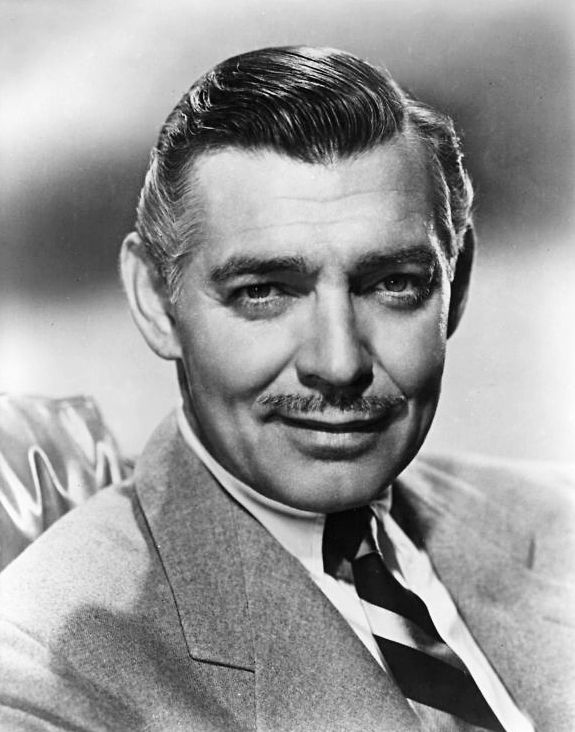
Clark Gable, often referred to as the “King of Hollywood,” is a name that resonates with glamour, elegance, and the golden age of cinema. Born on February 1, 1901, in Cadiz, Ohio, William Clark Gable’s journey to stardom was anything but easy. Over the years, Gable became synonymous with Hollywood royalty, a symbol of masculinity, charm, and talent that left an indelible mark on the film industry. This article explores the life, career, and legacy of Clark Gable, offering insights into his early struggles, rise to fame, personal life, and lasting impact on American cinema.
Early Life and the Struggles of a Future Star
Clark Gable was born into modest beginnings. His mother, Adeline, passed away when he was just ten months old, and his father, William, struggled to make ends meet as an oil driller. The young Gable’s early life was characterized by hardship and a sense of displacement. Raised by his father and stepmother in the small town of Hopedale, Ohio, Gable developed an interest in theater during his teenage years, a passion that would eventually drive him to pursue a career in acting.
However, the road to Hollywood was fraught with challenges. After dropping out of high school, Gable worked various odd jobs, including as an oil field worker and a logger, to save enough money to move to Portland, Oregon, where he joined a traveling theater company. It was here that Gable began to hone his craft, though success was still a distant dream.
The Influence of Josephine Dillon
A pivotal moment in Gable’s early career came when he met Josephine Dillon, a theater manager and acting coach who was 14 years his senior. Recognizing his potential, Dillon took Gable under her wing, refining his voice, grooming his appearance, and teaching him the nuances of stage presence. It was Dillon who persuaded Gable to drop his first name, William, in favor of the more distinctive “Clark Gable.”
In 1924, the pair moved to Hollywood, where Dillon continued to support Gable’s fledgling career. They married later that year, although their relationship was more professional than romantic. With Dillon’s guidance, Gable began to land small roles in silent films, but it wasn’t until the advent of talkies that his career truly began to take off.
The Rise to Stardom
Gable’s breakthrough came in 1931 when he signed a contract with Metro-Goldwyn-Mayer (MGM), one of the most prestigious studios in Hollywood at the time. His first major role was in the gangster film The Secret Six (1931), which showcased his rugged masculinity and on-screen charisma. However, it was his performance in A Free Soul (1931), where he played a mobster opposite Norma Shearer, that solidified his reputation as a leading man.
Throughout the early 1930s, Gable’s star continued to rise with a series of successful films, including Red Dust (1932), Dancing Lady (1933), and Manhattan Melodrama (1934). However, it was his role in Frank Capra’s romantic comedy It Happened One Night (1934) that catapulted him to superstardom. The film, in which Gable played a roguish reporter opposite Claudette Colbert, was a massive hit and earned him his first (and only) Academy Award for Best Actor.
The Iconic Role of Rhett Butler
Despite his already considerable fame, Gable’s most iconic role came in 1939 when he was cast as Rhett Butler in Gone with the Wind. Directed by Victor Fleming and based on the novel by Margaret Mitchell, the film was a monumental success and remains one of the most beloved movies in American cinema.
Gable’s portrayal of the dashing, morally ambiguous Rhett Butler won him widespread acclaim and solidified his status as the “King of Hollywood.” His chemistry with co-star Vivien Leigh, who played Scarlett O’Hara, was electric, and the film’s success cemented Gable’s legacy as one of the greatest actors of all time.
Personal Life and Tragedy
While Gable’s professional life was marked by success, his personal life was more tumultuous. He was married five times, with each marriage reflecting different stages of his life and career. His first marriage to Josephine Dillon ended in divorce in 1930, after which he married Ria Langham, a wealthy socialite 17 years his senior. This marriage also ended in divorce, but it helped Gable transition from a struggling actor to a polished, sophisticated man of the world.
Gable’s third marriage, to actress Carole Lombard, was perhaps the most significant. The two met in 1936 and quickly became one of Hollywood’s most beloved couples. Their marriage in 1939 was a private affair, reflecting their desire to keep their relationship out of the public eye. Lombard’s tragic death in a plane crash in 1942, while returning from a war bond tour, devastated Gable. Overwhelmed by grief, he joined the U.S. Army Air Forces, where he served as a gunner and cameraman during World War II.
After the war, Gable returned to Hollywood, but his career never quite regained its pre-war luster. He starred in several films, but none matched the success of his earlier work. Gable’s fourth marriage, to Lady Sylvia Ashley, ended in divorce after just a few years, and his final marriage to Kay Spreckels, a former model, and actress, brought him some semblance of happiness in his later years. The couple had one son, John Clark Gable, born after Gable’s death.
Legacy and Lasting Impact
Clark Gable’s final film, The Misfits (1961), written by Arthur Miller and directed by John Huston, was a poignant reflection of his career and life. Gable played an aging cowboy, a role that resonated with the actor’s own experiences and struggles. Tragically, Gable suffered a heart attack just days after filming wrapped and passed away on November 16, 1960, at the age of 59.
Gable’s death marked the end of an era in Hollywood. He was the epitome of the classic leading man—handsome, charismatic, and larger-than-life. His films continue to be celebrated for their timeless appeal, and his influence can be seen in the careers of countless actors who followed in his footsteps.
The Enduring Legacy of the King of Hollywood
Clark Gable’s life was one of contrasts—humble beginnings and immense success, personal tragedy, and professional triumph. He was a man who embodied the spirit of Hollywood’s golden age, a time when movies were larger-than-life, and stars were truly stars.
Even decades after his death, Gable’s legacy endures. His performances in films like Gone with the Wind and It Happened One Night remain iconic, and his influence on the film industry is undeniable. Gable’s life story is a testament to the power of perseverance, the allure of Hollywood, and the enduring appeal of a true movie star.
In the annals of American cinema, Clark Gable will forever be remembered as the “King of Hollywood,” a title that reflects not only his on-screen achievements but also his impact on the cultural landscape of the 20th century. His journey from a small-town boy in Ohio to one of the most famous actors in the world is a classic rags-to-riches tale, one that continues to inspire and captivate audiences to this day.


