
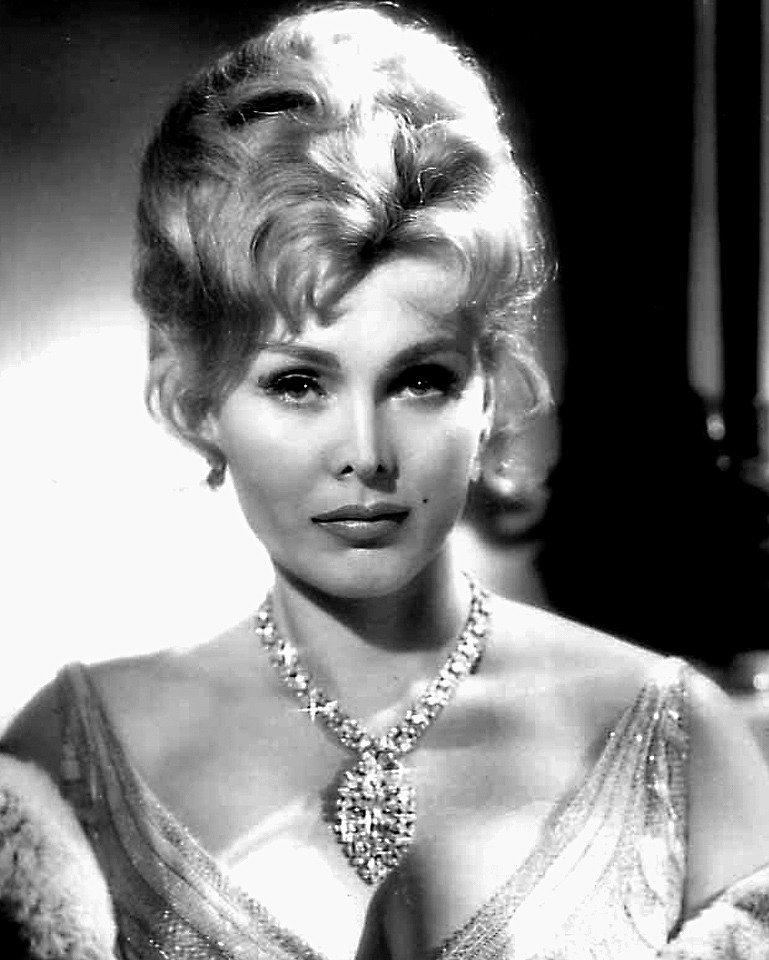
Zsa Zsa Gabor, a name synonymous with glamour, elegance, and a certain Old Hollywood charm, captivated audiences and the public for decades. Born Sári Gábor on February 6, 1917, in Budapest, Hungary, she would later become an iconic figure in American pop culture, known not just for her acting career but for her larger-than-life personality and multiple marriages. This article delves into the life, career, and enduring legacy of Zsa Zsa Gabor, providing insights into her rise to fame, her personal life, and the impact she left on the world.
Early Life and Entry into the Limelight
Zsa Zsa Gabor was born into a prominent family in Budapest, the middle daughter of Vilmos Gábor, a soldier, and Jolie Tillman, an entrepreneur. Her sisters, Magda and Eva, also found their way into the spotlight, becoming well-known actresses. Zsa Zsa’s early years were marked by privilege and opportunity, and her beauty quickly became apparent. In 1936, she won the title of Miss Hungary, a victory that would set the stage for her future in the public eye.
Shortly after her beauty pageant success, Gabor moved to Vienna, where she began her acting career on stage. However, the political tensions in Europe during the late 1930s prompted her to move to the United States, where her charm, wit, and beauty quickly made her a fixture in Hollywood.
Hollywood and the Pursuit of Stardom
Zsa Zsa Gabor’s move to Hollywood was fueled by the allure of stardom, and she wasted no time in making a name for herself. Though her film career never reached the heights of some of her contemporaries, Gabor appeared in over 60 films over a span of five decades. Her most notable roles were in movies such as Moulin Rouge (1952), directed by John Huston, and Touch of Evil (1958), directed by Orson Welles. Despite these appearances, Gabor was often more famous for her off-screen antics than for her on-screen performances.
What Gabor lacked in blockbuster roles, she made up for with her presence in the media and her ability to command attention. She epitomized the role of the socialite, becoming known for her lavish lifestyle, flamboyant personality, and sharp wit. Gabor had an extraordinary ability to stay in the public’s eye, often through her romantic entanglements and her famously quotable interviews.
Marriages and the Art of Reinvention
Perhaps more than her film roles, Zsa Zsa Gabor was known for her numerous marriages. Over the course of her life, Gabor was married nine times, each union reflecting a different chapter of her life and career. Her first marriage, in 1937, was to Burhan Asaf Belge, a Turkish diplomat. This marriage, like many of her others, was short-lived, lasting only four years.
In 1942, Gabor married hotel magnate Conrad Hilton, the founder of the Hilton Hotels empire. This marriage brought her into the orbit of high society and gave her a daughter, Francesca Hilton, born in 1947. The marriage, however, was tumultuous and ended in divorce in 1947. Gabor later claimed in her autobiography, One Lifetime Is Not Enough, that her daughter was the result of a sexual assault by Hilton, a revelation that added to the complexities of her public persona.
Gabor’s subsequent marriages included unions with actor George Sanders, investment banker Herbert Hutner, oil magnate Joshua S. Cosden, Jr., toy designer Jack Ryan, attorney Michael O’Hara, and Mexican actor Felipe de Alba, though the marriage to de Alba was annulled after just one day. Her final marriage was to Frédéric Prinz von Anhalt, a German-born socialite, in 1986. This marriage lasted until her death, marking the longest of her nine marriages.
Each of Gabor’s marriages was marked by its own drama and intrigue, contributing to her image as a woman who lived life on her own terms. Her ability to reinvent herself with each new relationship kept the public fascinated and ensured her continued relevance in a rapidly changing world.
Public Persona and Cultural Impact
Zsa Zsa Gabor’s public persona was one of the key elements that kept her in the limelight for so many years. She was famous for her witty and often self-deprecating remarks, many of which have become legendary. Gabor once quipped, “I am a marvelous housekeeper. Every time I leave a man, I keep his house.” This blend of humor and self-awareness made her a favorite among journalists and talk show hosts, and she became a regular on television talk shows throughout the 1960s and 1970s.
Gabor’s accent, glamour, and flamboyance made her an archetype of a certain kind of celebrity, one who was famous for being famous. She was a precursor to the modern-day reality TV star, someone whose personal life was as much a part of their public persona as any professional accomplishments. Gabor’s ability to captivate the public’s imagination with her lifestyle, rather than her film roles, was a key factor in her enduring fame.
Her influence extended beyond the screen and into the realm of fashion and beauty. Gabor’s style—marked by her love of diamonds, fur coats, and haute couture—was emulated by women around the world. She became a symbol of opulence and sophistication, embodying a type of glamour that was increasingly rare as Hollywood moved away from its golden age.
Later Years and Health Struggles
In her later years, Zsa Zsa Gabor’s life was marked by a series of health struggles. In 2002, she was involved in a serious car accident that left her partially paralyzed. This was followed by a series of strokes that further debilitated her. In 2010, she suffered a fall that resulted in a broken hip, and complications from this injury eventually led to the amputation of her right leg.
Despite these health challenges, Gabor remained in the public eye, largely due to the efforts of her husband, Frédéric Prinz von Anhalt, who kept the media informed about her condition. Gabor’s health struggles highlighted the stark contrast between her glamorous public persona and the realities of aging and illness.
Gabor passed away on December 18, 2016, at the age of 99, just two months shy of her 100th birthday. Her death marked the end of an era, as she was one of the last remaining stars from the golden age of Hollywood.
Legacy and Enduring Influence
Zsa Zsa Gabor’s legacy is one of both glamour and resilience. She was a woman who understood the power of image and used it to her advantage throughout her life. While her acting career may not have been as illustrious as some of her contemporaries, her impact on popular culture is undeniable.
Gabor’s ability to remain relevant in an ever-changing world is a testament to her savvy understanding of the media and her own persona. She was one of the first celebrities to be famous for her lifestyle, setting the stage for future generations of stars who would follow in her footsteps.
Her wit, style, and unapologetic embrace of her own femininity made her a role model for women around the world. Gabor’s life was a celebration of excess and extravagance, but also of independence and self-reinvention. She lived life on her own terms, and in doing so, became an icon of 20th-century celebrity culture.
Conclusion
Zsa Zsa Gabor was more than just an actress—she was a cultural phenomenon. Her life was a testament to the power of charm, wit, and self-confidence. Gabor understood better than most how to navigate the complexities of fame, and she did so with a flair that few have matched. From her early days as Miss Hungary to her final years as a beloved figure of Hollywood’s golden age, Gabor’s legacy continues to inspire and captivate.
Her story is one of reinvention, resilience, and the pursuit of happiness, no matter the obstacles. In a world where fame is often fleeting, Zsa Zsa Gabor’s ability to remain in the public eye for over seven decades is a remarkable achievement. As we look back on her life, it is clear that Zsa Zsa Gabor was not just a star—she was a legend.


