
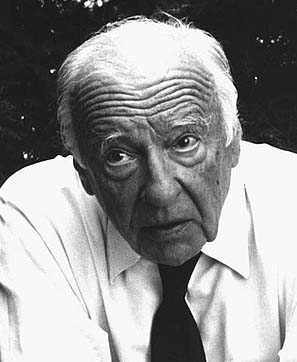
Hans Georg Gadamer, born on February 11, 1900, in Marburg, Germany, is widely regarded as one of the most influential philosophers of the 20th century. As the founder of philosophical hermeneutics, Gadamer’s work has had a profound impact on the humanities, shaping our understanding of interpretation, history, and language. His life and career, spanning over a century, are marked by significant contributions to philosophy and a deep commitment to the exploration of human understanding.
Early Life and Academic Beginnings
Hans Georg Gadamer was born into an intellectual environment, with his father being a professor of pharmacology at the University of Marburg. This early exposure to academia undoubtedly influenced Gadamer’s intellectual development. In 1922, he earned his doctorate under the guidance of Paul Natorp, a leading figure in Neo-Kantian philosophy. Natorp’s emphasis on the philosophy of language and the importance of historical context in understanding knowledge would lay the groundwork for Gadamer’s later work.
However, it was Gadamer’s encounter with Martin Heidegger, one of the most prominent philosophers of existentialism, that would have the most profound impact on his philosophical trajectory. Heidegger’s emphasis on being and the existential conditions of human life deeply influenced Gadamer’s thinking, particularly in the realm of hermeneutics—the theory and methodology of interpretation. In 1929, Gadamer achieved his habilitation, or qualification to teach at the university level, under Heidegger’s supervision, marking the beginning of a long and distinguished academic career.
Academic Career: From Leipzig to Heidelberg
Gadamer’s early academic career was shaped by the tumultuous political landscape of Germany during the 1930s and 1940s. In 1939, he was appointed as a professor at the University of Leipzig, and later, during the post-war period, he became the rector of the university from 1946 to 1947. His tenure at Leipzig was followed by positions at the University of Frankfurt and, most notably, at the University of Heidelberg, where he succeeded Karl Jaspers, a prominent existentialist philosopher. Gadamer remained at Heidelberg until his retirement in 1970, solidifying his reputation as a leading philosopher.
At Heidelberg, Gadamer founded and directed the journal “Philosophische Rundschau,” which became an important platform for the discussion of philosophical ideas in post-war Germany. His influence extended beyond Germany, as he became a well-known figure in the international philosophical community, contributing to numerous academic journals and participating in philosophical conferences worldwide.
The Magnum Opus: “Truth and Method”
Gadamer’s most significant contribution to philosophy is undoubtedly his 1960 work, “Wahrheit und Methode” (“Truth and Method”). This monumental text addresses the nature of human understanding and the role of language, history, and culture in shaping our perceptions of truth. Gadamer critiques the scientific conception of truth, which is often seen as objective and methodologically certain, and instead argues that truth is something that can only be experienced through interpretation.
“Truth and Method” challenges the idea that knowledge can be separated from the knower. Gadamer posits that all understanding is historically situated and culturally mediated—our interpretations are influenced by our historical context, linguistic frameworks, and the traditions in which we are immersed. This concept is central to his notion of the “fusion of horizons,” where the interpreter’s perspective merges with the historical context of the subject matter, creating a deeper and more nuanced understanding.
One of the most compelling aspects of Gadamer’s philosophy is his treatment of art, history, and language as dynamic processes that shape human experience. He argues that art is not merely an object to be observed but an event in which the observer is actively involved. Through the act of interpretation, art transforms the observer, revealing new possibilities of experience and understanding. This idea is exemplified in Gadamer’s analysis of the concept of “play” in art, where the artwork and the observer engage in a reciprocal relationship that transcends mere observation.
Philosophical Hermeneutics: The Art of Understanding
Gadamer’s development of philosophical hermeneutics represents a significant departure from traditional hermeneutics, which was primarily concerned with the interpretation of texts, particularly religious and legal documents. Gadamer expands this concept to encompass all forms of human understanding, arguing that interpretation is not just a method but a fundamental aspect of human existence. In this view, understanding is always situated within a historical context, and interpretation is a dialogical process that involves a constant interplay between the past and the present.
Central to Gadamer’s hermeneutics is the role of language. He asserts that language is not just a tool for communication but the very medium through which human beings experience the world. Language, for Gadamer, is what defines human existence and limits our ability to relate to others. It is through language that we engage with the world and each other, making it the foundation of all understanding. This emphasis on language reflects Gadamer’s broader philosophical project of overcoming the divide between the sciences and the humanities by demonstrating that all forms of knowledge are, in essence, interpretive.
Gadamer’s hermeneutics also challenges the dominance of scientific rationality in modern thought. He is critical of the tendency of science to reduce knowledge to objective facts, arguing that such an approach ignores the complexity and ambiguity of human experience. Instead, Gadamer advocates for a more holistic approach to understanding that recognizes the importance of historical context, tradition, and dialogue in the formation of knowledge.
The Legacy of Hans Georg Gadamer
Gadamer’s influence extends far beyond the confines of academic philosophy. His ideas have been instrumental in shaping contemporary thought in fields as diverse as literary theory, theology, legal studies, and the social sciences. His work has inspired generations of scholars to reconsider the nature of interpretation and the role of history and language in shaping human understanding.
In addition to “Truth and Method,” Gadamer authored numerous other important works, including “The Problem of Historical Consciousness” (1963), “Philosophical Hermeneutics” (1971), and “Reason in the Age of Science” (1976). These texts further explore the themes of history, language, and the nature of human understanding, solidifying Gadamer’s position as one of the most important philosophers of the 20th century.
Gadamer’s work on hermeneutics also laid the groundwork for subsequent developments in continental philosophy, particularly the work of philosophers like Jacques Derrida and Paul Ricoeur, who further explored the implications of Gadamer’s ideas for our understanding of language, meaning, and interpretation.
Beyond Philosophy: Gadamer’s Cultural and Scientific Contributions
Beyond his philosophical work, Gadamer was deeply engaged with broader cultural and scientific issues. He was a keen student of literature and poetry, producing significant studies on figures such as Goethe, Hölderlin, and Rilke. His insights into the nature of literary interpretation have had a lasting impact on literary theory and criticism.
Gadamer was also interested in the intersection of philosophy and science, particularly the implications of scientific advances for human understanding. His work in this area reflects his broader concern with the relationship between reason and experience, and the limits of scientific rationality in capturing the fullness of human life.
In his later years, Gadamer became increasingly concerned with the ethical dimensions of hermeneutics, emphasizing the importance of dialogue and mutual understanding in addressing the challenges of the modern world. He argued that the future of humanity depends on our ability to engage in meaningful dialogue across cultural and historical boundaries, a theme that resonates strongly in today’s globalized world.
Conclusion: The Enduring Impact of Hans Georg Gadamer
Hans Georg Gadamer’s life and work stand as a testament to the power of philosophy to deepen our understanding of the world and our place within it. His development of philosophical hermeneutics has had a profound and lasting impact on a wide range of disciplines, challenging us to reconsider the nature of truth, interpretation, and understanding.
Gadamer’s emphasis on the importance of history, language, and dialogue in shaping human experience has provided a powerful framework for exploring the complexities of modern life. His work continues to inspire scholars, students, and thinkers around the world, offering valuable insights into the nature of knowledge, the limits of scientific rationality, and the possibilities of human understanding.
As we navigate the challenges of the 21st century, Gadamer’s call for a more dialogical and interpretive approach to knowledge remains as relevant as ever. His legacy serves as a reminder that the pursuit of understanding is not just a matter of accumulating facts, but a deeply human endeavor that requires us to engage with the world in all its complexity and ambiguity.


