
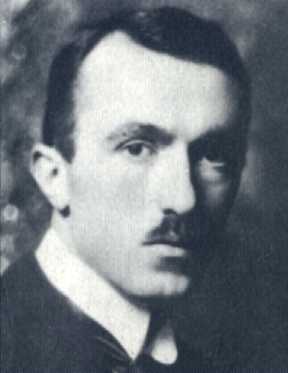
Carlo Emilio Gadda, born on November 14, 1893, in Milan, Italy, is often hailed as one of the most significant and complex Italian writers of the 20th century. His works, rich in linguistic experimentation and narrative innovation, offer a deep reflection on the human condition, social structures, and the intricacies of language. Gadda’s life and literary career are marked by a profound engagement with the cultural and political contexts of his time, making him a pivotal figure in modern Italian literature.
Early Life and Education
Carlo Emilio Gadda was born into a middle-class family in Milan. His father was an entrepreneur, and his mother was a literature teacher. From a young age, Gadda displayed a keen interest in literature and the humanities. However, his life took a significant turn with the death of his father in 1909. The loss, coupled with his father’s poor financial decisions, plunged the family into economic difficulties, forcing Gadda to reconsider his career aspirations.
Despite his passion for literature, Gadda followed his mother’s advice and enrolled in the engineering program at the Politecnico di Milano. His decision was influenced by the practical need to secure a stable profession in the face of the family’s precarious financial situation. In 1920, Gadda graduated with a degree in electrical engineering, a field that would influence his later literary works, particularly in their meticulous attention to detail and the complexity of their structure.
World War I and Early Literary Influences
The outbreak of World War I profoundly impacted Gadda’s life and literary trajectory. He volunteered to serve in the Italian army and was assigned to the Alpini, a specialized mountain infantry unit. Gadda’s experiences during the war, including his time as a prisoner of war, would later be chronicled in his “Giornale di guerra e di prigionia” (War and Prison Diary), published in 1955. This work, written in the form of a diary, reflects on themes that would become central to his later writings: the absurdity of war, the complexity of human emotions, and a deep-seated disdain for hierarchical structures.
After the war, Gadda returned to civilian life and briefly worked as an engineer in Italy, Belgium, and Argentina. However, the call of literature proved too strong to ignore. In 1924, he made a pivotal decision to enroll in the faculty of philosophy, pursuing his true passion. Although he completed all his exams, Gadda never presented his thesis, a reflection of his increasingly conflicted relationship with academic structures and his evolving literary ambitions.
The Shift to Literature
Gadda’s transition from engineering to literature began in earnest with his collaboration with the Florentine literary journal “Solaria” in 1926. His literary debut came the following year with the publication of “Apologia manzoniana,” an essay on the celebrated Italian writer Alessandro Manzoni. This marked the beginning of Gadda’s long and prolific literary career, characterized by a unique blend of philosophical reflection, narrative innovation, and linguistic experimentation.
In 1931, Gadda published his first narrative work, “La Madonna dei filosofi” (The Madonna of the Philosophers). The publication of this book marked a significant turning point in his life, leading him to abandon his engineering career entirely in favor of writing. Gadda’s decision to dedicate himself fully to literature was further solidified by the publication of “Il castello di Udine” (The Castle of Udine) in 1934, for which he received the prestigious Bagutta Prize.
Major Works and Literary Style
Carlo Emilio Gadda is perhaps best known for his innovative and challenging narrative style, which combines elements of philosophy, psychology, and social critique. His works are often characterized by their dense, multilayered prose, frequent use of dialects, and intricate narrative structures. These qualities make his writing both intellectually demanding and richly rewarding.
One of Gadda’s most significant contributions to literature is his exploration of the human condition through the lens of what he called “the cognizione del dolore” (the cognition of pain). This theme is central to one of his most acclaimed works, “La cognizione del dolore” (The Cognition of Pain), a novel that was serialized between 1938 and 1941 and later published in book form. The novel, set in a fictional South American country resembling Italy, explores themes of grief, alienation, and the absurdity of human existence. It is widely regarded as a masterpiece of Italian literature, showcasing Gadda’s ability to weave complex psychological insights into his narrative.
Another landmark in Gadda’s career is “Quer pasticciaccio brutto de via Merulana” (That Awful Mess on Via Merulana), published in 1957. This novel, set in Rome during the early years of Fascism, is a crime story that transcends the conventions of the genre to offer a biting social commentary on Italian society. The novel’s intricate plot, combined with Gadda’s characteristic linguistic experimentation, makes it one of the most challenging yet rewarding works in the Italian literary canon. The novel’s language, blending standard Italian with Roman dialects, captures the complexity and fragmentation of Italian society at the time.
Personal Struggles and Later Years
Gadda’s literary output in the 1940s and 1950s was marked by both personal and professional challenges. After the death of his mother in 1936, with whom he had a complicated and often strained relationship, Gadda moved to Florence in 1940. This period of his life was marked by a deepening sense of isolation and disillusionment, themes that are reflected in his writing.
In Florence, Gadda published “L’Adalgisa” (1944), a collection of short stories that offer a satirical yet affectionate portrayal of Milanese bourgeois society. The collection, which blends historical narrative with social critique, further established Gadda as a leading figure in Italian literature.
In 1950, Gadda moved to Rome, where he worked for the cultural programs of the Italian state broadcaster, RAI. His work at RAI, particularly on the “Terzo programma” (Third Program), allowed him to explore new forms of narrative, blending literary and journalistic techniques. During this period, Gadda published some of his most mature works, including “Il primo libro delle favole” (The First Book of Fables) in 1952 and “Novelle dal ducato in fiamme” (Stories from the Duchy in Flames) in 1953, the latter of which earned him the prestigious Viareggio Prize.
Legacy and Influence
Carlo Emilio Gadda’s influence on Italian literature and beyond cannot be overstated. His innovative narrative techniques, his exploration of language and dialects, and his philosophical insights into the human condition have left an indelible mark on the literary world. Gadda’s works have been the subject of extensive scholarly analysis, and his unique approach to narrative continues to inspire writers, critics, and readers.
Gadda’s later works, including “Eros e Priapo: Da furore a cenere” (Eros and Priapus: From Fury to Ashes), published in 1967, reflect his ongoing engagement with the political and social issues of his time. This work, a satirical exploration of Fascism and its cultural aftermath, showcases Gadda’s ability to blend historical analysis with biting social critique.
Gadda passed away in Rome on May 21, 1973, at the age of 79. His death marked the end of a remarkable literary career, but his works continue to be celebrated for their originality, complexity, and profound insights into the human experience.
Posthumous Publications and Continued Relevance
Even after his death, Gadda’s work continues to resonate with new generations of readers and scholars. Several of his works were published posthumously, including “Meditazione milanese” (Milanese Meditations) in 1974 and “Romanzo italiano di ignoto del Novecento” (Italian Novel of an Unknown Author of the 20th Century) in 1983. These posthumous publications have contributed to the ongoing re-evaluation and appreciation of Gadda’s contribution to literature.
Gadda’s legacy is also preserved through the numerous critical studies and biographies that continue to explore his life and work. His writings offer a unique window into the complexities of Italian society in the 20th century, and his innovative use of language and narrative structures has had a lasting impact on the development of modern literature.
Conclusion: The Enduring Impact of Carlo Emilio Gadda
Carlo Emilio Gadda’s life and work stand as a testament to the power of literature to explore the depths of human experience and to challenge the boundaries of narrative form. His contributions to Italian literature are unparalleled, and his works continue to be studied and admired for their linguistic brilliance, philosophical depth, and incisive social commentary.
As we continue to navigate the complexities of the modern world, Gadda’s exploration of language, identity, and the human condition remains as relevant as ever. His legacy as a master of narrative and a keen observer of society ensures that his works will continue to be read and appreciated for generations to come.


