
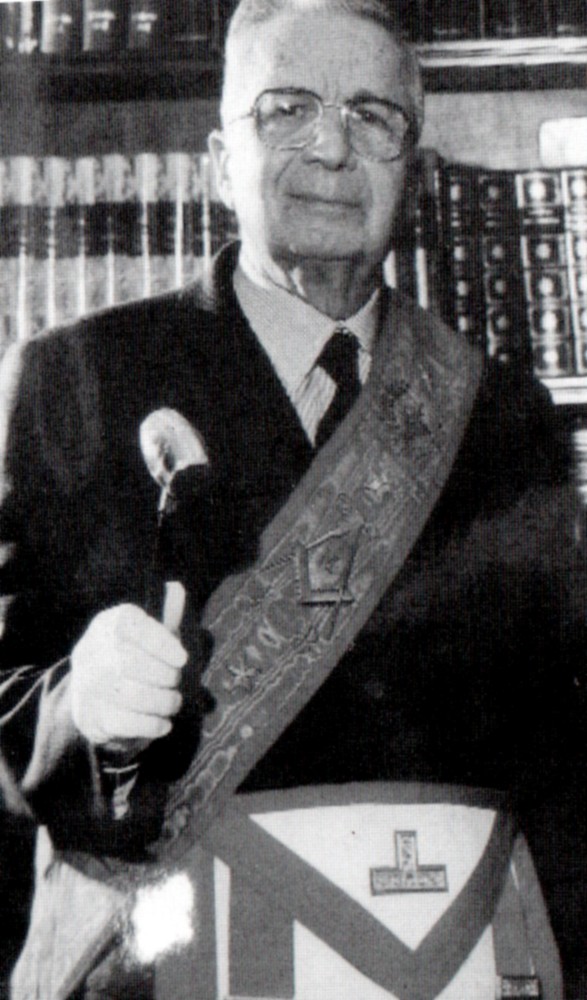
Licio Gelli is a name that resonates deeply within the intricate web of post-war Italian history. Born on April 21, 1919, in Pistoia, Tuscany, Gelli’s life is a testament to a man who not only navigated but also thrived in the murky waters of political and economic intrigue. His story is one that intertwines with some of the most significant and dark chapters of 20th-century Europe, making him a figure of both infamy and fascination.
Early Life and Formative Years
Licio Gelli was born into a modest family; his father was a miller, and his mother a homemaker. Gelli’s early life was marked by a propensity for rebelliousness. At a young age, he was expelled from all schools in the Kingdom of Italy for physically assaulting a school principal who defended a non-fascist teacher. This incident foreshadowed a life characterized by a blend of audacity, opportunism, and a keen sense of survival.
In 1937, at just 18, Gelli volunteered for the Italian Milizia Volontaria per la Sicurezza Nazionale (Voluntary Militia for National Security) and soon found himself in Spain, fighting alongside Francisco Franco’s forces during the Spanish Civil War. His participation in this conflict was an early indication of his alignment with fascist ideologies, a path that would define much of his later life.
The War Years and Rise in Fascist Circles
Upon returning to Italy in 1938, Gelli quickly ingratiated himself with the local fascist authorities in Pistoia. His meticulous attention to detail and fervent support for Mussolini’s regime did not go unnoticed. He began his career in the local Fascist Federation, where he was noted for his efficiency, even going so far as to document the cigarette brands smoked by his peers.
By 1940, Gelli was called up to serve in the Italian Army as Mussolini prepared for the invasion of France. Throughout World War II, Gelli’s activities were marked by a series of rapid transfers and promotions, reflecting his ability to navigate the shifting tides of war. His time in Montenegro during the war remains shrouded in mystery, with conflicting accounts of his actions, ranging from organizing partisan raids to being involved with various intelligence agencies, including Italian, British, and possibly even Soviet services.
As the war drew to a close, Gelli’s survival instincts kicked in. In 1943, with Italy’s surrender and the subsequent rise of the Italian Social Republic (RSI), Gelli quickly aligned himself with the new fascist state, becoming a key figure in organizing anti-partisan activities in his native Tuscany. However, by 1944, sensing the inevitable defeat of the Axis powers, Gelli began to hedge his bets, establishing contacts with the Italian Resistance. His duplicitous nature was in full display as he played both sides, aiding the resistance while continuing his role within the fascist apparatus.
Post-War Era and Initial Ventures
The end of World War II could have spelled doom for Gelli, who had been a fervent supporter of the fascist regime. However, his connections and cunning ensured his survival. In the chaotic aftermath of the war, Gelli managed to evade significant retribution, despite being involved in numerous dubious activities, including the alleged torture of partisans.
By the late 1940s, Gelli began to reinvent himself. He moved into the world of business, initially struggling in small ventures. His persistence eventually paid off when he became the representative for the Remington Rand typewriter company in Italy. This position marked the beginning of his rise in the corporate world, where he would soon cross paths with influential figures in the political and industrial spheres.
The Rise of Gelli in Post-War Italy
Licio Gelli’s most significant ascent began in the 1950s, when he became involved with the Permaflex mattress company. Through a combination of business acumen and strategic alliances, Gelli helped expand the company’s reach, eventually becoming its managing director. His role in the company not only increased his wealth but also his influence, particularly in the region of Frosinone, where he cultivated ties with powerful figures, including Giulio Andreotti, a leading Christian Democrat politician.
But it was in 1963 that Gelli made a move that would forever cement his legacy as one of the most enigmatic figures in Italian history: he joined the Freemasons. Gelli’s entry into the world of Freemasonry, and later his leadership of the clandestine Propaganda Due (P2) lodge, marked the beginning of a new chapter in his life, one that would intertwine with the highest levels of Italian politics, finance, and intelligence.
The P2 Lodge: A State Within a State
Propaganda Due, commonly known as P2, was a Masonic lodge that, under Gelli’s leadership, became a shadow government within Italy. Gelli’s P2 lodge included an extensive network of high-ranking officials, politicians, military officers, and business leaders. The lodge’s activities ranged from influencing political appointments to orchestrating financial deals and, according to some accusations, being involved in terrorist activities.
The P2 scandal broke wide open in 1981 when a police raid on Gelli’s villa uncovered a list of over 900 members, many of whom held significant positions in Italian society. The revelations rocked Italy, leading to widespread investigations and the eventual banning of the lodge. The scandal implicated many, including prominent figures in the government, military, and media, suggesting that Gelli’s influence had penetrated nearly every aspect of Italian public life.
Legal Troubles and Final Years
The exposure of P2 led to a series of legal battles for Gelli. He was arrested in Switzerland in 1982 but managed to escape custody, a testament to his enduring connections and influence. Over the next few years, Gelli lived as a fugitive, only surrendering in 1987 when he was assured that his time in jail would be limited.
Gelli’s legal troubles were far from over. He faced multiple charges, including conspiracy, financial fraud, and involvement in the Bologna massacre of 1980, although he was eventually acquitted of the most serious accusations. In the 1990s, Gelli was convicted of financial crimes related to the collapse of Banco Ambrosiano, one of Italy’s largest banks.
Despite his legal woes, Gelli remained a significant figure in Italy. He lived his final years under house arrest in Arezzo, Tuscany, where he continued to be a subject of public and media interest until his death in 2015 at the age of 96.
Legacy and Historical Context
Licio Gelli’s life is a mirror of Italy’s tumultuous journey through the 20th century. His ability to survive and thrive in different political regimes, from fascism to democracy, speaks volumes about his adaptability and the murky undercurrents of Italian politics. Gelli was a master manipulator, a man who understood power and how to wield it from the shadows.
His involvement with the P2 lodge remains one of the most significant chapters in post-war Italian history, highlighting the deep connections between the state, organized crime, and the business world. The P2 scandal not only exposed the extent of corruption in Italy but also served as a catalyst for reforms in the country’s political and financial systems.
Conclusion
Licio Gelli was more than just a businessman or a political operative; he was a symbol of the dark side of power in modern Italy. His life story, filled with intrigue, betrayal, and manipulation, offers a stark reminder of the potential for corruption in any system. As Italy continues to grapple with the legacy of its past, Gelli’s name remains a reminder of how the pursuit of power, unchecked and unscrupulous, can shape the course of history in ways both profound and troubling.
Gelli’s legacy is one of infamy, but it is also a testament to the complex and often contradictory nature of human ambition. His story is a cautionary tale, one that continues to resonate in Italy and beyond, as a symbol of the dangers that lurk when power is wielded without accountability.


