
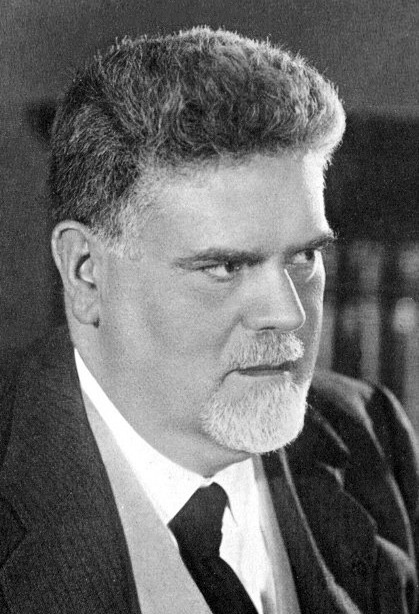
Giovanni Gentile is a figure of immense historical significance in the intellectual and political landscape of Italy during the early 20th century. His contributions to philosophy, education, and political thought have left an indelible mark, making him one of the most influential and controversial thinkers of his time. This article will explore the life, achievements, and enduring impact of Giovanni Gentile, focusing on his age, rise to fame, and key life highlights.
Early Life and Education
Giovanni Gentile was born on May 29, 1875, in Castelvetrano, Sicily. He was the son of Teresa and Giovanni Gentile, a pharmacist. Growing up in Campobello di Mazara, Gentile showed early promise in academics. He attended the “Leonardo Ximenes” classical high school in Trapani, where he developed a passion for literature, philosophy, and history. His intellectual journey led him to the prestigious Scuola Normale Superiore in Pisa, where he pursued a degree in Letters and Philosophy. Under the mentorship of renowned professors such as Donato Jaia (philosophy), Amedeo Crivellucci (history), and Alessandro D’Ancona (literature), Gentile honed his skills and deepened his knowledge, setting the stage for his future endeavors.
Academic Career and Philosophical Contributions
Gentile graduated in 1897 and continued his academic pursuits with a postgraduate course in Florence. His career as a philosopher and educator began with a teaching position at the National College “Mario Pagano” in Campobasso, where he taught philosophy. He later moved to Naples to teach at the “Vittorio Emanuele” high school. In 1901, Gentile married Erminia Nudi, whom he had met in Campobasso. The couple had six children together.
Gentile’s academic career continued to flourish, and in 1902, he became a free lecturer in theoretical philosophy, followed by a position as a lecturer in pedagogy in 1903. His reputation as a philosopher grew, and in 1906, he was appointed as a professor of the history of philosophy at the University of Palermo. During his time in Palermo, Gentile co-founded the journal Nuovi Doveri with Giuseppe Lombardo Radice and became an active member of the intellectual circle “Giuseppe Amato Pojero.”
Gentile’s philosophical work was deeply influenced by the idealist tradition, particularly by the ideas of Hegel. He is best known for developing the philosophy of “Actual Idealism,” which posits that reality is a product of thought, and that the act of thinking itself is the only true reality. This radical departure from traditional idealism placed Gentile at the forefront of Italian philosophy, earning him recognition both in Italy and abroad.
Involvement in Politics and the Fascist Regime
Gentile’s philosophical ideas eventually led him into the political arena. In 1914, as World War I loomed, he moved to Pisa to take up a position as a full professor of theoretical philosophy. During this period, he expressed support for Italy’s involvement in the war, viewing it as a continuation of the Risorgimento—the movement for Italian unification.
In 1919, Gentile relocated to Rome, where he continued to teach and, in 1920, founded the Giornale Critico della Filosofia Italiana, a journal that further established his influence in the field of philosophy. His increasing interest in politics coincided with the rise of Fascism in Italy. On October 31, 1922, following the March on Rome, Gentile was appointed Minister of Public Education by Benito Mussolini, marking the beginning of his close association with the Fascist regime.
As Minister of Public Education, Gentile implemented the “Gentile Reform,” a comprehensive overhaul of the Italian educational system. The reform emphasized the importance of classical studies, philosophy, and the humanities, and sought to instill a strong sense of national identity and loyalty to the state. While the reform was innovative and had a lasting impact on Italian education, it also aligned the educational system with the Fascist ideology, earning Gentile both praise and criticism.
Ideological Commitment and Controversy
In 1923, Gentile formally joined the National Fascist Party, fully committing himself to the regime’s ideological project. His intellectual contributions to Fascism were significant; he viewed the movement as a means to achieve a religious and ethical regeneration of the Italian people. His belief in the potential of Fascism to unify and elevate the nation was encapsulated in the Manifesto of Fascist Intellectuals, which he authored in 1925. This manifesto sought to provide a philosophical justification for Fascism and attracted the support of many Italian intellectuals.
However, Gentile’s unwavering support for Fascism led to a rift with some of his contemporaries, most notably Benedetto Croce, a fellow philosopher and long-time correspondent. Croce responded to Gentile’s manifesto with his own Manifesto of Anti-Fascist Intellectuals, highlighting the deep ideological divide between the two men. Despite this, Gentile continued to be a leading figure in the Fascist regime, holding various positions of influence, including the presidency of the National Institute of Fascist Culture and the role of scientific director at the Treccani Encyclopedia.
Later Years and Decline
Gentile’s relationship with the Fascist regime began to sour in the late 1920s and 1930s, particularly after the signing of the Lateran Pacts in 1929, which established a concordat between the Italian state and the Catholic Church. As a staunch advocate of a secular state, Gentile was troubled by the increasing influence of the Church in Italian politics, though he recognized Catholicism as a significant cultural and spiritual force in the country.
Despite these concerns, Gentile remained active in various academic and cultural institutions throughout the 1930s. He served as the director of the Scuola Normale Superiore in Pisa, founded the Italian Institute of Germanic Studies and the Italian Institute for the Middle and Far East, and held the presidency of the National Center for Manzonian Studies. However, his reputation was increasingly tarnished by his association with Fascism, particularly after he signed the Manifesto of Race in 1938, which supported the regime’s racial laws, despite his personal reservations about them.
World War II and Final Days
With the onset of World War II, Gentile’s political involvement intensified once more. In 1941, he became president of the Domus Galileiana in Pisa and, in 1942, assumed the presidency of the Royal Academy of Italy, which absorbed the prestigious Accademia dei Lincei. However, the collapse of the Fascist regime in 1943 left Gentile in a precarious position.
In February 1943, Gentile delivered a lecture titled “My Religion,” in which he reaffirmed his belief in a secular state while also identifying as a Catholic and a Christian. Later that year, in June, he delivered a speech in Rome titled “Discourse to the Italians,” in which he called for national unity. Despite his efforts to distance himself from the more extreme elements of Fascism, Gentile’s loyalty to Mussolini led him to support the Italian Social Republic, a puppet state established by the Nazis in northern Italy.
Gentile’s decision to remain loyal to the Fascist cause made him a target for anti-Fascist partisans. On April 15, 1944, he was assassinated by a group of communist partisans in Florence. His death marked the end of a tumultuous career that had seen him rise to the pinnacle of intellectual and political life in Italy, only to be brought down by the very forces he had helped to empower.
Legacy and Historical Significance
Giovanni Gentile’s legacy is complex and deeply intertwined with the history of Italy in the first half of the 20th century. As a philosopher, his contributions to idealist thought and his development of Actual Idealism remain influential, particularly in the fields of education and political theory. However, his close association with Fascism and his role in supporting and legitimizing the regime have cast a long shadow over his reputation.
Gentile’s life and work continue to be the subject of intense debate among historians, philosophers, and political scientists. Some view him as a brilliant thinker whose ideas were tragically co-opted by a totalitarian regime, while others see him as a willing accomplice in the Fascist project. Regardless of one’s perspective, there is no denying that Giovanni Gentile was a figure of immense significance in Italian history, whose ideas and actions continue to resonate to this day.
In conclusion, Giovanni Gentile’s life was marked by intellectual brilliance, political ambition, and a deep commitment to his vision of a unified, culturally rich Italy. His contributions to philosophy and education have left a lasting impact, but his involvement with Fascism has ensured that his legacy remains controversial and contested. As we reflect on his life and achievements, it is essential to consider both the positive and negative aspects of his legacy, recognizing the complexity of a man who was both a product and a shaper of his time.


