
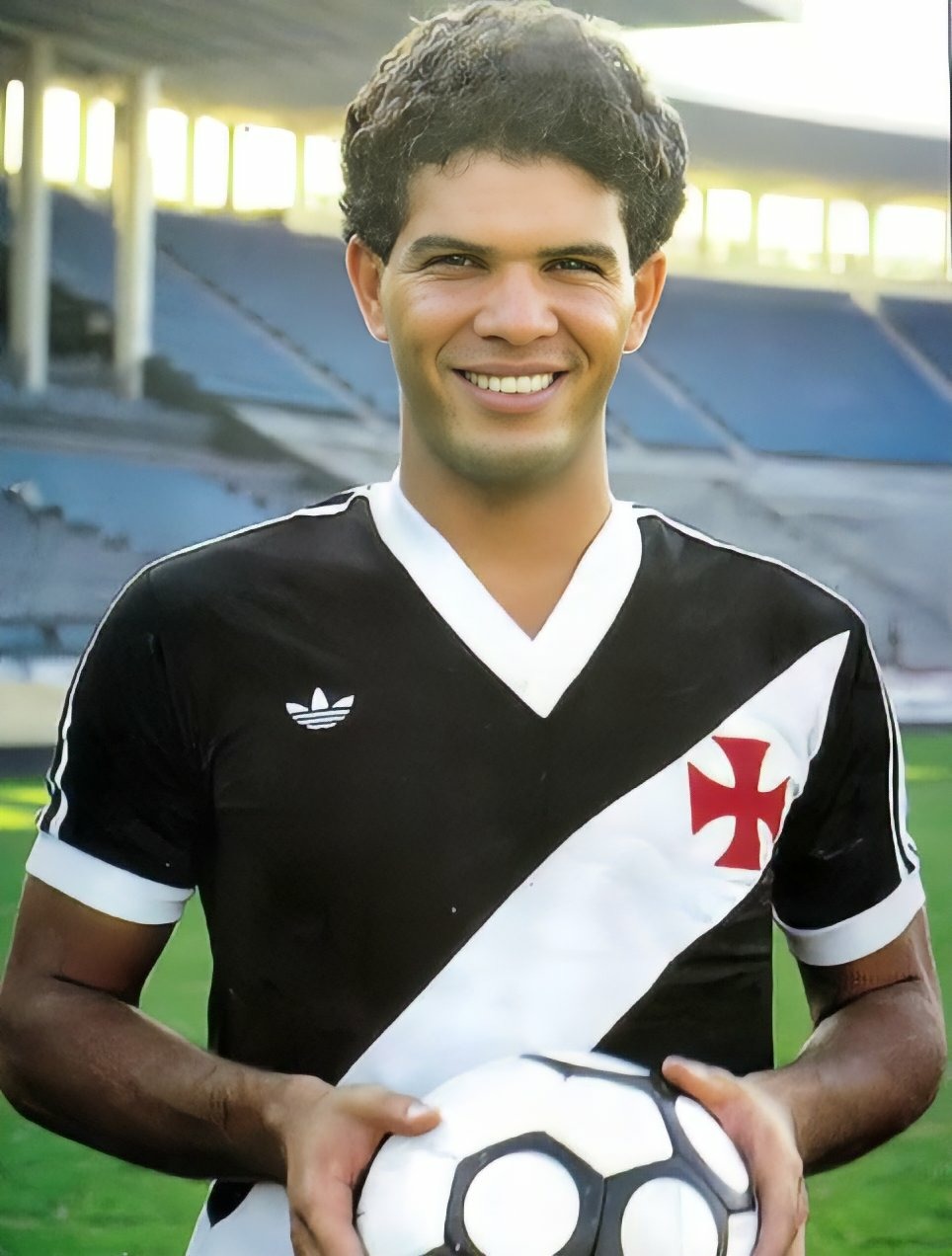
Geovani Faria da Silva, commonly known simply as Geovani, is a name that resonates with football enthusiasts, particularly those who followed the sport in the 1980s and 1990s. Born on April 6, 1964, in Vitória, Brazil, Geovani carved out a distinguished career as a midfielder, leaving an indelible mark on the world of football. His journey from the streets of Vitória to international fame is a tale of talent, perseverance, and the pursuit of excellence.
Early Life and Introduction to Football
Geovani’s story begins in the state of Espírito Santo, Brazil, where he was born and raised. Like many Brazilian footballers, his journey began in the youth teams of local clubs. At the tender age of sixteen, Geovani joined the youth ranks of Desportiva Capixaba, a club known for nurturing young talents. This early exposure to competitive football set the stage for what would become an illustrious career.
Rise to Fame with Vasco da Gama
In 1983, Geovani’s life changed dramatically when he was signed by Vasco da Gama, one of Brazil’s most storied football clubs. At Vasco, Geovani was thrust into the spotlight, playing alongside future football legends such as Romário and Roberto Dinamite. His exceptional skills, particularly his vision and ability to dictate the pace of the game, quickly earned him a reputation as one of Brazil’s most promising young talents.
That same year, Geovani’s talents were recognized on the international stage. He was selected to represent Brazil in the Under-20 World Cup, a tournament that would prove to be a turning point in his career. In the final against Argentina, Geovani scored the winning goal, securing Brazil’s victory and solidifying his status as a rising star in Brazilian football.
International Success and Copa America Victory
Geovani’s success with Vasco da Gama and the Brazilian Under-20 team did not go unnoticed. He soon found himself called up to the senior national team, where he continued to shine. In 1989, Geovani was part of the Brazilian squad that competed in the Copa America, one of South America’s most prestigious football tournaments. Brazil emerged victorious, and Geovani played a crucial role, even scoring a goal during the tournament.
This victory was particularly significant for Geovani, as it marked Brazil’s first Copa America title in nearly 40 years. The win also helped cement his place in the annals of Brazilian football history, as he became part of a generation of players who restored Brazil’s dominance in South American football.
Move to Europe: Bologna and Karlsruher SC
In 1989, Geovani made a significant career move, leaving Brazil to play in Europe. He signed with Bologna, an Italian club known for its passionate fan base and rich history. However, Geovani’s time in Italy was challenging. Despite his undeniable talent, he struggled to adapt to the more tactical and physically demanding style of European football. Over the course of two seasons, he managed to score only two goals, a far cry from the prolific performances he had delivered in Brazil.
In 1991, Geovani moved to Germany to play for Karlsruher SC. His stint in Germany was similarly underwhelming, and after a year, he returned to Brazil to rejoin Vasco da Gama. Despite the challenges he faced in Europe, Geovani’s experiences abroad contributed to his growth as a player, teaching him valuable lessons about resilience and adaptability.
Return to Brazil and Late Career
Upon his return to Brazil, Geovani resumed his role as a key player for Vasco da Gama. He helped the team secure several state championships, once again proving his worth as one of Brazil’s top midfielders. His ability to control the tempo of the game and his precise passing continued to make him a valuable asset to his team.
In 1993, Geovani took his talents to Mexico, signing with Tigres UANL. While his time in Mexico was brief, it added another chapter to his diverse and storied career. After leaving Tigres, Geovani returned to Brazil, where he spent the final years of his career playing for smaller clubs. He officially retired from professional football in 2002, bringing an end to a career that had spanned nearly two decades.
Life After Football
Retirement from football did not signal the end of Geovani’s challenges. In 2006, he was diagnosed with polyneuropathy, a debilitating condition that affects the peripheral nerves. This diagnosis was a difficult blow for Geovani, who had spent his life in peak physical condition. Despite the challenges posed by the illness, Geovani has remained resilient, drawing on the same strength and determination that fueled his football career.
Legacy and Impact on Brazilian Football
Geovani’s legacy in Brazilian football is one of talent, perseverance, and quiet determination. While he may not have achieved the same level of global fame as some of his contemporaries, his contributions to the game are undeniable. He was a key figure in Vasco da Gama’s success during the 1980s and early 1990s, and his role in Brazil’s 1989 Copa America victory will forever be remembered by fans of the Seleção.
Moreover, Geovani’s journey serves as an inspiration to young footballers, particularly those who face challenges and setbacks in their careers. His ability to overcome obstacles, whether they were on the pitch in Europe or in his personal life, is a testament to his character and resilience.
Geovani’s Style of Play
To truly appreciate Geovani’s impact on football, one must understand his style of play. As a midfielder, Geovani was known for his exceptional vision and ability to control the flow of the game. He was a playmaker in the truest sense, often serving as the link between defense and attack. His passing was precise, and he had a knack for finding space in even the most crowded of midfields.
Geovani was not the most physically imposing player on the field, but he more than made up for it with his intelligence and technical ability. His ability to read the game and anticipate the movements of his teammates and opponents alike made him a formidable presence in the middle of the park. It was this combination of skill and intelligence that made him a standout player during his time with Vasco da Gama and the Brazilian national team.
The 1989 Copa America: A Career Highlight
Of all the achievements in Geovani’s career, the 1989 Copa America stands out as a defining moment. The tournament, held in Brazil, was a pivotal one for the national team. Brazil had not won the Copa America since 1949, and the pressure was on for the team to deliver a victory on home soil.
Geovani played a key role in Brazil’s success in the tournament. His goal in the competition was a highlight, showcasing his ability to perform on the biggest stage. The final, held at the Maracanã Stadium in Rio de Janeiro, saw Brazil defeat Uruguay 1-0 to claim the title. For Geovani, this victory was not just a personal triumph but also a validation of his place among Brazil’s footballing elite.
The Challenges of Playing Abroad
Geovani’s experiences in Europe, particularly in Italy and Germany, were marked by challenges. The transition from Brazilian football to the European game was not an easy one for Geovani. The tactical discipline and physical demands of Serie A and the Bundesliga were a stark contrast to the more free-flowing style of play he was accustomed to in Brazil.
In Italy, Geovani struggled to find his footing at Bologna. Despite his technical skills and footballing intelligence, he found it difficult to adapt to the rigid tactical systems employed by Italian teams at the time. His time in Germany was similarly challenging, and he eventually returned to Brazil, where he felt more at home both on and off the pitch.
These experiences abroad, while difficult, were crucial in shaping Geovani’s career. They taught him the importance of adaptability and resilience, lessons that he carried with him throughout the rest of his playing days.
Geovani’s Influence on Future Generations
Geovani’s impact on football extends beyond his own career. As a player who experienced both the highs of international success and the lows of personal and professional challenges, his story serves as a valuable lesson for future generations of footballers. Young players can look to Geovani’s career as an example of the importance of perseverance, hard work, and the ability to overcome adversity.
In particular, Geovani’s experiences in Europe highlight the difficulties that many South American players face when making the transition to European football. His story underscores the importance of mental toughness and the need for players to adapt to different styles of play in order to succeed at the highest levels of the game.
Conclusion
Geovani Faria da Silva’s life and career are a testament to the power of talent, determination, and resilience. From his early days in Vitória to his rise to fame with Vasco da Gama and the Brazilian national team, Geovani’s journey is one that inspires and motivates. Despite the challenges he faced, both on and off the pitch, Geovani’s legacy in the world of football is secure.
His contributions to the game, particularly his role in Brazil’s 1989 Copa America victory, ensure that he will be remembered as one of the great midfielders of his generation. As future generations of footballers look to make their mark on the world stage, they can draw inspiration from Geovani’s story – a story of talent, perseverance, and the relentless pursuit of excellence.


