
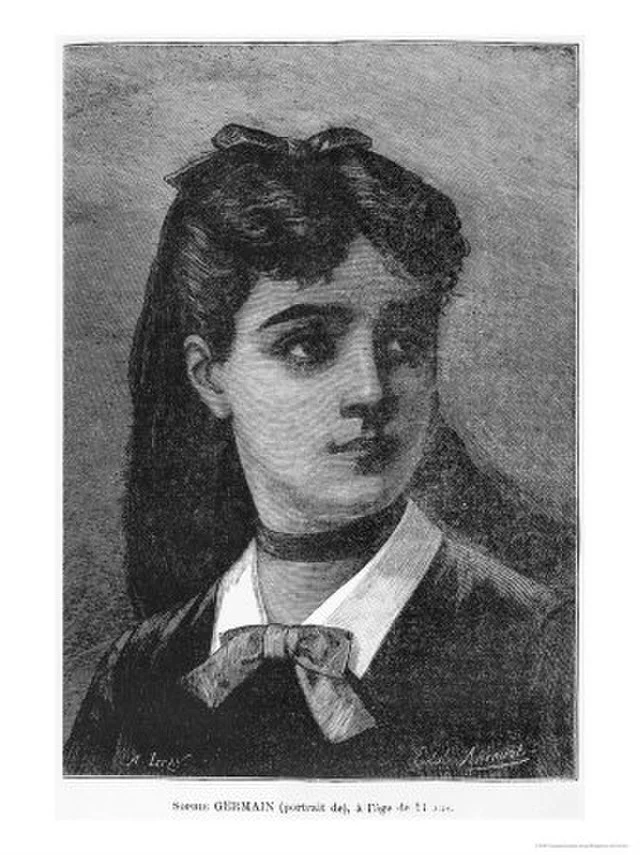
Sophie Germain, born on April 1, 1776, in Paris, France, is one of the most remarkable and pioneering figures in the history of mathematics. Despite the societal constraints of her time, which limited educational opportunities for women, Germain made significant contributions to number theory and mathematical physics, particularly in the theory of elasticity. Her work laid the groundwork for future advancements and earned her a place among the most respected mathematicians of her era. This article explores the life, achievements, and enduring legacy of Sophie Germain, providing detailed insights into her journey from a curious young girl to a trailblazing mathematician.
Early Life and the Beginnings of a Mathematician
Sophie Germain was born into a well-off family in Paris. Her father, Ambroise-François Germain, was a successful silk merchant, and her mother, Marie Madelaine Gruguelin, managed the household. Growing up in an environment where intellectual discussion was encouraged, Sophie was exposed to political and philosophical debates at a young age, which likely influenced her inquisitive nature.
At the age of 13, Sophie Germain read a story about the death of the ancient Greek mathematician Archimedes at the hands of a Roman soldier. This account profoundly impacted her, sparking a lifelong passion for mathematics. Despite her parents’ initial disapproval—they feared that such studies were inappropriate for a young woman—Sophie persisted. She began teaching herself Latin and Greek to read the works of Newton and Euler, often studying secretly at night under the covers, after her parents had gone to bed.
Her parents eventually relented, recognizing the intensity of her commitment to learning. Although Sophie never married or held a professional academic position—circumstances largely dictated by the social norms of her time—her father supported her financially throughout her life, allowing her to pursue her studies with dedication.
Pursuing Mathematics in a Male-Dominated World
In an era when women were largely excluded from formal education, Sophie Germain’s path to mathematical knowledge was unconventional and fraught with challenges. Denied access to higher education, she obtained lecture notes from the École Polytechnique, a leading institution of science and technology in Paris, by using a male pseudonym, “M. LeBlanc.” This ruse allowed her to correspond with some of the leading mathematicians of her time, including Joseph-Louis Lagrange, who was so impressed by the originality of her work that he sought out “M. LeBlanc.” When he discovered that “M. LeBlanc” was, in fact, a woman, his respect for her did not wane; instead, he became her mentor and advocate.
This mentorship with Lagrange marked the beginning of Sophie Germain’s serious engagement with the mathematical community. Although her education was largely self-directed and informal, her work exhibited a depth of understanding and creativity that earned her respect among her peers.
Major Contributions to Number Theory and the Fermat’s Last Theorem
One of Sophie Germain’s most significant contributions to mathematics was in the area of number theory, particularly her work on Fermat’s Last Theorem. The theorem, which remained unsolved for over 350 years, stated that there are no whole number solutions to the equation for . Germain developed a novel approach to the problem by identifying a special class of prime numbers, now known as “Sophie Germain primes,” which played a crucial role in the partial solutions to the theorem.
Germain corresponded with the eminent mathematician Adrien-Marie Legendre, who recognized the value of her contributions and included some of her results in his own work on number theory. This collaboration helped further cement Germain’s reputation as a formidable mathematician, despite the pervasive gender biases of the time.
Correspondence with Carl Friedrich Gauss
Perhaps the most famous of Sophie Germain’s mathematical correspondences was with Carl Friedrich Gauss, one of the greatest mathematicians in history. Between 1804 and 1809, Germain exchanged a series of letters with Gauss, discussing complex problems in number theory. Initially, she continued to use her pseudonym, “M. LeBlanc,” fearing that her work might not be taken seriously if her true identity were known.
Gauss, however, was deeply impressed by the depth of understanding and ingenuity displayed in these letters. When her identity was eventually revealed—after she took steps to ensure Gauss’s safety during the French occupation of his hometown—he expressed admiration for her talents and lamented the barriers that women faced in the scientific community.
This correspondence was not only a testament to Germain’s mathematical prowess but also highlighted the significant challenges she overcame to be taken seriously in a male-dominated field.
The Theory of Elasticity and the Prize from the Paris Academy of Sciences
In addition to her work in number theory, Sophie Germain made groundbreaking contributions to mathematical physics, particularly in the theory of elasticity. In 1808, the German physicist Ernst Chladni visited Paris and demonstrated his experiments on vibrating plates, known today as Chladni figures. These patterns intrigued the scientific community, and the Paris Academy of Sciences offered a prize for developing a mathematical theory that could explain them.
Germain was the only person to enter the competition, submitting her work in 1811. Although her initial attempt did not win the prize—largely because it lacked a rigorous foundation in physical principles—her work was recognized for its originality and potential. She continued to refine her theory, and after two more submissions, she finally won the prize in 1816. This achievement was significant not only because it was a rare instance of a woman being honored by a leading scientific institution but also because it marked a major advancement in the mathematical understanding of elasticity.
Despite winning the prize, Germain was not fully satisfied. She felt that the scientific community had not given her work the recognition it deserved. The main judge of the competition, Siméon Denis Poisson, acknowledged her contribution but did not engage deeply with her ideas, reflecting the persistent gender biases of the time.
Later Life and Legacy
Sophie Germain’s later years were marked by continued intellectual activity, although she remained somewhat isolated from the mainstream scientific community. She worked on various mathematical and philosophical problems until her death, including further developments in number theory and the study of curved surfaces.
In 1829, she was diagnosed with breast cancer, but she continued her work undeterred, even as her health declined. She died on June 27, 1831, at the age of 55. Tragically, her death certificate did not acknowledge her contributions to mathematics or science, listing her profession simply as a “rentier,” or landowner.
However, her legacy lived on. Although she did not receive the recognition she deserved during her lifetime, subsequent generations of mathematicians and historians have come to appreciate the significance of her contributions. The mathematical community honors her memory with terms like “Sophie Germain primes,” and she is remembered as a pioneer who broke through the barriers of her time to make lasting contributions to the field.
The Historical Context and the Struggle for Recognition
Sophie Germain’s life and work must be understood within the broader historical context of her time. The late 18th and early 19th centuries were periods of significant scientific advancement, but they were also times when women were largely excluded from formal education and professional scientific communities. The fact that Germain was able to make substantial contributions to mathematics, despite these obstacles, speaks volumes about her determination and intellect.
Her struggles for recognition were not unique to her; they reflected the broader societal attitudes towards women in science. Germain’s story is one of perseverance in the face of systemic bias, and her achievements paved the way for future generations of women in mathematics and science.
Conclusion: The Enduring Impact of Sophie Germain
Sophie Germain remains a towering figure in the history of mathematics. Her contributions to number theory, particularly her work on Fermat’s Last Theorem, and her groundbreaking research in elasticity, are foundational to these fields. Germain’s life is a testament to the power of persistence, curiosity, and intellectual courage. Despite the gender biases that sought to limit her, she left an indelible mark on the world of mathematics.
As we reflect on her life, it is clear that Sophie Germain’s legacy extends far beyond her mathematical achievements. She is an inspiring example of how passion and determination can overcome the most formidable obstacles. Today, as we continue to strive for greater inclusion and diversity in science and mathematics, the story of Sophie Germain serves as both a reminder of the challenges faced by women in the past and a beacon of hope for the future.


