
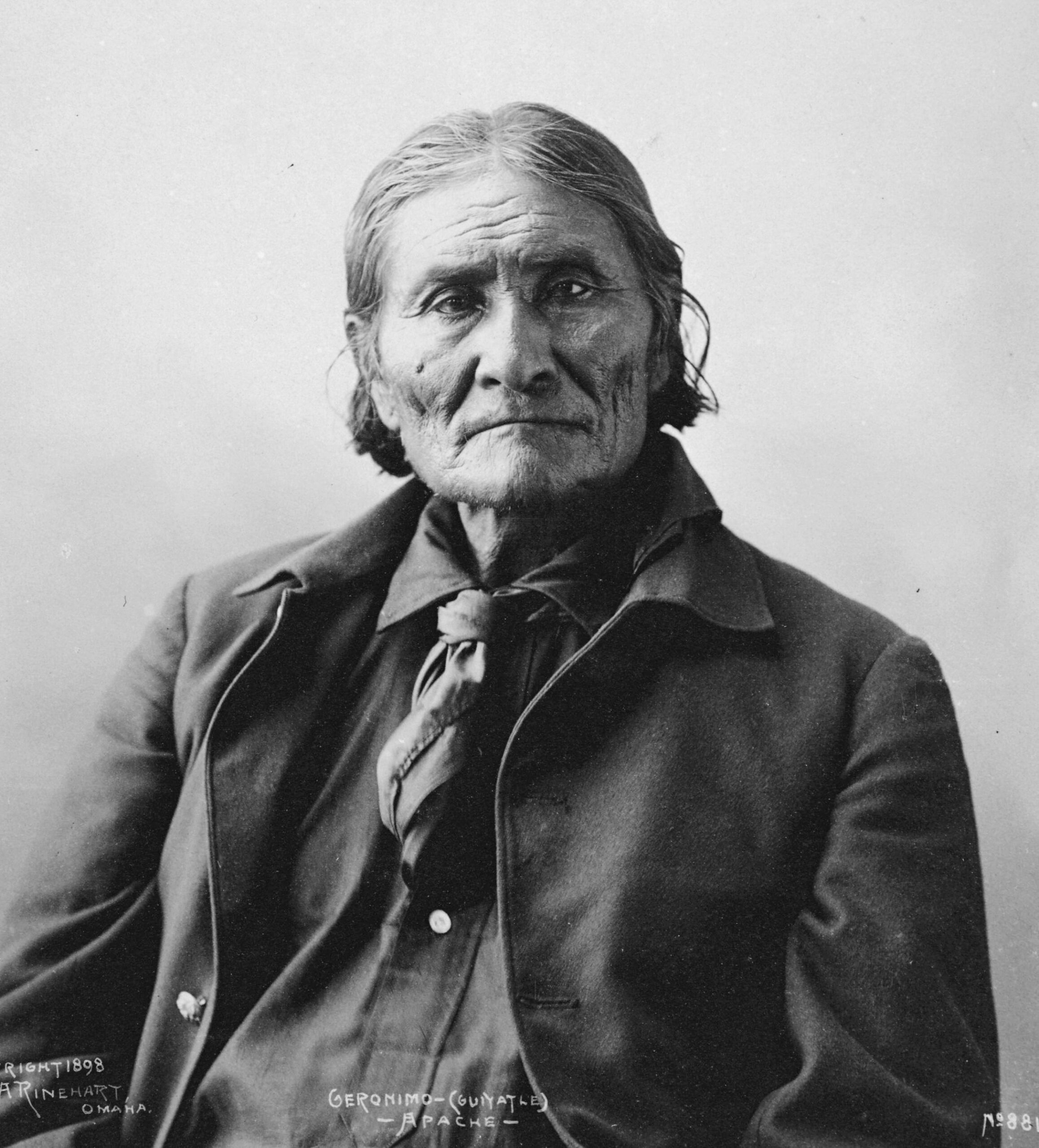
Geronimo, born on June 16, 1829, in No-Doyohn Canyon, which is now Clifton in present-day New Mexico, is one of the most iconic figures in Native American history. As a prominent leader of the Apache people, specifically the Chiricahua tribe, Geronimo became a symbol of Native American resistance against the encroaching forces of the United States and Mexico during the 19th century. His life was marked by relentless warfare, deep spiritual beliefs, and a profound commitment to his people’s survival. This article delves into the life, legacy, and key highlights of Geronimo’s life, offering insights into his age, rise to fame, and the lasting impact he left on history.
Early Life and Cultural Background
Geronimo was born into the Bedonkohe band of the Apache tribe, but he was closely associated with the Chiricahua Apaches. His birth name was Goyahkla, which means “One Who Yawns.” The Apache people, known for their fierce independence and warrior culture, lived in what is now the Southwestern United States, in areas that included parts of Arizona, New Mexico, and northern Mexico.
Geronimo was raised in the traditional Apache way of life, learning the skills necessary for survival in the harsh environment of the American Southwest. After the death of his father, his mother moved with him to live among the Chihenne, another Apache group, where he was further immersed in the customs and traditions of his people. As he grew older, Geronimo developed into a skilled warrior and leader, deeply respected by his peers for his bravery and strategic acumen.
At the age of 17, Geronimo married a woman named Alope, who was a member of the Nedni-Chiricahua tribe. Together, they had three children. It was during this time that Geronimo’s life would take a tragic turn, setting him on a path that would define his legacy.
The Tragic Event That Shaped Geronimo’s Life
In 1858, a devastating event occurred that would forever alter the course of Geronimo’s life. While Geronimo was away on a trading trip, a Mexican military force, led by Colonel José María Carrasco, attacked his camp. In the assault, Geronimo’s mother, wife, and three children were brutally killed. The loss of his family was a profound and devastating blow, one that ignited in Geronimo an unquenchable thirst for revenge against the Mexican soldiers.
This tragedy marked the beginning of Geronimo’s transformation from a respected warrior to a relentless and feared leader. He became known for his ability to predict the future, a skill that earned him the nickname “Sognatore” or “The Dreamer.” However, it was his ferocity in battle and his ability to elude capture that truly defined his reputation. Mexican troops, in awe and fear of his prowess, began calling him “Geronimo,” a name derived from the Spanish pronunciation of the name Jerome, which they reportedly shouted during battle.
Geronimo’s Role as a Leader and Warrior
Following the attack on his family, Geronimo became deeply involved in the ongoing conflict between the Apache people and the Mexican and American forces. He joined forces with other Apache leaders, including the renowned Mangas Coloradas and Cochise, to resist the incursions into their lands. Geronimo’s strategic brilliance and fearless leadership made him a key figure in the Apache resistance, and he quickly rose to prominence among his people.
Geronimo was known not only for his martial abilities but also for his spiritual leadership. He was a shaman, or medicine man, respected for his deep connection to the spiritual world. His ability to lead both in battle and in spiritual matters made him an invaluable leader for the Apache, who looked to him for guidance during the most challenging times.
Throughout the 1860s and 1870s, Geronimo led numerous raids against Mexican and American settlers, as well as military forces. His knowledge of the rugged terrain of the Southwest, combined with his tactical ingenuity, allowed him and his followers to carry out successful raids and then disappear into the vast desert landscapes. This ability to evade capture only enhanced his legend, making him a figure of both admiration and fear.
The Struggle Against U.S. Expansion
As the United States expanded westward, tensions between the Apache people and American settlers grew increasingly violent. The U.S. government sought to forcibly relocate the Apache to reservations, a policy that Geronimo fiercely resisted. He and his followers refused to submit to the authority of the U.S. government, leading to a series of conflicts that would make Geronimo one of the most wanted men in America.
In 1876, the U.S. government attempted to move the Chiricahua Apaches to the San Carlos Reservation in Arizona, a barren and inhospitable land far from their traditional territories. Geronimo and other Apache leaders initially complied with the relocation but soon grew disillusioned with the harsh conditions and broken promises from the government. In 1878, Geronimo escaped from the reservation with a small band of followers, reigniting his campaign of resistance.
For the next several years, Geronimo led a series of escapes and rebellions, often with only a small group of warriors. Despite being vastly outnumbered and pursued by thousands of U.S. and Mexican troops, Geronimo’s knowledge of the land and his guerrilla tactics allowed him to evade capture time and again. His ability to survive against overwhelming odds became legendary, earning him a reputation as the ultimate symbol of Native American resistance.
The Final Surrender and Imprisonment
The relentless pursuit of Geronimo and his followers by U.S. forces eventually took its toll. By 1886, Geronimo, now in his late 50s, was exhausted from the years of warfare. On September 4, 1886, he finally agreed to surrender to General Nelson Miles at Skeleton Canyon in Arizona. This surrender marked the end of the Apache resistance and the beginning of Geronimo’s life in captivity.
Following his surrender, Geronimo was taken as a prisoner of war, first to Fort Bowie in Arizona and then to various locations across the country, including Fort Pickens in Florida and later Fort Sill in Oklahoma. Despite his status as a prisoner, Geronimo became a national celebrity. His fame grew as he participated in various public events, including the 1904 World’s Fair in St. Louis, where he sold autographs, photographs, and souvenirs.
In 1905, Geronimo was invited to participate in the inaugural parade of President Theodore Roosevelt, a testament to his enduring fame. Despite his public appearances, Geronimo remained a prisoner of war until his death. He never regained his freedom, nor was he allowed to return to his homeland in the Southwest.
Legacy and Death
Geronimo spent the final years of his life at Fort Sill, where he continued to express regret for his decision to surrender. On his deathbed, he reportedly told his nephew, “I should have never surrendered. I should have fought until I was the last man alive.” These words reflect the deep sense of loss and betrayal that Geronimo felt, both for himself and for his people.
Geronimo died on February 17, 1909, after contracting pneumonia. He was buried at the Apache Indian Prisoner of War Cemetery at Fort Sill, Oklahoma. His grave has since become a site of pilgrimage for those who admire his legacy and his unwavering commitment to his people’s freedom.
The Historical Context and Impact of Geronimo’s Legacy
Geronimo’s life and legacy must be understood within the broader context of 19th-century American history, a time of intense conflict between Native American tribes and the expanding United States. The Apache resistance, led by figures like Geronimo, represented one of the last stands against the colonization and displacement of Native peoples.
Geronimo’s story is emblematic of the broader struggle of Native Americans during this period, as they faced overwhelming military force, broken treaties, and forced relocations. His resistance was not just a fight for survival, but a fight to preserve a way of life, a culture, and a people. Even in defeat, Geronimo remained a symbol of defiance and courage, qualities that have ensured his place in history.
Today, Geronimo is remembered as a hero among Native Americans and as a symbol of resistance against oppression. His name has become synonymous with bravery and the struggle for freedom. Geronimo’s legacy continues to inspire, serving as a reminder of the resilience and strength of the Native American people.
Conclusion: The Enduring Legacy of Geronimo
Geronimo’s life is a powerful narrative of resistance, resilience, and the fight for justice. From the tragic loss of his family to his relentless campaigns against the U.S. and Mexican forces, Geronimo’s story is one of unyielding determination and courage. His legacy as a leader, warrior, and symbol of Native American resistance continues to resonate more than a century after his death.
As we reflect on Geronimo’s life, it is important to recognize the broader historical context in which he lived. His struggles were part of a larger narrative of Native American resistance against the forces of colonization and displacement. Geronimo’s story is a testament to the enduring spirit of the Apache people and their fight to maintain their land, culture, and way of life.
Geronimo’s life and legacy continue to inspire those who value freedom, justice, and the right to self-determination. His name remains a symbol of resistance against oppression, and his story serves as a reminder of the ongoing struggles faced by Indigenous peoples around the world. Geronimo’s life was marked by hardship and loss, but it was also a life of immense courage and unwavering commitment to his people—a legacy that will endure for generations to come.


