
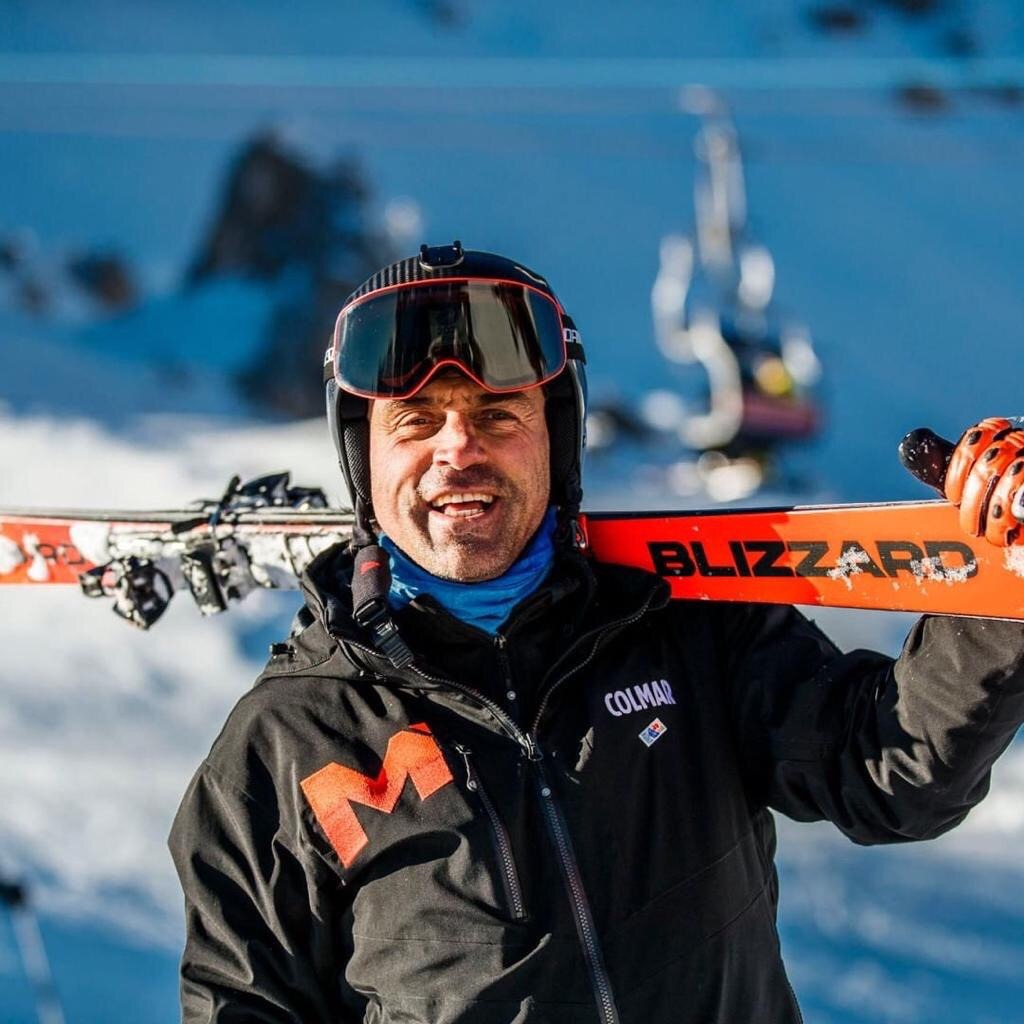
Kristian Ghedina, a name synonymous with speed and skiing excellence, was born on November 20, 1969, in Cortina d’Ampezzo, Italy. This picturesque town, nestled in the Dolomite Mountains, is known for its world-class ski resorts and is where Ghedina’s journey into the world of competitive skiing began. His life and career are a fascinating blend of triumphs, setbacks, and an undying passion for speed, both on snow and asphalt.
Early Life and Introduction to Skiing
Kristian Ghedina grew up in an environment where skiing was as natural as walking. From a young age, he was exposed to the snowy slopes of Cortina d’Ampezzo, practically learning to ski before he could even walk. His early years were marked by a deep connection with the mountains and a profound love for skiing. The slopes of the Tofane, which he later came to dominate, were his playground.
As he honed his skills, it became evident that Ghedina was not just another skier; he was destined for greatness. His innate talent, combined with the rigorous training he underwent, set the stage for a remarkable career in alpine skiing.
Rise to Fame: The 1990s and Early Successes
Ghedina’s rise to fame in the world of skiing began in earnest during the 1990-91 season. It was during this period that he first tasted success on the international stage. His breakthrough came in the Val Gardena, where he secured his first podium finish. This victory was a sign of things to come, as Ghedina would go on to dominate the world of downhill skiing for years to come.
The 1990-91 season also saw him secure memorable victories on the Tofane slopes, a place he knew intimately. His success in Sweden at Are further cemented his status as one of the top downhill skiers of his time. However, his ascent was not without its challenges. Midway through the season, Ghedina suffered a significant injury that forced him to miss several crucial races, effectively ending his bid for the World Cup title that year.
Despite this setback, Ghedina’s reputation as a formidable downhill skier continued to grow. His fearless approach to skiing, combined with his ability to navigate the most challenging courses, made him a favorite among fans and a respected competitor among his peers.
The 1993 Car Accident: A Life-Altering Moment
In 1993, Ghedina’s life took a dramatic turn when he was involved in a serious car accident. The incident left him unable to compete for an extended period, casting doubt on his future in skiing. For an athlete whose life was defined by speed and precision, being confined to a hospital bed was a harsh reality to face.
During his recovery, Ghedina remained determined to return to the slopes. His resilience and unyielding spirit were on full display as he worked tirelessly to regain his strength and skills. By 1995, he was back on the World Cup circuit, defying the odds and proving that he still had what it took to compete at the highest level.
His return was nothing short of triumphant. In Wengen, Ghedina secured a victory that reaffirmed his place among the elite of downhill skiing. His comeback was a testament to his mental and physical fortitude, qualities that would define his career.
The Peak of His Career: 1995-1998
The mid to late 1990s marked the peak of Ghedina’s skiing career. He continued to rack up victories, with some of the most notable coming in this period. One of his most significant achievements was conquering the Streif at Kitzbühel in 1998, a course considered one of the most challenging in the world. Winning on this legendary course solidified Ghedina’s status as one of the greats in downhill skiing.
Throughout his career, Ghedina was known for his remarkable ability to reduce friction on the snow, a skill that set him apart from his competitors. His preference for soft snow and wide turns allowed him to excel on courses that others found challenging. However, his career was also marked by a persistent struggle with poor visibility, a fear that had its roots in the 1993 car accident. This issue often affected his performance, particularly in races held in adverse weather conditions.
Despite these challenges, Ghedina continued to compete at the highest level, earning numerous victories and accolades. His rivalry with other top skiers of the time, such as Luc Alphand and Hermann Maier, provided some of the most exciting moments in the sport’s history.
Later Career and Transition to Coaching
As the new millennium dawned, Ghedina’s career began to slow down. Injuries and the toll of years of high-speed competition started to catch up with him. However, he was not ready to hang up his skis just yet. In 2002, after a series of disappointing seasons, Ghedina managed to stage another comeback, winning the Super-G at the Italian Championships in Piancavallo. This victory was his ninth national title and a fitting bookend to his illustrious skiing career.
In the 2005-2006 season, Ghedina made history by becoming the oldest athlete to compete in the Alpine Skiing World Cup. His longevity in the sport was a testament to his enduring passion and dedication. That same season, he briefly held the record as the oldest skier to podium in a World Cup event.
Finally, in April 2006, Ghedina announced his retirement from competitive skiing. However, his love for speed did not wane. He transitioned into the world of motorsports, competing in the Italian Superturismo Championship and the F3000 International Masters. Ghedina also participated in the Porsche Supercup, showcasing his versatility as an athlete.
His foray into motorsports was a natural extension of his need for speed, a trait that had defined his skiing career. Although he eventually retired from racing in 2011, Ghedina remained active in the world of sports, taking on coaching roles and mentoring the next generation of skiers.
Legacy and Life Beyond Competition
Kristian Ghedina’s legacy in the world of skiing is undeniable. He remains one of the most successful and respected downhill skiers of all time. His career was marked by 13 World Cup victories, including 12 in downhill and one in Super-G. His ability to overcome adversity, from severe injuries to challenging course conditions, is a testament to his character and determination.
In his post-competition years, Ghedina has continued to contribute to the sport. He has worked as a coach, helping to train and develop young skiers, including the Croatian champion Ivica Kostelić. His knowledge and experience have made him a valuable asset in the world of alpine skiing.
In 2014, Ghedina founded a ski school in Cortina d’Ampezzo, further cementing his ties to his hometown and the sport that made him famous. His school has become a hub for aspiring skiers, providing them with the skills and training needed to succeed in competitive skiing.
In 2021, Ghedina was named an ambassador for the Winter Olympics, which were held in Cortina d’Ampezzo. This role was a fitting recognition of his contributions to the sport and his enduring connection to the region.
Conclusion: The Legacy of a Speed Legend
Kristian Ghedina’s life and career are a testament to the power of passion, perseverance, and resilience. From his early days on the slopes of Cortina d’Ampezzo to his triumphant return after a life-threatening accident, Ghedina has shown that true champions are defined not just by their victories but by their ability to overcome obstacles.
His legacy in the world of skiing is secure, but perhaps even more importantly, Ghedina has left a lasting impact on the sport through his coaching and mentorship. As the founder of a ski school and an ambassador for the Winter Olympics, he continues to inspire and influence the next generation of skiers.
In the end, Kristian Ghedina is more than just a name in the annals of skiing history; he is a symbol of speed, determination, and the relentless pursuit of excellence. His story is one that will continue to inspire both athletes and fans for generations to come.


