
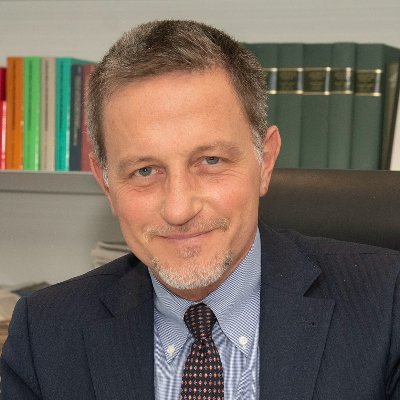
Massimo Giannini is a prominent Italian journalist, author, and television host who has played a significant role in shaping public discourse in Italy. Born on February 6, 1962, in Rome, Giannini’s career spans several decades, during which he has become one of the most respected voices in Italian media. His journey from a young law graduate to the director of one of Italy’s leading newspapers is a testament to his dedication, intellect, and influence in the fields of journalism and broadcasting.
Early Life and Education
Massimo Giannini was born and raised in Rome, a city known for its rich history and vibrant cultural scene. After completing his secondary education, Giannini pursued a degree in Law, a choice that reflects his deep interest in societal structures and governance. However, despite his academic background in law, Giannini was drawn to journalism, where he believed he could make a more immediate impact on society.
In 1986, Giannini began his career in journalism by joining the editorial team of “Il Sole 24 Ore,” a leading Italian financial newspaper. This early experience provided him with a strong foundation in economic and financial reporting, areas that would remain central to his work throughout his career.
Rise to Prominence at La Repubblica
Two years after starting his career, in 1988, Giannini moved to “La Repubblica,” one of Italy’s most influential newspapers. His talent for incisive analysis and his deep understanding of economic matters quickly set him apart, and by 1994, he was appointed as the head of the economic desk at the newspaper. This position allowed Giannini to delve into complex economic issues, providing readers with clear and insightful explanations of the financial events shaping Italy and the world.
Giannini’s reputation continued to grow, and in 1995, he briefly left “La Repubblica” to work at “La Stampa,” another major Italian newspaper, where he served as a correspondent and columnist. His time at “La Stampa” further honed his skills as a writer and analyst, and in 1998, he returned to “La Repubblica,” this time as the head of the political desk. In this role, Giannini was at the forefront of covering Italy’s turbulent political landscape, offering readers not just news, but also context and analysis that helped them understand the broader implications of political developments.
Becoming a Public Figure: Books and Television
In the early 2000s, Massimo Giannini expanded his influence beyond the pages of newspapers. In 2004, he was promoted to deputy editor of “La Repubblica,” a role that put him in charge of much of the newspaper’s content. Around this time, Giannini also began writing books, further establishing himself as a thought leader on economic and political issues.
His first book, “Ciampi: Sette anni di un tecnico al Quirinale,” published in 2006, focused on the presidency of Carlo Azeglio Ciampi, a pivotal figure in Italian politics. The book was well-received and demonstrated Giannini’s ability to translate complex political and economic issues into accessible narratives for a broad audience.
In 2007, Giannini took on the role of director for “Affari e Finanza,” the Monday supplement of “La Repubblica,” dedicated to business and finance. The following year, he published “Lo Statista. Il ventennio berlusconiano tra fascismo e populismo,” a critical examination of the twenty-year period during which Silvio Berlusconi dominated Italian politics. This book underscored Giannini’s position as a sharp critic of populist movements and his concern for the preservation of democratic institutions.
Giannini’s expertise and eloquence soon made him a sought-after commentator on television. He began appearing regularly on political talk shows, such as “Omnibus” on La7 and “Ballarò” on Rai Tre. His presence on television brought him into the homes of millions of Italians, solidifying his status as a public intellectual and a trusted voice in Italian journalism.
Hosting “Ballarò” and Television Controversies
In 2014, Massimo Giannini made a significant career move by becoming the host of “Ballarò,” one of Italy’s most-watched political talk shows. The show, which aired on Rai Tre, had been a staple of Italian political discourse for years, and Giannini’s appointment as host was a major milestone in his career. His role as the host of “Ballarò” required him to navigate the often treacherous waters of Italian politics, balancing the need to provide sharp commentary with the demands of maintaining a fair and balanced discussion.
However, Giannini’s tenure at “Ballarò” was not without controversy. His appointment sparked criticism from the Usigrai, the union of RAI journalists, who objected to the hiring of an external journalist rather than promoting one of the many in-house journalists. Despite these challenges, Giannini brought a new energy to the show, tackling pressing political issues with his characteristic incisiveness.
Unfortunately, his time at “Ballarò” was cut short in 2016 when the new director of Rai Tre, Daria Bignardi, decided to replace the show with a new program, “Politics,” hosted by Gianluca Semprini. This decision marked the end of Giannini’s role as a television host, but his influence in Italian media remained undiminished.
Return to Print Media: Director of La Stampa
After leaving “Ballarò,” Massimo Giannini continued to be a prominent figure in Italian journalism. In 2020, he was appointed as the director of “La Stampa,” one of Italy’s oldest and most respected newspapers. His appointment came at a critical time, as the world grappled with the COVID-19 pandemic and its far-reaching consequences.
As the director of “La Stampa,” Giannini faced the challenge of guiding the newspaper through one of the most turbulent periods in recent history. Under his leadership, “La Stampa” has continued to provide in-depth coverage of national and international events, offering readers not just news, but also thoughtful analysis and context. Giannini’s editorial vision has been instrumental in maintaining the newspaper’s reputation for excellence in journalism.
Contributions to Radio and Ongoing Influence
In addition to his work in print and television, Massimo Giannini has also made significant contributions to radio. From 2017 to 2020, he hosted two programs on Radio Capital: “Circo Massimo” and “Punto Massimo.” These programs allowed Giannini to reach a different audience, engaging listeners with his insights on politics, economics, and current events.
Giannini’s ability to adapt to different media formats—print, television, and radio—demonstrates his versatility as a journalist and commentator. Whether writing a newspaper editorial, hosting a television show, or discussing the issues of the day on the radio, Giannini has consistently provided valuable perspectives on the most important topics facing Italy and the world.
Personal Life and Legacy
Massimo Giannini has managed to maintain a relatively private personal life, even as his professional achievements have made him a public figure. He is known for his dedication to his work, often spending long hours in the newsroom or the studio to ensure that his reporting is accurate, insightful, and impactful.
Giannini’s legacy as a journalist is built on his commitment to truth and his ability to explain complex issues in a way that is both accessible and engaging. He has played a crucial role in shaping public understanding of economic and political issues in Italy, and his work continues to influence the national conversation.
As Giannini continues his career, he remains a key figure in Italian journalism. His work at “La Stampa,” his contributions to radio and television, and his published books all reflect his deep understanding of the challenges facing Italy and the world. Through his reporting and commentary, Giannini has helped to inform and educate generations of Italians, making him one of the most important journalists of his time.
In a media landscape that is constantly evolving, Massimo Giannini’s voice remains a steady and reliable source of information and analysis. His ability to adapt to new challenges and his unwavering commitment to journalistic integrity ensure that he will continue to be a significant figure in Italian media for years to come.


