
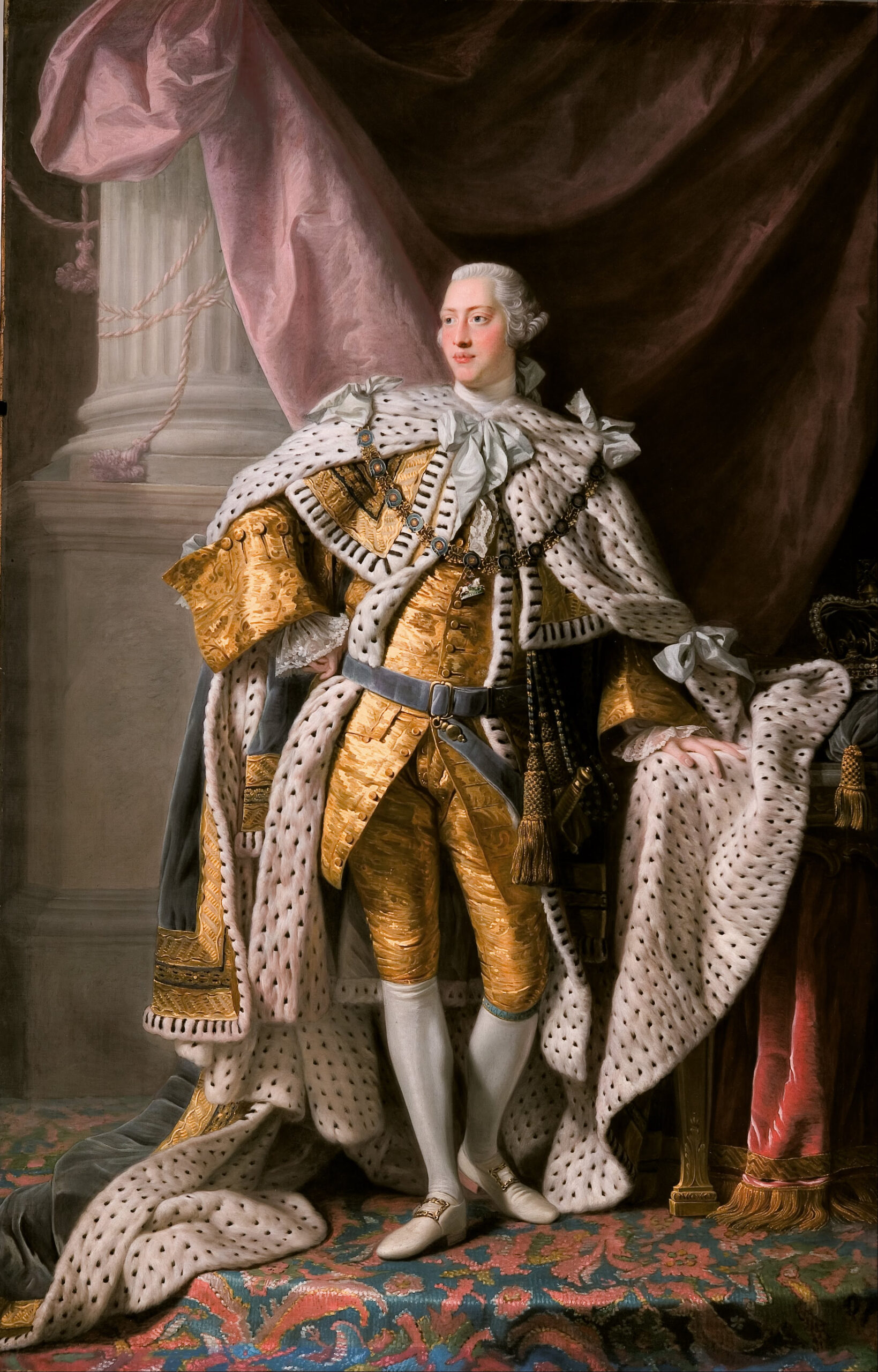
King George III, born on June 4, 1738, in London, is one of the most notable monarchs in British history. Ascending to the throne at the young age of 22, he reigned as the King of Great Britain and Ireland from 1760 until his death in 1820. His reign, spanning six decades, was marked by significant events that shaped both the British Empire and the world. This article delves into the life of George III, exploring his age at various milestones, his rise to fame, and the key highlights of his reign.
Early Life and Ascension to the Throne
George William Frederick was born to Frederick, Prince of Wales, and Princess Augusta of Saxe-Gotha. He was the grandson of King George II, under whose reign the foundations of the British Empire were significantly expanded. George III’s early life was shaped by a strict and demanding upbringing, heavily influenced by his mother, Princess Augusta. She instilled in him a strong sense of duty and responsibility, which would later define his approach to kingship.
In 1760, at the age of 22, George III ascended to the throne following the death of his grandfather, King George II. His coronation took place on September 22, 1761, marking the beginning of a long and tumultuous reign. Unlike his predecessors, George III was born in England and was the first of the Hanoverian line to speak English as his first language, which endeared him to the British public.
A Reign Marked by Conflict and Reform
George III’s reign is often characterized by the intense political and military conflicts that defined the 18th century. One of the most significant challenges he faced was the American Revolution. The colonies’ insurrection, which began in 1775, was a direct result of mounting tensions over British taxation and governance. Despite advice from prominent figures like William Pitt the Elder and Edmund Burke, who advocated for moderation, George III was determined to maintain British authority over the colonies. His refusal to compromise led to the eventual secession of the thirteen American colonies, formalized by the Treaty of Paris in 1783.
The loss of the American colonies was a devastating blow to British prestige and a turning point in George III’s reign. It marked the beginning of a shift in the British political system, where the power of the monarchy began to wane in favor of a more autonomous parliamentary government. Despite this, George III continued to exert significant influence over British politics, particularly in matters of foreign policy and religious affairs.
The Mental Health of King George III
One of the most intriguing aspects of George III’s life was his struggle with mental illness. Throughout his reign, the King experienced episodes of severe mental instability, which historians now believe were symptoms of a condition known as porphyria. These episodes became more frequent as he aged, leading to periods where he was unable to fulfill his royal duties. By 1811, his condition had deteriorated to the point where his son, the future George IV, was appointed Prince Regent to rule in his stead.
In 2005, a study conducted by the University of Kent revealed that George III’s mental health issues were likely exacerbated by arsenic poisoning. The analysis of the King’s hair samples indicated high levels of arsenic, which was commonly found in medications of the time. This discovery added a new layer of complexity to the historical understanding of George III’s mental health, suggesting that his illness may have been partly iatrogenic, or caused by the medical treatments he received.
George III’s Legacy: An Intransigent Monarch
Despite the challenges he faced, George III remained a popular figure in Britain, particularly during the later years of his reign. His steadfast opposition to revolutionary France endeared him to a British public wary of the radical changes sweeping across Europe. Domestically, he was known for his strong stance against the emancipation of Catholics, a position that resonated with the Protestant majority in Britain.
However, his intransigence also had its downsides. His refusal to grant greater autonomy to Ireland and his opposition to political reforms in Britain contributed to growing unrest and dissatisfaction. These issues would continue to plague the British monarchy and government long after his death.
George III’s reign also saw the continuation of the process that would lead to the industrial revolution in Britain, with significant advancements in agriculture, manufacturing, and trade. His support for agricultural innovations and the improvement of British infrastructure played a crucial role in the economic transformation of the country during the late 18th and early 19th centuries.
The Final Years and Death of King George III
By the early 19th century, George III’s health had deteriorated to the point where he was no longer able to govern. The last years of his life were marked by increasing blindness and deafness, as well as continued mental decline. He spent his final years in seclusion at Windsor Castle, where he passed away on January 29, 1820, at the age of 81.
George III was succeeded by his son, George IV, whose reign would be marked by a continuation of the challenges that had defined his father’s rule, including ongoing conflicts in Europe and demands for political reform at home.
Historical Context and Nuances
To fully appreciate the reign of George III, it is essential to consider the broader historical context in which he lived. The 18th century was a period of significant change and upheaval in Britain and beyond. The expansion of the British Empire, the rise of industrialization, and the challenges posed by the American and French Revolutions all had a profound impact on George III’s reign.
George III’s approach to governance was heavily influenced by his belief in the divine right of kings, a concept that had been central to British monarchy since the Tudor period. However, by the time George III ascended the throne, this belief was increasingly at odds with the growing power of Parliament and the emerging idea of constitutional monarchy. His efforts to maintain royal authority in the face of these changes often put him at odds with his ministers and Parliament, leading to political tensions that would define much of his reign.
Moreover, George III’s personal life and health played a significant role in shaping his legacy. His struggle with mental illness, coupled with the pressures of ruling during a time of great change, contributed to a complex and often contradictory image. While he was revered for his personal virtues and commitment to duty, his political decisions, particularly regarding the American colonies, have been the subject of much debate and criticism.
Conclusion: The Enduring Legacy of King George III
King George III’s reign was one of the most eventful and consequential in British history. His life was marked by triumphs and tragedies, from the heights of imperial power to the depths of personal suffering. While his determination to uphold British authority led to the loss of the American colonies, his reign also saw the foundations laid for Britain’s eventual emergence as a global superpower in the 19th century.
Today, George III is remembered as a complex and multifaceted monarch, whose legacy continues to be studied and debated by historians. His life offers valuable insights into the challenges of leadership during a time of profound change, and his story remains a testament to the enduring impact of individual rulers on the course of history.


