
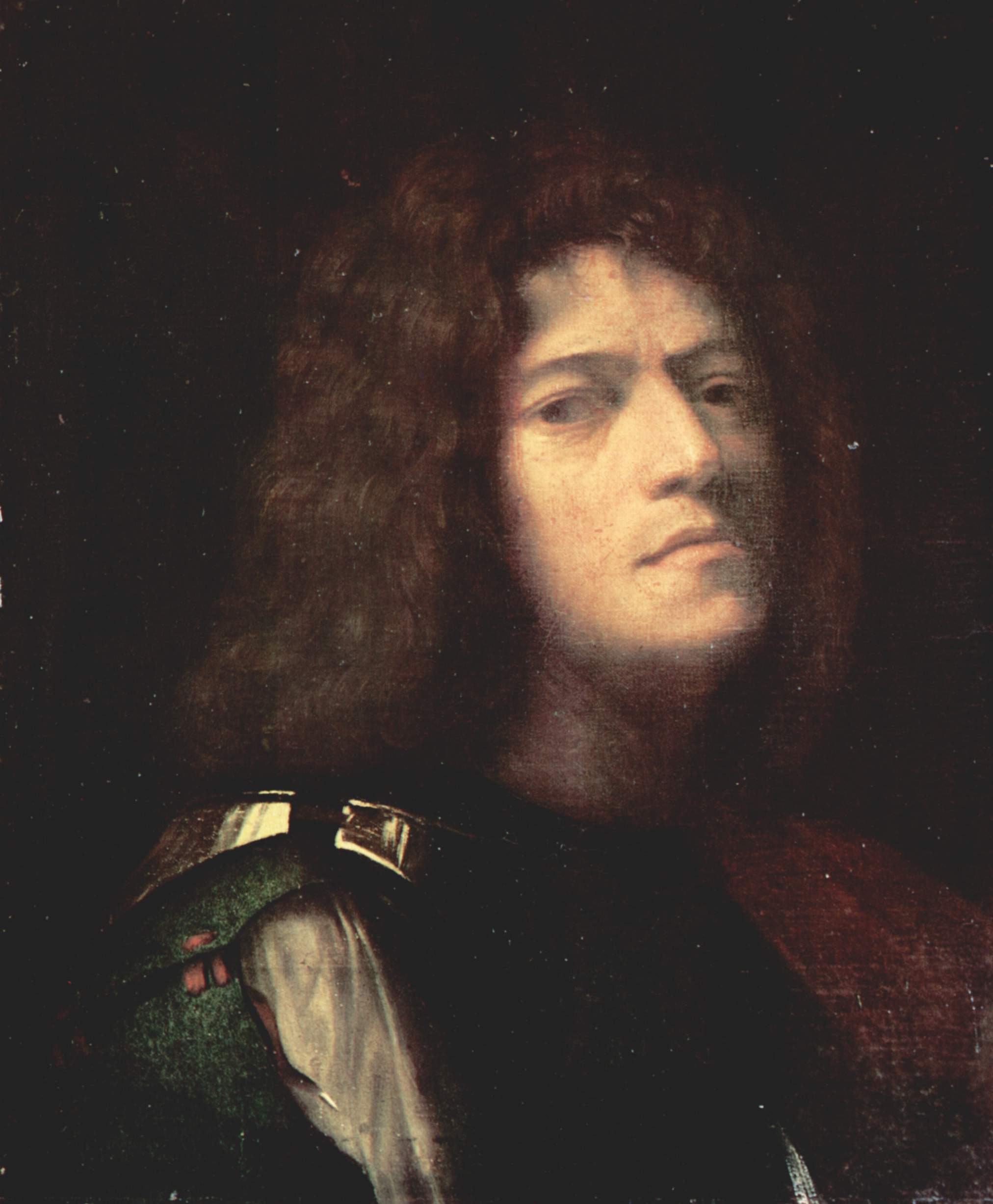
Giorgione, likely a pseudonym for Giorgio or Zorzo da Castelfranco, was born in Castelfranco Veneto, probably in 1478. As one of the most enigmatic figures in the Italian Renaissance, Giorgione’s life and works remain shrouded in mystery, largely due to the fact that he seldom signed his paintings. Despite this, he is celebrated as a pioneering artist who played a crucial role in advancing Venetian painting towards modernity, particularly through his innovative use of color and atmospheric landscapes. This article delves into the age, fame, and life highlights of Giorgione, offering detailed insights into his contributions to art and the historical context in which he lived.
Early Life and Artistic Beginnings
Giorgione was born during a time of great artistic flourishing in Italy, yet little is known about his early life and formative years. His birthplace, Castelfranco Veneto, is a small town in the Veneto region, situated between Venice and the Alps. The details of his early training are also unclear, but it is widely believed that he studied under Giovanni Bellini, one of the leading painters of the Venetian School. This connection to Bellini, a master of color and composition, would have a profound influence on Giorgione’s artistic development.
The influence of Leonardo da Vinci, who visited Venice during Giorgione’s formative years, also played a significant role in shaping his artistic vision. Leonardo’s emphasis on the naturalistic portrayal of light and shadow, as well as his innovative compositions, resonated with Giorgione, who would go on to incorporate these elements into his own work. It is during this period that Giorgione began to develop his signature style, characterized by a deep sensitivity to nature, a subtle use of color, and an ethereal, almost dreamlike quality.
The Rise to Fame in Venice
Giorgione’s move to Venice marked the beginning of his brief but impactful career as a painter. In the vibrant cultural atmosphere of the Serenissima, Giorgione quickly established himself as one of the leading artists of his time. He was highly sought after by the Venetian nobility, who were captivated by his innovative approach to painting. Unlike many of his contemporaries, who focused on religious themes and grand narratives, Giorgione’s work often explored more personal and intimate subjects, infused with symbolism and ambiguity.
One of his earliest known works, the “Judith with the Head of Holofernes” (c. 1504), showcases his mastery of oil painting and his ability to convey complex emotions through subtle expressions and gestures. This painting, which depicts the biblical heroine Judith holding the severed head of the Assyrian general Holofernes, was groundbreaking in its depiction of a female protagonist with such intensity and power. The work marked Giorgione’s arrival on the Venetian art scene and set the tone for his subsequent masterpieces.
Iconic Works and Artistic Innovation
Giorgione’s oeuvre, though relatively small due to his untimely death, is rich with innovation and artistry. His most famous painting, “The Tempest” (c. 1508), is a prime example of his revolutionary approach to composition and subject matter. This enigmatic work, which depicts a soldier and a nursing woman set against a turbulent landscape, defies easy interpretation. The lack of a clear narrative and the mysterious atmosphere have led to endless speculation among art historians, making “The Tempest” one of the most studied and debated paintings in art history.
Another significant work attributed to Giorgione is the “Sleeping Venus” (c. 1510), which is often regarded as the first major depiction of the reclining nude in Western art. This painting not only influenced later artists like Titian, who completed the work after Giorgione’s death, but also set a new standard for the portrayal of the human body in art. The soft, sensuous forms and the harmonious integration of the figure with the landscape exemplify Giorgione’s skill in creating compositions that are both serene and deeply evocative.
Giorgione’s ability to infuse his works with a sense of mystery and emotional depth is also evident in “The Three Philosophers” (c. 1508-1509). This painting, which depicts three figures in contemplation against a backdrop of a dark cave and a glowing landscape, has been interpreted in various ways, ranging from an allegory of the three ages of man to a depiction of the Magi. The work’s ambiguous symbolism and rich, vibrant colors reflect Giorgione’s unique ability to blend the intellectual with the sensuous, creating art that transcends conventional categories.
The Influence of Humanism and Renaissance Thought
Giorgione’s work was deeply influenced by the intellectual currents of the Renaissance, particularly the ideas of humanism and the rediscovery of classical antiquity. As an artist, Giorgione was immersed in the cultural and philosophical environment of Venice, where the exchange of ideas between scholars, poets, and artists was a daily occurrence. This intellectual milieu is reflected in the symbolic complexity and philosophical depth of his paintings.
One of the hallmarks of Giorgione’s style is his use of landscape not merely as a backdrop, but as an integral component of the narrative and emotional content of his works. This approach was revolutionary at a time when landscapes were often treated as secondary to the human figures in a painting. In works like “The Tempest” and “The Three Philosophers,” the landscape becomes a living, breathing entity that interacts with the figures, creating a dialogue between man and nature that is both subtle and profound.
Giorgione’s interest in humanism is also evident in his portrayal of the human figure, which is characterized by a deep sensitivity to emotion and psychology. His figures are not idealized in the classical sense, but rather depicted with a naturalism that captures their inner life and complexity. This focus on the individual and the subjective experience was a significant departure from the more rigid and hierarchical compositions of earlier Renaissance art, and it paved the way for the development of a more personal and expressive style in Venetian painting.
The Enigma of Giorgione’s Identity and Legacy
Despite his significant contributions to the art of the Renaissance, much about Giorgione’s life remains a mystery. He seldom signed his works, and many of the paintings attributed to him have been the subject of debate among art historians. This lack of documentation, combined with his early death during the plague in 1510, has contributed to the aura of mystery that surrounds his life and work.
The exact circumstances of his death are also unclear, though it is widely believed that he succumbed to the plague that ravaged Venice in the early 16th century. He was likely in his early thirties at the time of his death, cutting short a career that, even in its brevity, left an indelible mark on the history of art.
Giorgione’s influence extended far beyond his lifetime. His innovative use of color, light, and composition profoundly impacted his contemporaries and successors, most notably Titian, who is believed to have completed some of Giorgione’s unfinished works. The transition from the High Renaissance to the Mannerist style in Venice can be traced in part to Giorgione’s pioneering approach, which emphasized mood, atmosphere, and the emotional resonance of color over linear perspective and anatomical precision.
The Legacy of Giorgione in Art History
Giorgione’s legacy in art history is one of innovation and mystery. His works, though few in number, are regarded as some of the most important achievements of the Venetian Renaissance. The challenges of attributing works to Giorgione have only added to his mystique, as art historians continue to debate the authorship of certain paintings and the interpretation of his enigmatic compositions.
His pioneering use of atmospheric landscapes and his focus on the psychological depth of his subjects influenced a generation of Venetian painters, including Titian, Sebastiano del Piombo, and Lorenzo Lotto. These artists built upon Giorgione’s innovations, further developing the expressive potential of color and light in their own works.
In the broader context of Renaissance art, Giorgione is often compared to Leonardo da Vinci for his ability to convey complex emotions and ideas through subtle details and compositions. Like Leonardo, Giorgione was interested in the interplay between light and shadow, and in the ways that color could be used to evoke mood and meaning. However, while Leonardo’s influence was felt primarily in Florence and Milan, Giorgione’s impact was most deeply felt in Venice, where his style helped to define the unique character of Venetian painting in the early 16th century.
Conclusion: The Enduring Impact of Giorgione
Giorgione remains one of the most enigmatic and influential figures in the history of art. His innovative use of color, light, and composition, combined with his ability to infuse his works with a sense of mystery and emotional depth, set him apart as a true master of the Venetian Renaissance. Despite the challenges of attributing and interpreting his works, Giorgione’s legacy endures, continuing to inspire and captivate artists, scholars, and art lovers around the world.
His paintings, though few in number, have had a lasting impact on the development of Western art, particularly in the realm of landscape painting and the portrayal of the human figure. Giorgione’s ability to blend the intellectual with the sensual, and the real with the imagined, has made him a central figure in the history of art, one whose works continue to be studied and admired for their beauty, complexity, and innovation.
In the end, Giorgione’s art invites us to look beyond the surface, to explore the deeper meanings and emotions that lie beneath. His paintings are not just visual images, but rich, layered compositions that speak to the complexity of human experience and the enduring power of art to capture the essence of life.


