
Introduction
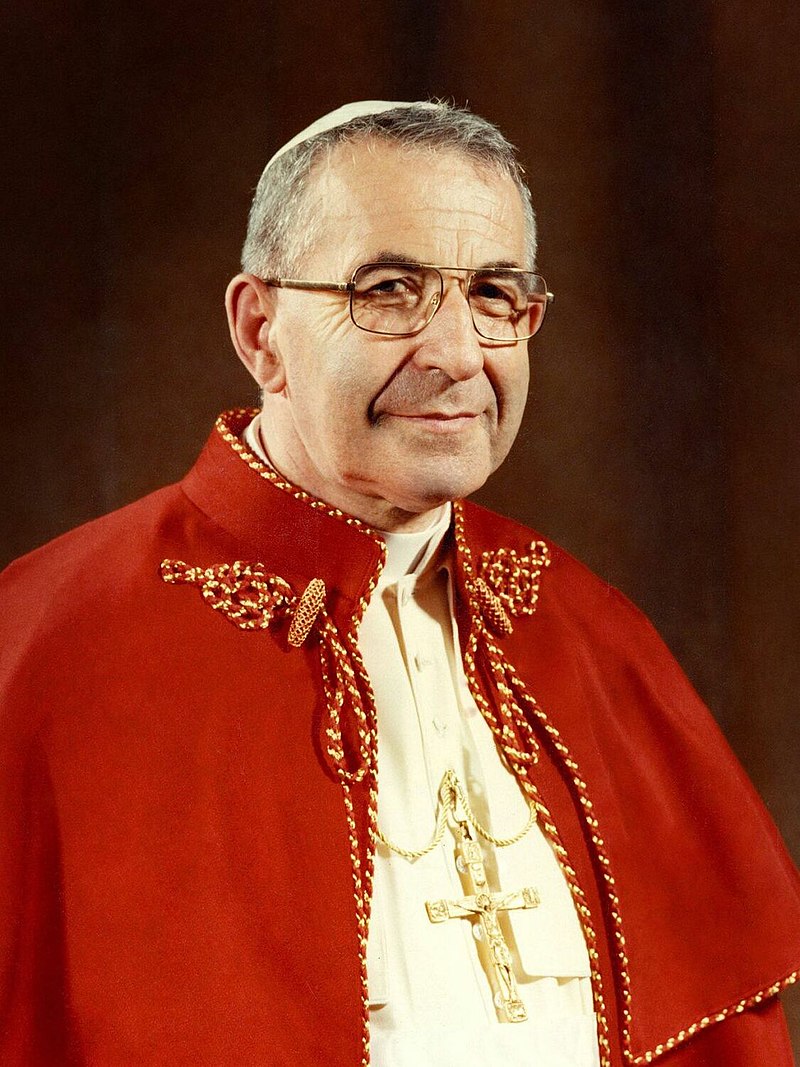
Giovanni Paolo I, born Albino Luciani on October 17, 1912, in Canale d’Agordo, a small village in the province of Belluno, Italy, is one of the most unique figures in the history of the Catholic Church. His papacy, although brief—lasting only 34 days—left an indelible mark on the Church and the world. Often referred to as the “Smiling Pope,” Giovanni Paolo I’s life and career were characterized by humility, simplicity, and a deep commitment to pastoral care. This article delves into the life of Giovanni Paolo I, his rise to prominence, the historical context of his short but impactful papacy, and the legacy he left behind.
Early Life and Background
Albino Luciani was born into a humble, working-class family. His father was a glassblower in Murano, known for its exquisite glassworks, while his mother was a homemaker. Growing up in a family with modest means, Luciani’s early life was marked by a deep understanding of the struggles faced by the working class, an experience that would later influence his pastoral approach as a priest and bishop.
From a young age, Luciani was deeply religious. He felt a calling to the priesthood early in life, a path he pursued with dedication. After completing his primary education, Luciani entered the seminary in Belluno, where he studied theology. He was ordained a priest on July 7, 1935, at the age of 22. This marked the beginning of a long and distinguished career in the Church, characterized by a profound commitment to education, pastoral care, and theological study.
Rise to Prominence in the Catholic Church
After his ordination, Albino Luciani quickly established himself as a respected theologian and educator. From 1937 to 1958, he served as a professor of theology at the Gregorian Seminary in Belluno. During this time, he became known for his clear, accessible teaching style and his ability to connect complex theological concepts with the everyday lives of his students.
In 1954, Luciani was appointed Vicar General of the Diocese of Belluno, a role that expanded his influence within the Church. His pastoral work, characterized by a deep concern for the spiritual and material well-being of his parishioners, earned him a reputation as a compassionate and effective leader. This reputation caught the attention of Pope John XXIII, who in 1958 appointed Luciani as the Bishop of Vittorio Veneto.
As Bishop of Vittorio Veneto, Luciani was known for his humility and his commitment to the poor. He often spoke out against social injustices and worked tirelessly to improve the lives of those in his diocese. His leadership during the difficult years of the Second Vatican Council (1962-1965) was particularly noteworthy. Luciani embraced the Council’s reforms, which sought to modernize the Church and make it more accessible to the laity. His support for these changes, coupled with his pastoral sensibility, further elevated his standing within the Catholic hierarchy.
In 1969, Pope Paul VI appointed Luciani as the Patriarch of Venice, one of the most prestigious positions in the Italian Church. As Patriarch, Luciani continued to advocate for social justice and the implementation of the reforms of Vatican II. He was made a Cardinal in 1973, further solidifying his influence within the Church.
The Historic Election of Giovanni Paolo I
The death of Pope Paul VI in August 1978 triggered a conclave that would become one of the most significant in modern Church history. The Church was at a crossroads, with various factions within the College of Cardinals advocating for different visions of the Church’s future. There were three main groups: the conservative faction, the progressive faction, and the “internationalist” faction, which sought to elect a pope with a global perspective. The latter was represented by figures such as Cardinal Karol Wojtyla, who would later become Pope John Paul II.
In this complex and divided environment, Albino Luciani emerged as a compromise candidate. He was seen as a unifying figure who could bridge the gap between the various factions. His humility, simplicity, and pastoral approach appealed to the Cardinals, and on August 26, 1978, he was elected Pope. He took the name Giovanni Paolo I, in honor of his two immediate predecessors, Pope John XXIII and Pope Paul VI, signaling his commitment to continuing their work.
Giovanni Paolo I’s Papacy: A Brief but Impactful Reign
Giovanni Paolo I’s papacy was the shortest of the 20th century, lasting only 34 days. Despite its brevity, his time as pope was marked by significant gestures and reforms that hinted at the potential for substantial change had he lived longer.
1. The First Pope with a Double Name
One of the first things Giovanni Paolo I did as pope was to take a double name, a historic first in the history of the papacy. By choosing the names Giovanni (John) and Paolo (Paul), he paid tribute to his two predecessors—Pope John XXIII, who had initiated the Second Vatican Council, and Pope Paul VI, who had seen it through to completion. This choice of name reflected his intention to continue the work of the Council and to guide the Church with the same spirit of renewal and openness.
2. Abandoning the Papal Coronation
Giovanni Paolo I also made headlines by deciding to forgo the traditional papal coronation. Instead of the elaborate coronation ceremony, he opted for a simpler inauguration Mass. This decision was in line with his humble nature and his desire to emphasize the pastoral mission of the pope rather than the grandeur of the papal office. This move was seen as a symbolic step toward a more accessible and less hierarchical Church.
3. Speaking in the First Person
Another significant change introduced by Giovanni Paolo I was his use of the first person when referring to himself, rather than the traditional royal “we.” This seemingly small linguistic shift had profound implications. It reinforced his image as a humble, approachable leader, closer to the people he served. This change in tone was well received by the faithful and is still remembered as a hallmark of his short pontificate.
4. Addressing Controversial Issues
Despite the brevity of his reign, Giovanni Paolo I did not shy away from addressing some of the most pressing issues facing the Church. One of the most notable was his willingness to discuss the use of contraceptives—a highly contentious issue at the time. His comments on this subject were considered by some to be too lenient, and the Vatican newspaper, L’Osservatore Romano, reportedly chose not to publish them. This incident highlights the tensions within the Church over how to address modern social issues, and it suggests that Giovanni Paolo I might have pursued a more open and dialogical approach had his papacy continued.
The Mysterious Death of Giovanni Paolo I
On September 28, 1978, just 34 days after his election, Giovanni Paolo I was found dead in his bed. His sudden death shocked the world and gave rise to numerous conspiracy theories. Some speculated that he had been poisoned, while others suggested that his death was the result of foul play by factions within the Vatican or by outside forces, such as intelligence agencies. However, the official cause of death was recorded as a heart attack.
The circumstances surrounding his death have remained the subject of speculation and intrigue for decades. While there is no definitive evidence to support the more sensational theories, the mystery surrounding his death has only added to the fascination with his life and papacy.
The Legacy of Giovanni Paolo I
Despite the brevity of his papacy, Giovanni Paolo I left a lasting legacy. His emphasis on humility, simplicity, and pastoral care resonated with Catholics around the world and set a tone that would influence his successors. Pope John Paul II, who succeeded him, adopted many of the same themes in his own papacy, and Pope Francis, the current pope, has often been compared to Giovanni Paolo I for his focus on humility and service to the poor.
Giovanni Paolo I’s decision to forgo the coronation and his use of the first person in papal addresses are seen as precursors to the more informal and approachable style of leadership that has become more common in the Church today. His willingness to engage with controversial issues, even if only briefly, also set an example for future popes to follow in addressing the challenges of modernity.
In 2003, the process for his beatification began, and in 2017, Pope Francis recognized a miracle attributed to Giovanni Paolo I, moving him closer to sainthood. His life and papacy continue to be studied and celebrated for the profound, if brief, impact he had on the Catholic Church.
Conclusion: The Enduring Influence of Giovanni Paolo I
Giovanni Paolo I’s papacy may have lasted only 34 days, but its impact is still felt in the Catholic Church today. His commitment to humility, simplicity, and pastoral care, as well as his openness to addressing contemporary issues, marked a shift in the papal office that has continued with his successors. The mystery surrounding his death has only deepened the intrigue surrounding his life, making him one of the most fascinating figures in modern Church history.
As the Church continues to evolve, the legacy of Giovanni Paolo I serves as a reminder of the importance of leadership that is grounded in humility and service. His life and brief papacy remain an inspiration to Catholics around the world, and his potential canonization would only further cement his place in the history of the Church.


