
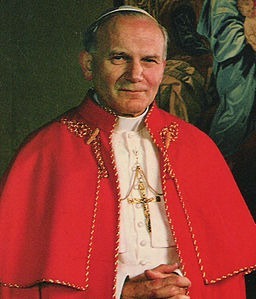
Pope John Paul II, born Karol Józef Wojtyła, was a towering figure in the 20th century and one of the most influential leaders of the Catholic Church. His life, marked by deep faith, intellectual rigor, and a profound commitment to human rights, has left an indelible mark on the world. This article delves into the life of Pope John Paul II, exploring his early years, rise to fame, and the lasting impact of his pontificate.
Early Life and Education
Karol Józef Wojtyła was born on May 18, 1920, in the small town of Wadowice, Poland, located about 50 kilometers from Krakow. He was the second of two children born to Karol Wojtyła Sr., a former army officer, and Emilia Kaczorowska, a schoolteacher. Tragedy struck early in his life, as his mother passed away when he was just nine years old, and his older brother, Edmund, died in 1932 at the age of 26.
Despite these early hardships, Wojtyła excelled in his studies. In 1938, he moved to Krakow with his father to attend the Jagiellonian University, where he studied philosophy. His academic pursuits were interrupted by the outbreak of World War II, during which he worked in a quarry and a chemical factory to avoid deportation to Germany for forced labor.
Path to the Priesthood
Wojtyła’s call to the priesthood came during the dark days of World War II. In 1942, he began studying at an underground seminary run by the Archbishop of Krakow, Cardinal Adam Stefan Sapieha. He continued his studies while participating in the clandestine “Rhapsodic Theatre,” a group dedicated to preserving Polish culture under Nazi occupation.
On November 1, 1946, Karol Wojtyła was ordained as a priest. Shortly thereafter, he traveled to Rome to further his theological education, earning a doctorate in philosophy with a thesis on the mysticism of Saint John of the Cross. Upon returning to Poland in 1948, he served as a parish priest in various locations while also continuing his academic career.
Rise Through the Church Hierarchy
Wojtyła’s intellectual prowess and dedication to his pastoral duties did not go unnoticed. In 1958, at the age of 38, he was appointed auxiliary bishop of Krakow. His leadership during the Second Vatican Council (1962-1965), where he contributed significantly to the Council’s documents on religious freedom and the role of the laity, further elevated his standing within the Church.
In 1964, Wojtyła was appointed Archbishop of Krakow, and three years later, Pope Paul VI made him a cardinal. His work in Krakow, particularly his efforts to build a church in the communist-controlled town of Nowa Huta, a symbol of resistance to the atheist regime, solidified his reputation as a champion of religious freedom.
Election as Pope
The death of Pope Paul VI in 1978 led to the election of Pope John Paul I, who tragically passed away after just 33 days in office. This unexpected event prompted a second conclave in the same year, and on October 16, 1978, Karol Wojtyła was elected as the 264th Pope of the Catholic Church, taking the name John Paul II. He was the first non-Italian pope in over 450 years, a fact that symbolized the global nature of the Church.
Pontificate: A Global Legacy
Pope John Paul II’s pontificate, which lasted for nearly 27 years, was one of the longest in history and marked by significant contributions to both the Church and the world at large.
1. Apostolic Travels: A Pilgrim Pope
One of the defining characteristics of John Paul II’s papacy was his extensive travels. He visited 129 countries during his pontificate, more than any of his predecessors, earning him the nickname “The Pilgrim Pope.” His travels were not just symbolic; they were a manifestation of his deep commitment to engaging with people from all walks of life, regardless of their religion or culture.
These visits had profound impacts. In Poland, his 1979 visit is credited with inspiring the Solidarity movement, which played a crucial role in the eventual fall of communism in Eastern Europe. His trip to Cuba in 1998, where he met with Fidel Castro, marked a significant moment in the thawing of relations between the Catholic Church and communist states.
2. Role in the Fall of Communism
Pope John Paul II’s influence extended beyond the spiritual realm into the geopolitical arena. His unwavering support for the Solidarity movement in Poland, combined with his calls for human rights and freedom, made him a key figure in the eventual collapse of communist regimes in Eastern Europe. His moral authority and the power of his words gave strength to those who sought freedom from oppression.
3. Interfaith Dialogue
Another hallmark of John Paul II’s papacy was his commitment to interfaith dialogue. He was the first pope to visit a synagogue, doing so in Rome in 1986, and he made historic visits to Jewish and Muslim communities. His efforts to foster understanding and reconciliation among different faiths were groundbreaking and set a precedent for his successors.
4. Assassination Attempt and Forgiveness
On May 13, 1981, Pope John Paul II survived an assassination attempt in St. Peter’s Square when he was shot by Mehmet Ali Ağca, a Turkish national. Despite being gravely wounded, the Pope’s recovery was seen by many as miraculous. In a remarkable act of forgiveness, John Paul II visited Ağca in prison in 1983, where he personally forgave him. This act of mercy was emblematic of his teachings on forgiveness and reconciliation.
5. World Youth Day and the Youth Apostolate
Pope John Paul II had a special bond with the youth, which he believed were the future of the Church. In 1984, he established World Youth Day, an event that gathers millions of young Catholics from around the world to celebrate their faith. These gatherings became one of the most visible and enduring legacies of his papacy, reflecting his belief in the importance of engaging with young people.
6. Theology and Writings
John Paul II was also a prolific writer, authoring numerous encyclicals, apostolic letters, and books. His writings often addressed contemporary issues, from bioethics to social justice, and he was known for his deep philosophical insights, particularly in areas concerning the dignity of the human person and the sanctity of life.
His 1995 encyclical, Evangelium Vitae (“The Gospel of Life”), is particularly notable for its strong stance against abortion, euthanasia, and the death penalty, reinforcing the Church’s commitment to the protection of life in all its forms.
7. Health and Final Years
Despite suffering from Parkinson’s disease and other health issues in the later years of his life, John Paul II remained active in his papal duties. His visible suffering became a powerful testament to the dignity of human life and the value of suffering when united with Christ’s passion.
Legacy and Canonization
Pope John Paul II passed away on April 2, 2005, at the age of 84, after a pontificate that spanned nearly three decades. His death was mourned by millions around the world, and calls for his canonization began almost immediately.
In a historic move, his successor, Pope Benedict XVI, waived the traditional five-year waiting period and initiated the process of beatification just weeks after his death. John Paul II was beatified on May 1, 2011, and canonized as a saint by Pope Francis on April 27, 2014, alongside Pope John XXIII.
Conclusion
Pope John Paul II was a leader of unparalleled influence and a man of deep faith. His life story is one of resilience, intellect, and a tireless commitment to his mission as the Vicar of Christ. From his humble beginnings in Poland to his role as a global spiritual leader, John Paul II’s legacy continues to inspire millions. His teachings on human dignity, freedom, and the value of life remain as relevant today as they were during his lifetime. His canonization as a saint only cements his place in history as one of the most beloved and revered figures of the modern era.


