
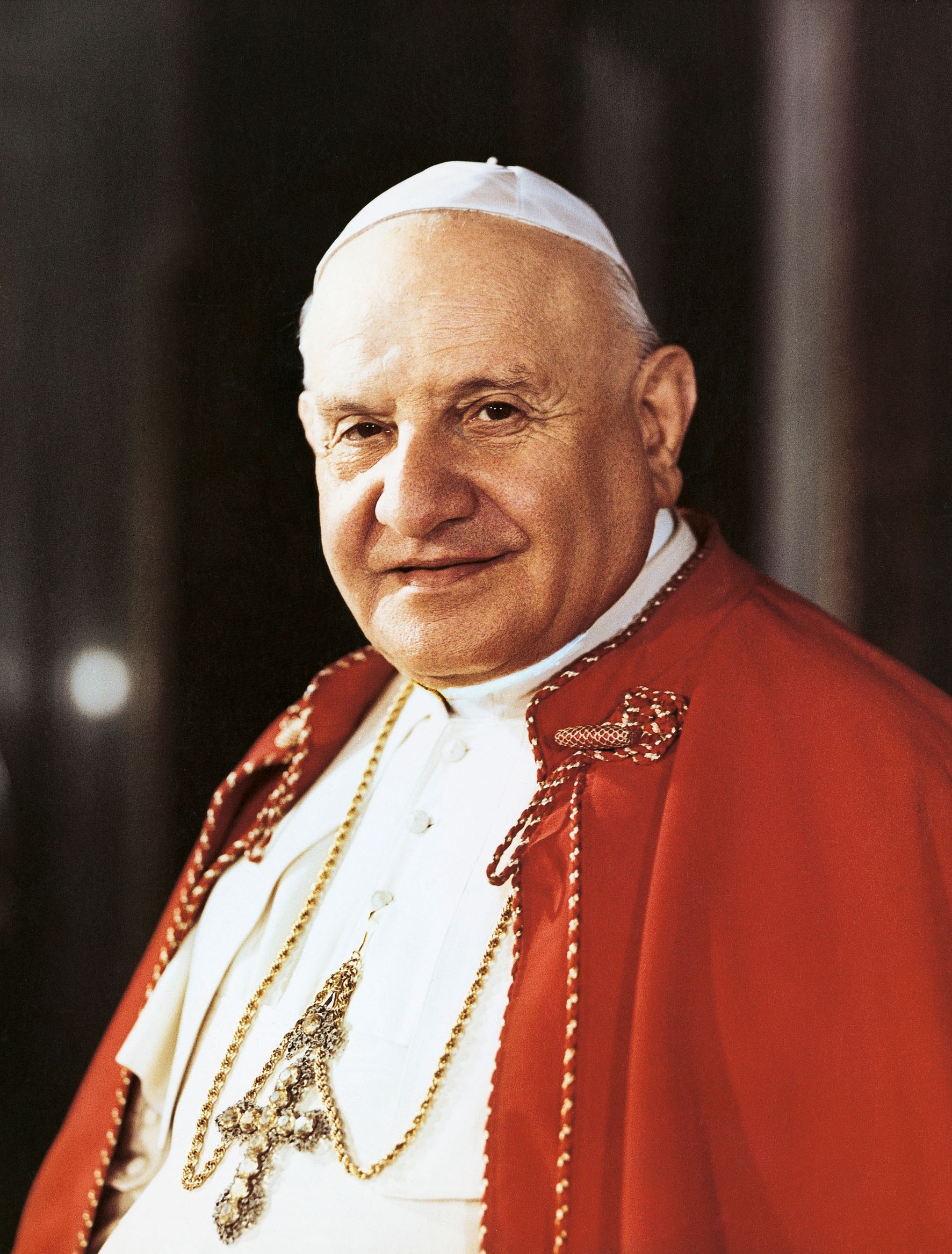
Pope John XXIII, born Angelo Giuseppe Roncalli, is remembered as one of the most transformative figures in modern Catholic history. His papacy, though brief, left a lasting impact on the Church and the world. Often referred to as “The Good Pope,” his warmth, humility, and groundbreaking initiatives, such as the Second Vatican Council, endeared him to millions. This article explores the life of Pope John XXIII, from his humble beginnings to his rise as a beloved global religious leader.
Early Life and Education
Angelo Giuseppe Roncalli was born on November 25, 1881, in the small village of Sotto il Monte, near Bergamo in northern Italy. He was the fourth of 13 children born to Giovanni Battista Roncalli and Marianna Giulia Mazzola, a family of sharecroppers. The Roncalli family lived in modest circumstances, and young Angelo was raised with strong values of faith, charity, and humility, which would profoundly influence his later life and papacy.
Despite the family’s financial challenges, Angelo was a bright and determined student. Recognizing his potential, his local parish priest and a family friend provided financial support for him to attend the seminary in Bergamo at the age of 11. His time in the seminary was formative, and he began keeping a spiritual diary, which he continued throughout his life, later published as “Journal of a Soul.”
In 1901, Angelo moved to Rome to continue his studies at the Pontifical Roman Seminary, where he excelled academically. He earned a doctorate in Sacred Theology in 1904, marking the beginning of his lifelong commitment to the Church.
Early Priesthood and Military Service
After his ordination as a priest on August 10, 1904, Father Roncalli returned to his home diocese of Bergamo. His early years in the priesthood were spent serving as a secretary to the Bishop of Bergamo, Giacomo Radini-Tedeschi, a role that deeply influenced his pastoral approach. Bishop Radini-Tedeschi was a progressive leader who was deeply involved in social issues, and his mentorship shaped Roncalli’s views on the Church’s role in addressing the needs of the poor and marginalized.
During World War I, Roncalli served as a military chaplain, ministering to wounded soldiers and those on the front lines. His experiences during the war deepened his empathy and understanding of human suffering, qualities that would later define his papacy.
Diplomatic Missions and Rise Through the Church Hierarchy
In 1921, Pope Benedict XV appointed Roncalli as the national director of the Society for the Propagation of the Faith in Italy. This position involved significant travel and engagement with the global Catholic community, broadening Roncalli’s perspective on the Church’s role in the world.
Roncalli’s diplomatic career began in earnest in 1925 when Pope Pius XI appointed him as the Apostolic Visitor to Bulgaria. He was consecrated as a bishop, adopting the motto “Oboedientia et Pax” (Obedience and Peace), which reflected his commitment to serving the Church faithfully. His time in Bulgaria was challenging, as he navigated the complex relationship between the Catholic and Orthodox communities. Nevertheless, his diplomatic skills and genuine concern for the people won him respect and admiration.
In 1935, Roncalli was appointed Apostolic Delegate to Turkey and Greece. His mission there coincided with the tumultuous years leading up to and during World War II. During this period, Roncalli was instrumental in saving thousands of Jews fleeing the Holocaust by issuing baptismal certificates and visas, actions that would later be recognized as acts of heroism.
After the war, in 1944, Pope Pius XII appointed Roncalli as the Apostolic Nuncio to France. This was a particularly sensitive assignment, as he had to navigate the aftermath of the Nazi occupation and deal with the complex political landscape of post-war France. His humility, diplomacy, and ability to build bridges between conflicting parties earned him the respect of both the French government and the Church.
Cardinal and Patriarch of Venice
In 1953, at the age of 72, Roncalli was appointed Cardinal and Patriarch of Venice. Many saw this as the culmination of a distinguished ecclesiastical career, and it was expected that he would spend the remainder of his life in this important yet relatively local role. However, his time in Venice was marked by significant pastoral activity, including efforts to engage with the broader community, which set the stage for his unexpected election to the papacy.
Election as Pope
Following the death of Pope Pius XII in 1958, the College of Cardinals convened to elect a new pope. On October 28, 1958, to the surprise of many, Cardinal Roncalli was elected as the 261st Pope of the Catholic Church, taking the name John XXIII. His election was seen by many as a choice for a “transitional” pope due to his advanced age. However, John XXIII quickly demonstrated that he was not merely a caretaker but a leader with a bold vision for the Church.
The Good Pope: A Papacy of Transformation
Pope John XXIII’s papacy, though lasting only five years, was one of the most transformative in the history of the Catholic Church. He became known as “The Good Pope” for his warmth, humility, and genuine concern for people from all walks of life.
1. Second Vatican Council: Opening the Windows of the Church
The most significant event of John XXIII’s papacy was the convocation of the Second Vatican Council (1962-1965). Announced in January 1959, just a few months after his election, the Council was a bold initiative aimed at renewing the Church and addressing the challenges of the modern world. John XXIII described it as an opportunity to “open the windows of the Church and let in some fresh air.”
The Council addressed a wide range of issues, including the role of the laity, relations with other Christian denominations and religions, and the Church’s approach to the modern world. The changes initiated by Vatican II had a profound and lasting impact on the Church, fostering a more inclusive and engaged approach to faith and ministry.
2. Diplomatic and Humanitarian Efforts
Throughout his papacy, John XXIII continued to use his diplomatic skills to promote peace and understanding. He played a crucial role in diffusing the Cuban Missile Crisis in 1962 by appealing to both President John F. Kennedy and Premier Nikita Khrushchev to find a peaceful resolution. His encyclical Pacem in Terris (Peace on Earth), issued in 1963, articulated a vision of global peace based on justice, human rights, and cooperation among nations. It was addressed not only to Catholics but to “all men of good will,” reflecting his belief in the universal nature of the Church’s mission.
3. A Pope of the People
John XXIII’s papacy was marked by his close connection with ordinary people. He frequently visited hospitals, prisons, and orphanages, bringing comfort and encouragement to those in need. His visit to Rome’s Regina Coeli prison in 1958, where he told the inmates, “You could not come to me, so I came to you,” exemplified his pastoral approach. He was known for his simple, direct communication style, which made him accessible and beloved by many.
One of the most memorable moments of his papacy was the “Moonlight Speech,” delivered on the night of October 11, 1962, after the opening session of Vatican II. Standing at the window of the Apostolic Palace, he addressed the crowds in St. Peter’s Square with words of love and affection, encouraging them to “give your children a kiss, tell them it is from the Pope.” This spontaneous and heartfelt address endeared him even more to the people.
Legacy and Canonization
Pope John XXIII passed away on June 3, 1963, after a brief battle with stomach cancer. His death was mourned around the world, and his legacy was immediately recognized as one of profound importance. The changes he set in motion through Vatican II and his example of humility, kindness, and dedication to peace left an indelible mark on the Church and the world.
In 2000, Pope John Paul II beatified John XXIII, and on April 27, 2014, he was canonized as a saint by Pope Francis, alongside John Paul II. His feast day is celebrated on October 11, the anniversary of the opening of the Second Vatican Council.
Conclusion
Pope John XXIII was a leader whose impact far exceeded the expectations set by his age and the circumstances of his election. His commitment to renewing the Church, fostering peace, and connecting with people on a personal level made him a beloved figure both within and outside the Catholic Church. The legacy of “The Good Pope” continues to inspire millions today, reminding us of the power of faith, humility, and compassion in transforming the world.


