
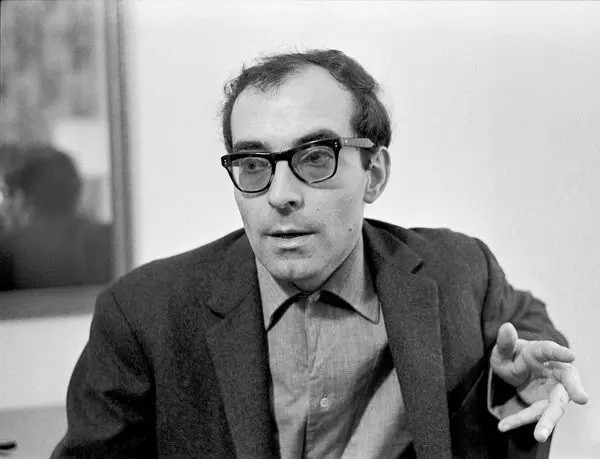
Jean-Luc Godard, born on December 3, 1930, in Paris, France, stands as one of the most iconic figures in the history of cinema. His name is synonymous with the revolutionary “Nouvelle Vague” (New Wave) movement that transformed French cinema in the late 1950s and 1960s. Godard’s work is celebrated for its innovative techniques, unorthodox storytelling, and profound commentary on society and politics. This article delves into the life, career, and legacy of Jean-Luc Godard, exploring his age, rise to fame, and the highlights that define his remarkable journey.
Early Life and Background
Jean-Luc Godard was born into a wealthy Protestant family with Swiss roots. His mother was the daughter of prominent bankers, while his father was a physician. Growing up in a privileged environment, Godard’s early life was marked by exposure to both the intellectual and artistic spheres, which would later heavily influence his work as a filmmaker.
After spending his formative years in Switzerland, Godard returned to Paris, where he attended the prestigious Sorbonne University. In 1949, he earned a degree in Ethnology, but his true passion lay elsewhere. It was during this time that Godard began to immerse himself in the world of cinema, a passion that would soon shape his destiny.
The Critic and the Emergence of a Visionary
Before becoming a filmmaker, Jean-Luc Godard made a name for himself as a film critic. He wrote for prominent film magazines such as “Cahiers du Cinéma” and “Arts.” His early articles, including one on American director Joseph Mankiewicz, showcased his deep understanding of cinema and his desire to challenge traditional narratives.
Godard’s critiques were not merely academic; they reflected his belief in the transformative power of cinema. In 1952, using the pseudonym Hans Lucas, Godard penned an influential essay titled “Defense and Illustration of Classical Decoupage,” in which he articulated his vision of a totalizing art form that would break free from conventional storytelling techniques. This essay marked the beginning of Godard’s journey toward becoming one of the most innovative directors in the history of film.
The Director Emerges: A Revolutionary Debut
In the mid-1950s, Jean-Luc Godard transitioned from film criticism to filmmaking. His first significant work, a short film titled “Operation Concrete” (1955), was inspired by his experiences working on the construction of the Grande Dixence Dam in Switzerland. However, it was his debut feature film, “Breathless” (“À bout de souffle”), released in 1960, that catapulted him to international fame.
“Breathless,” based on a story by François Truffaut, another leading figure of the Nouvelle Vague, was a cinematic revolution. Shot on a shoestring budget with handheld cameras and natural lighting, the film defied conventional filmmaking norms. It featured jump cuts, direct address to the camera, and a narrative that blurred the lines between fiction and reality. The film’s raw energy and innovative techniques resonated with a generation disillusioned by traditional cinema.
“Breathless” not only became a symbol of the Nouvelle Vague but also established Godard as a maverick director unafraid to challenge the status quo. The film’s success earned Godard the Jean Vigo Prize and solidified his reputation as a visionary filmmaker.
The 1960s: A Decade of Creativity and Controversy
The 1960s marked a period of prolific creativity for Jean-Luc Godard. During this decade, he directed over twenty films, each pushing the boundaries of cinematic expression. His work from this era is characterized by its exploration of existential themes, political ideologies, and the human condition.
Godard’s films, such as “Alphaville” (1965), “Pierrot le Fou” (1965), and “Week-end” (1967), were not just stories but statements. They reflected his deep engagement with Marxist philosophy and his critique of consumer culture. In “Week-end,” for example, Godard presents a scathing indictment of bourgeois society, using surreal imagery and disjointed narrative to convey his message.
The director’s embrace of Marxist ideology during this time influenced his filmmaking style, leading to a more fragmented and experimental approach. His films became increasingly political, often challenging viewers to question their perceptions of reality. This period also saw Godard’s collaboration with like-minded artists and intellectuals, further cementing his role as a leading figure in the countercultural movement.
The Dziga Vertov Group and the Pursuit of Revolutionary Cinema
By the late 1960s, Jean-Luc Godard’s frustration with traditional cinema had reached its peak. In 1969, he co-founded the Dziga Vertov Group, named after the Soviet filmmaker Dziga Vertov, with the aim of creating a new form of collective, non-hierarchical cinema. This group rejected the concept of the auteur in favor of a more collaborative approach to filmmaking.
The films produced during this period, such as “Wind from the East” (1969) and “Struggles in Italy” (1970), were overtly political and experimental. These works sought to dismantle the capitalist structures inherent in traditional cinema and promote revolutionary ideals. However, the group’s radical approach alienated many viewers, and the films were often met with mixed reactions.
Godard’s involvement with the Dziga Vertov Group marked a significant turning point in his career. It was a period of intense experimentation, but it also led to a temporary withdrawal from mainstream cinema. The group’s dissolution in the early 1970s coincided with Godard’s retreat from public life following a serious car accident that left him hospitalized for several months.
Reinvention and the Third Phase of Godard’s Career
In the mid-1970s, Jean-Luc Godard re-emerged with a renewed sense of purpose. This period, often referred to as the “third phase” of his career, was characterized by a return to more traditional narrative forms, albeit with a distinct Godardian twist. He began experimenting with new technologies, such as video recorders and Super 8 cameras, which allowed for more intimate and personal filmmaking.
One of the notable films from this period is “Every Man for Himself” (“Sauve qui peut (la vie)”) (1980), which marked Godard’s return to mainstream cinema after years of political filmmaking. The film explored themes of sexuality, identity, and alienation, reflecting the director’s ongoing fascination with the complexities of human relationships.
In “Passion” (1982) and “First Name: Carmen” (“Prénom Carmen”) (1983), Godard continued to experiment with form and content. “First Name: Carmen,” which won the Golden Lion at the Venice Film Festival, was a striking blend of classical music, literary references, and visual poetry. These films demonstrated Godard’s ability to adapt and evolve while maintaining his commitment to challenging cinematic norms.
Later Years and Legacy
As Jean-Luc Godard entered the later years of his life, his work became increasingly introspective and self-referential. He continued to push the boundaries of cinema, exploring the relationship between images, language, and reality. His 1990 film “Nouvelle Vague” exemplified this approach, as it was constructed entirely from quotations and borrowed phrases, a testament to Godard’s belief that all art is a form of dialogue with the past.
In 1995, Godard was honored with the Leopard of Honor at the Locarno Film Festival, recognizing his contributions to cinema. His influence extended beyond the realm of film, as his ideas and techniques permeated other art forms and inspired countless filmmakers around the world.
Godard’s final years were marked by a series of experimental projects that continued to challenge the conventions of cinema. His 2014 film “Goodbye to Language” (“Adieu au langage”), shot in 3D, was a bold exploration of the possibilities of the medium. The film won the Jury Prize at the Cannes Film Festival, further solidifying Godard’s status as a pioneer of avant-garde cinema.
Death and Posthumous Recognition
Jean-Luc Godard passed away on September 13, 2022, at the age of 91 in Rolle, Switzerland. His death was confirmed to be the result of assisted suicide, a decision that reflected his desire to maintain control over his own life and legacy. His wife, Anne-Marie Miéville, confirmed that Godard was not suffering from any terminal illness but was simply “exhausted” and wished to end his life on his own terms.
Godard’s death marked the end of an era in cinema. Tributes poured in from around the world, with filmmakers, critics, and fans celebrating his contributions to the art of filmmaking. His work continues to be studied, analyzed, and revered, ensuring that his legacy will endure for generations to come.
Conclusion
Jean-Luc Godard was more than just a filmmaker; he was a revolutionary artist who changed the way we think about cinema. His work challenged conventions, pushed boundaries, and forced audiences to confront uncomfortable truths about society and themselves. From his early days as a critic to his groundbreaking films and later experiments with new media, Godard remained committed to exploring the possibilities of cinema as an art form.
As we reflect on his life and career, it is clear that Jean-Luc Godard’s impact on the world of cinema is immeasurable. His films continue to inspire and provoke, reminding us of the power of art to challenge the status quo and ignite change. Jean-Luc Godard may be gone, but his legacy will live on, forever etched in the annals of film history.


