
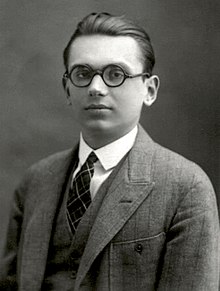
Kurt Gödel, born on April 28, 1906, in Brno, then part of Austria-Hungary (now the Czech Republic), is celebrated as one of the most influential logicians and mathematicians of the 20th century. His work revolutionized the understanding of mathematical logic and has had profound implications for various fields, including mathematics, computer science, and philosophy. This article provides a comprehensive exploration of Kurt Gödel’s life, his rise to fame, and the key highlights that have immortalized his contributions to human knowledge.
Early Life and Education
Kurt Gödel was born into a well-to-do family; his father was a successful businessman, and his mother came from a family of doctors. Growing up in Brno, Gödel displayed an early talent for mathematics and languages, becoming fluent in German, the language of his family, as well as French and Latin.
Gödel’s formal education began in his hometown, where he completed his schooling in 1923. That same year, he enrolled at the University of Vienna, a decision that would set the stage for his later accomplishments. The University of Vienna was a hub of intellectual activity, particularly in the fields of mathematics and philosophy. Gödel studied under prominent figures such as Hans Hahn, Friedrich Waismann, and Karl Menger. It was during this period that he was introduced to the works of Bertrand Russell and David Hilbert, which would heavily influence his thinking.
The Birth of a Revolutionary Idea: Gödel’s Incompleteness Theorems
Kurt Gödel is best known for his incompleteness theorems, published in 1931 when he was just 25 years old. These theorems are among the most significant achievements in the history of mathematics and logic. Gödel’s work demonstrated that in any consistent formal system that is sufficiently powerful to include basic arithmetic, there are true statements that cannot be proven within the system. This discovery shattered the prevailing belief that mathematics could be both complete and consistent, a goal that had been pursued by mathematicians such as Hilbert.
Gödel’s incompleteness theorems are often divided into two parts:
-
First Incompleteness Theorem: This theorem states that in any consistent formal system, there exist propositions that cannot be proven or disproven within the system itself. These propositions are true but unprovable, indicating that no formal system can be both complete and consistent if it is to include all truths about arithmetic.
-
Second Incompleteness Theorem: This theorem extends the first by proving that a formal system cannot demonstrate its own consistency. In other words, the system cannot prove that it is free of contradictions using its own rules.
These theorems had profound implications, not only for mathematics but also for the philosophy of mathematics and logic. They highlighted the inherent limitations of formal systems and posed significant challenges to the foundational efforts of mathematicians like Hilbert, who sought to establish a complete and consistent set of axioms for all of mathematics.
Gödel and the Vienna Circle
During his time at the University of Vienna, Kurt Gödel became associated with the Vienna Circle, a group of philosophers and scientists who advocated for logical positivism—a philosophical movement that emphasized empirical science and logical analysis as the primary means of knowledge acquisition. Gödel, however, maintained a somewhat distant relationship with the group, as his work often diverged from the strict empiricism that the Circle promoted.
The Vienna Circle held regular discussions on a variety of topics, ranging from the philosophy of science to the foundations of mathematics. Gödel’s work on incompleteness, while rooted in the logical analysis that the Circle valued, ultimately revealed the limitations of formal systems—a result that was somewhat at odds with the positivist vision of a completely logical and empirical foundation for all knowledge.
The Impact of Political Upheaval and Gödel’s Move to the United States
The rise of Adolf Hitler and the Nazi regime in the 1930s had a profound impact on intellectuals across Europe, including Kurt Gödel. Although he initially remained somewhat insulated from the political turmoil in Vienna, the assassination of Moritz Schlick, a leading figure of the Vienna Circle, by a Nazi sympathizer deeply affected Gödel and marked the beginning of his growing unease.
In 1938, Gödel married Adele Porkert, and as World War II loomed, the couple made the difficult decision to leave Europe. Gödel’s Jewish heritage and the increasing persecution of intellectuals under the Nazi regime made staying in Austria increasingly perilous. In 1940, Gödel and his wife embarked on a perilous journey across the Soviet Union and Japan before finally arriving in the United States, where he would spend the remainder of his life.
Upon settling in the United States, Gödel accepted a position at the Institute for Advanced Study in Princeton, New Jersey. The Institute was a haven for many European intellectuals fleeing the war, and it was here that Gödel would form one of the most important friendships of his life—with Albert Einstein. The two would often take long walks together, discussing a wide range of topics, from physics to philosophy.
Gödel’s Work at Princeton and Later Contributions
At the Institute for Advanced Study, Kurt Gödel continued to work on foundational issues in mathematics and logic. One of his most significant contributions during this period was his work on the consistency of the axiom of choice and the generalized continuum hypothesis with the axioms of set theory. Published in 1940, this work showed that these controversial mathematical principles could not be disproven based on the accepted axioms of set theory, known as Zermelo-Fraenkel set theory.
Gödel’s proof of the relative consistency of these axioms was a landmark in set theory and had far-reaching implications for the philosophy of mathematics. It demonstrated that certain mathematical propositions, while not provable, could be consistently added to the existing framework without leading to contradictions.
In addition to his work on set theory, Gödel also made contributions to the field of cosmology. Inspired by his discussions with Einstein, Gödel developed a solution to Einstein’s field equations in general relativity that described a rotating universe. This solution, known as the Gödel metric, was significant because it allowed for the possibility of closed time-like curves—essentially, paths through space-time that could theoretically allow for time travel. While this idea remains largely theoretical, Gödel’s work in this area showcased his deep engagement with the intersection of mathematics and physical reality.
The Later Years: Paranoia and Tragic Death
Despite his remarkable achievements, Kurt Gödel’s later years were marked by increasing mental instability. He developed severe paranoia, convinced that he was being poisoned. This fear became so overwhelming that he refused to eat unless his wife, Adele, first tasted his food. Tragically, when Adele was hospitalized and unable to care for him, Gödel stopped eating altogether. He died of self-starvation on January 14, 1978, in Princeton, just a few months shy of his 72nd birthday.
Gödel’s death was a tragic end to a life that had contributed so much to human knowledge. His paranoia and the circumstances of his death have been the subject of much speculation and analysis, with some suggesting that his mental decline was exacerbated by the very isolation that had allowed him to focus so intensely on his work.
Legacy and Influence
Kurt Gödel’s work has left an indelible mark on a wide range of fields. His incompleteness theorems, in particular, are regarded as some of the most important results in mathematical logic, with implications that extend far beyond mathematics. The realization that no formal system can be both complete and consistent has profound philosophical implications, challenging the notion that all truths can be derived from a set of axioms.
In the realm of computer science, Gödel’s work foreshadowed key developments in the theory of computation. His incompleteness theorems are closely related to the concept of undecidability in computer science, which concerns problems that cannot be solved by any algorithm. Gödel’s insights into the limits of formal systems have influenced the development of algorithms, complexity theory, and the philosophy of artificial intelligence.
Philosophically, Gödel’s work has been interpreted in various ways, with some viewing it as a vindication of Platonism—the belief that mathematical objects exist independently of human thought. Gödel himself was a Platonist, and he believed that mathematical truths were discovered rather than invented. This perspective has sparked considerable debate in the philosophy of mathematics, as it challenges more conventional views that see mathematics as a purely human construct.
Conclusion
Kurt Gödel’s life and work represent a towering achievement in the history of mathematics and logic. His incompleteness theorems revolutionized our understanding of formal systems and exposed the inherent limitations of mathematical reasoning. Beyond mathematics, Gödel’s work has had a lasting impact on fields as diverse as computer science, philosophy, and even cosmology.
Despite the tragic end to his life, Gödel’s legacy continues to inspire and challenge scholars across disciplines. His work reminds us of the complexity of truth and the limitations of human knowledge, and it encourages a deeper exploration of the mysteries that still elude us. Kurt Gödel may have uncovered the boundaries of formal systems, but his contributions have expanded the horizons of human understanding in ways that continue to resonate to this day.


