
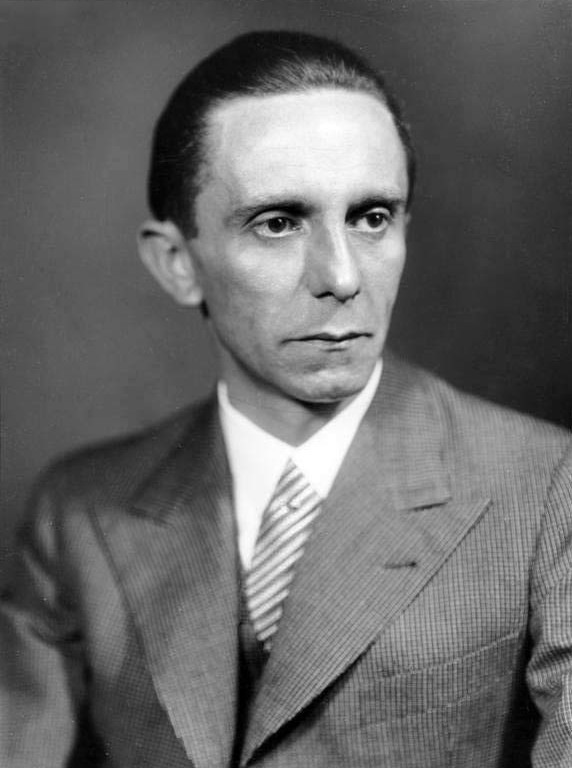
Joseph Goebbels remains one of the most infamous figures in modern history, known for his role as the Minister of Propaganda in Nazi Germany. Born on October 29, 1897, in Rheydt, Germany, Goebbels rose to prominence as one of Adolf Hitler’s closest associates and one of the most powerful figures in the Third Reich. His mastery of propaganda and his influence on the Nazi regime’s communication strategies had a profound impact on the spread of Nazi ideology and the course of World War II. This article provides a detailed exploration of Goebbels’ life, his rise to fame, and the key events that defined his career.
Early Life and Education
A Modest Beginning
Paul Joseph Goebbels was born into a Catholic family in Rheydt, a small town in the Rhineland. His father was a factory clerk, and his mother was a devout Catholic. Goebbels’ upbringing was relatively modest, and from a young age, he showed a keen interest in academics and literature. Despite suffering from a physical disability—a deformed right foot that left him with a limp—Goebbels excelled in his studies.
Academic Pursuits
Goebbels was an ambitious student, and his academic prowess earned him a scholarship to attend a prestigious high school. He later studied literature and philosophy at several universities, including the University of Bonn, the University of Würzburg, the University of Freiburg, and the University of Heidelberg. Goebbels earned a PhD in literature from the University of Heidelberg in 1921, writing his dissertation on 18th-century Romantic drama. His academic background and literary ambitions shaped his later work in propaganda, giving him the tools to craft persuasive and compelling narratives.
Goebbels’ Entry into Politics
Early Political Involvement
After completing his education, Goebbels struggled to find stable employment, which led him to dabble in writing and journalism. His early works were not particularly successful, and it was during this period that he became increasingly involved in nationalist and far-right political movements. The economic and social turmoil of post-World War I Germany provided fertile ground for the rise of extremist ideologies, and Goebbels, like many others, was drawn to the promises of renewal and national revival.
Joining the Nazi Party
In 1924, Goebbels joined the National Socialist German Workers’ Party (NSDAP), commonly known as the Nazi Party. He quickly rose through the ranks, becoming one of the party’s most ardent and vocal supporters. Goebbels was drawn to Adolf Hitler’s vision for Germany and became an early and fervent disciple of the future dictator.
Goebbels’ talent for oratory and his ability to connect with audiences through speeches and writing soon caught the attention of the party leadership. By 1926, he was appointed as the Gauleiter (regional party leader) of Berlin, a position that gave him significant influence within the party and over the city’s political landscape.
The Master of Propaganda
Propaganda: A Tool of Power
Joseph Goebbels is perhaps best known for his role as the Minister of Propaganda, a position he assumed in 1933 after the Nazi Party came to power in Germany. In this capacity, Goebbels was responsible for controlling and shaping the narrative of the Nazi regime. His work involved everything from managing the press, radio, and film industries to organizing mass rallies and public events designed to glorify Hitler and the Nazi ideology.
Goebbels was a master of propaganda, understanding its power to influence public opinion and manipulate mass behavior. He believed that propaganda should appeal to the emotions rather than the intellect and that repetition and simplicity were key to its effectiveness. These principles became the foundation of the Nazi propaganda machine, which played a crucial role in the regime’s ability to maintain control over the German population.
The Reich Ministry of Public Enlightenment and Propaganda
The Reich Ministry of Public Enlightenment and Propaganda, established by Goebbels in 1933, became the central institution for Nazi propaganda efforts. The ministry controlled the content and tone of all media in Germany, including newspapers, radio broadcasts, films, theater, literature, and the arts. Goebbels’ influence extended into every aspect of German cultural life, ensuring that all forms of expression conformed to Nazi ideology.
Under Goebbels’ direction, the ministry produced and disseminated propaganda that glorified Hitler, promoted the concept of Aryan superiority, and vilified Jews and other groups deemed undesirable by the regime. This relentless campaign of hate and misinformation laid the groundwork for the atrocities that would follow, including the Holocaust.
Goebbels’ Role in Nazi Propaganda Campaigns
One of Goebbels’ most infamous propaganda campaigns was the orchestrated narrative surrounding the Reichstag Fire in 1933. The Nazis used the fire, which they blamed on communists, as a pretext to pass the Reichstag Fire Decree, which suspended civil liberties and allowed the regime to suppress political opposition. Goebbels’ propaganda machine was instrumental in convincing the German public of the need for these drastic measures.
Goebbels also played a key role in the organization of the 1936 Berlin Olympics, which the Nazis used as a propaganda tool to present a sanitized and idealized image of Germany to the world. The event was carefully managed to showcase the regime’s supposed benevolence and the superiority of the Aryan race, while masking the brutal reality of life under Nazi rule.
World War II and Goebbels’ Influence
Propaganda During the War
As World War II progressed, Goebbels’ propaganda efforts became increasingly focused on maintaining German morale and justifying the regime’s actions. He was responsible for portraying Germany’s military campaigns as heroic and righteous, even as the tide of the war began to turn against the Nazis.
One of Goebbels’ most notorious speeches was delivered on February 18, 1943, at the Berlin Sportpalast. Known as the “Total War” speech, Goebbels called for the German people to fully commit to the war effort, urging them to make any sacrifice necessary for victory. The speech, characterized by its intense emotional appeal, exemplified Goebbels’ ability to manipulate public sentiment and rally support for the Nazi cause, even in the face of looming defeat.
The Final Days of the Third Reich
As the war drew to a close and Allied forces advanced into Germany, Goebbels remained loyal to Hitler and the Nazi regime. In the final days of the Third Reich, Goebbels joined Hitler in the Führerbunker in Berlin. After Hitler’s suicide on April 30, 1945, Goebbels briefly assumed the role of Chancellor of Germany, though the position was largely symbolic given the dire situation.
On May 1, 1945, just one day after Hitler’s death, Joseph Goebbels and his wife, Magda, committed suicide. In a final, horrific act of loyalty to the regime, they also murdered their six children. The deaths of the Goebbels family marked the end of one of the most infamous chapters in modern history.
The Legacy of Joseph Goebbels
The Impact of Goebbels’ Propaganda
Joseph Goebbels’ legacy is one of manipulation, deceit, and the weaponization of media. His pioneering use of propaganda not only contributed to the rise and maintenance of the Nazi regime but also set a precedent for the use of propaganda in modern politics and warfare. The methods and strategies employed by Goebbels have been studied and, in some cases, emulated by authoritarian regimes around the world, demonstrating the lasting influence of his work.
Goebbels’ propaganda played a critical role in normalizing and spreading the Nazi ideology, contributing to the horrors of the Holocaust and the devastation of World War II. His ability to manipulate public perception and mobilize mass support for the regime’s agenda underscores the dangerous power of propaganda when wielded by those with malign intent.
Goebbels in Historical Context
Understanding Goebbels’ role in history is essential for comprehending the mechanisms of totalitarianism and the ways in which media and information can be exploited for political gain. His life and career serve as a stark reminder of the ethical responsibilities of those who control the flow of information and the potential consequences when those responsibilities are abandoned.
While Goebbels is often remembered as the architect of Nazi propaganda, it is important to contextualize his actions within the broader history of the Nazi regime and the catastrophic impact it had on the world. His work was a key element in the machinery of a regime that caused untold suffering and destruction, and his legacy is inextricably linked to the crimes of the Third Reich.
Conclusion
Joseph Goebbels was a figure of immense influence in Nazi Germany, whose mastery of propaganda had a profound impact on the course of history. From his early days as an academic and aspiring writer to his rise as one of Hitler’s closest confidants, Goebbels’ life was marked by a relentless pursuit of power and control over public perception. His legacy, while deeply troubling, serves as a critical case study in the dangers of propaganda and the ways in which it can be used to manipulate and oppress.
Goebbels’ story is a reminder of the importance of vigilance in safeguarding the truth and the ethical use of media. As history continues to unfold, the lessons learned from Goebbels’ propaganda machine remain as relevant as ever, offering insights into the ways in which information can be weaponized in the pursuit of power.


