
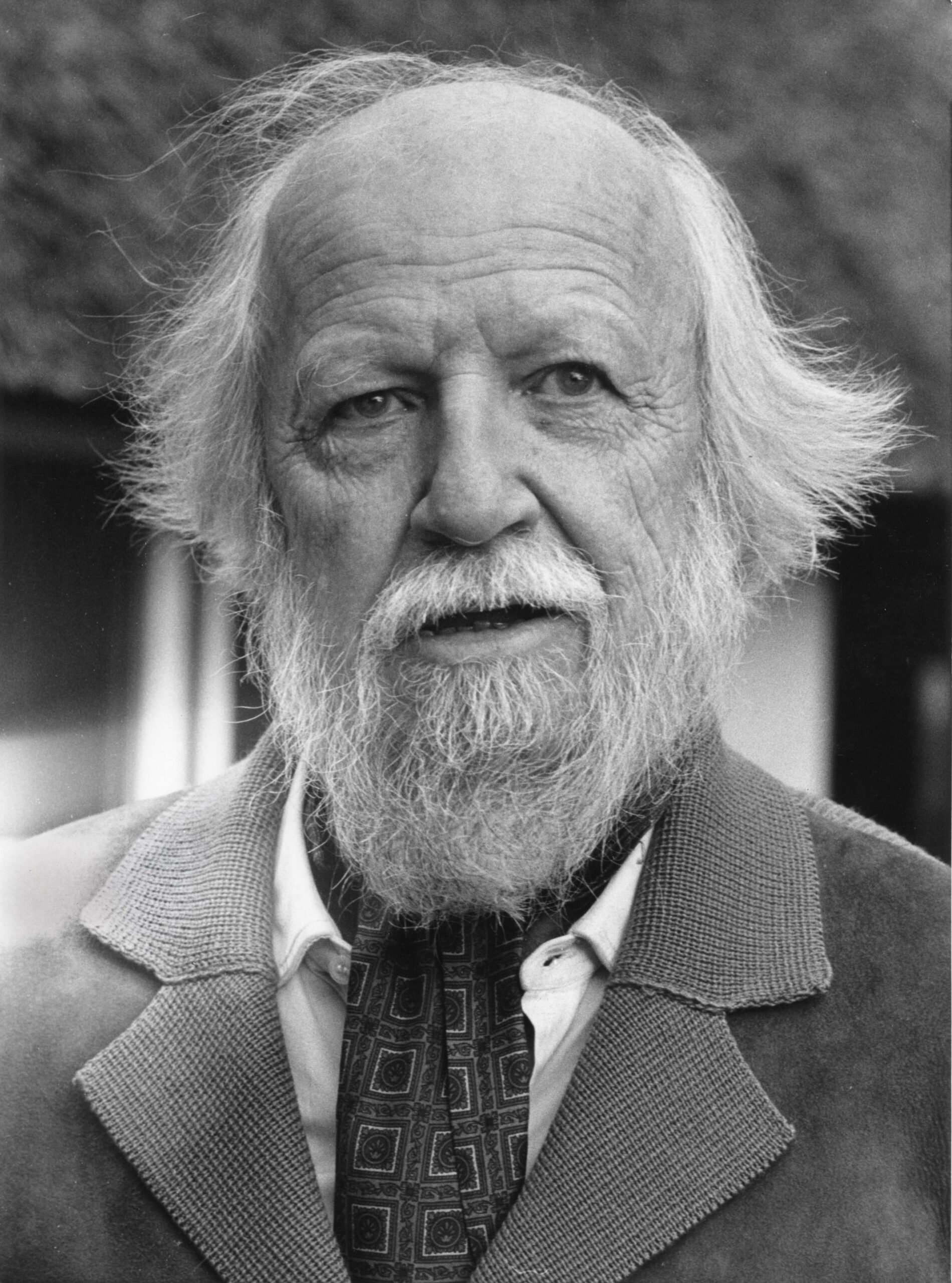
Introduction
William Gerald Golding, born on September 19, 1911, in Newquay, Cornwall, United Kingdom, was a British novelist, playwright, and poet whose literary works have had a profound impact on literature and society. Best known for his novel Lord of the Flies, Golding’s work is characterized by a deep exploration of human nature, morality, and the inherent darkness within mankind. His ability to blend realistic narratives with metaphorical insights into the human condition earned him critical acclaim, culminating in the Nobel Prize in Literature in 1983. This article explores the life of William Golding, delving into his early life, rise to literary fame, key works, and lasting influence on the literary world.
Early Life and Education
William Golding was born into an intellectually stimulating environment. His father, Alec Golding, was a science teacher with a strong belief in rationalism, while his mother, Mildred, was an advocate for women’s rights. Growing up in Marlborough, where his father taught, Golding was exposed to a broad spectrum of ideas and intellectual debates from an early age. This background would later influence his writing, particularly his interest in the conflict between civilization and savagery.
Golding attended Marlborough Grammar School, where he developed a love for literature and a fascination with the darker aspects of human nature. His early education was marked by a tension between his father’s scientific rationalism and his own burgeoning interest in literature and philosophy. In 1930, Golding enrolled at Brasenose College, Oxford, where he initially studied natural sciences. However, after two years, he switched to English literature, a decision that would set the course for his future career as a writer.
In 1934, while still a student at Oxford, Golding published his first collection of poems, simply titled Poems. Although the collection did not garner much attention, it marked the beginning of his literary journey and provided a glimpse into his developing voice as a writer.
Early Career and World War II
After completing his studies at Oxford, Golding worked briefly as a schoolteacher at a Steiner school in Streatham, South London. His time as a teacher exposed him to the complexities of human behavior and the nature of authority, themes that would later become central to his work. During this period, Golding also met and married Ann Brookfield, a chemist, in 1939. The couple moved to Salisbury, where Golding took up a teaching position at Bishop Wordsworth’s School.
Golding’s teaching career was interrupted by the outbreak of World War II. In 1940, he joined the Royal Navy, where he served for several years, participating in some of the most significant naval operations of the war, including the D-Day landings in Normandy and the invasion of Walcheren. His experiences during the war had a profound impact on his worldview, deepening his understanding of the capacity for human evil and the fragility of civilization. These experiences would later be reflected in his writing, particularly in Lord of the Flies.
After the war, Golding returned to teaching, but his experiences had changed him profoundly. He began to explore writing more seriously, seeking to articulate the complex and often dark insights he had gained during the war.
The Birth of Lord of the Flies
In the early 1950s, William Golding began work on a novel that would become his most famous work, Lord of the Flies. Originally titled Strangers from Within, the novel was initially rejected by several publishers. However, in 1954, it was accepted for publication by Faber and Faber, with the title changed to Lord of the Flies. The novel tells the story of a group of boys stranded on a deserted island who gradually descend into savagery as their attempts to govern themselves fail.
Lord of the Flies is a powerful exploration of the inherent darkness within human nature, the fragility of social order, and the ease with which civilization can collapse into chaos. Golding’s portrayal of the boys’ descent into violence and moral decay was a stark commentary on the post-war world, reflecting the author’s pessimistic view of humanity’s potential for evil. The novel’s themes of power, fear, and the loss of innocence resonated with readers, and it quickly became a critical and commercial success.
Despite its initial success, Lord of the Flies did not achieve immediate widespread recognition. However, over time, it gained popularity, particularly among academic circles, where it became a staple in English literature courses. Today, Lord of the Flies is considered one of the most important works of 20th-century literature, and its impact on popular culture and literary discourse is undeniable.
Literary Success and Later Works
Following the success of Lord of the Flies, William Golding continued to write prolifically. In 1955, he published The Inheritors, a novel that explores the conflict between Neanderthals and Homo sapiens. The novel, like much of Golding’s work, is steeped in metaphor and explores themes of innocence, violence, and the nature of humanity.
In 1956, Golding published Pincher Martin, a novel about a naval officer who survives a shipwreck and struggles to survive on a desolate rock in the Atlantic. The novel is a psychological exploration of survival, guilt, and the fear of death, reflecting Golding’s ongoing interest in the darker aspects of the human psyche.
Throughout the 1960s and 1970s, Golding continued to write novels, plays, and essays, exploring a wide range of themes and experimenting with different narrative styles. Some of his notable works from this period include The Spire (1964), a novel about the construction of a cathedral spire and the moral and psychological struggles of those involved, and The Pyramid (1967), a novel that explores the lives of characters in a small English town and the social hierarchies that define their interactions.
Despite his literary success, Golding faced periods of self-doubt and creative struggle. In the late 1960s, he began to experience difficulties with his writing, leading him to keep a diary in which he documented his struggles with physical and mental health. These challenges, however, did not diminish his output, and Golding continued to produce significant works throughout his life.
Nobel Prize and Later Years
William Golding’s contributions to literature were formally recognized in 1983 when he was awarded the Nobel Prize in Literature. The Nobel Committee praised Golding for his “narrative art, which illuminates the human condition in the world of today with the perspicuity of realistic narrative and the universality of myth.” The award solidified Golding’s status as one of the most important writers of the 20th century and brought his work to an even wider audience.
In 1988, Golding was knighted by Queen Elizabeth II, becoming Sir William Golding. This honor was a testament to his influence and contributions to British literature and culture.
In his later years, Golding continued to write, though his output slowed as he faced health challenges. His later works include Darkness Visible (1979), Rites of Passage (1980), and The Paper Men (1984). Rites of Passage is particularly notable, as it won the Booker Prize in 1980 and is the first in a trilogy known as To the Ends of the Earth. The trilogy explores the themes of class, power, and human behavior during a sea voyage in the early 19th century.
Golding’s final novel, The Double Tongue, was published posthumously in 1995. The novel, set in ancient Greece, reflects Golding’s continued interest in the complexities of human nature and the moral dilemmas that define the human experience.
Legacy and Impact
William Golding’s work has had a lasting impact on literature and continues to be studied and admired for its depth, complexity, and insight into the human condition. Lord of the Flies remains a cornerstone of modern literature, its themes as relevant today as they were when the novel was first published. The novel’s exploration of the dark side of human nature, the fragility of civilization, and the consequences of unchecked power resonates with readers across generations.
Golding’s influence extends beyond literature. His work has been adapted into numerous films, plays, and television programs, and his themes have been explored in various academic disciplines, including psychology, sociology, and political science. His portrayal of the human capacity for evil, the complexities of moral decision-making, and the conflict between civilization and savagery has made him a key figure in discussions about human nature and the structure of society.
Golding’s writing is characterized by its rich symbolism, intricate narratives, and deep philosophical questions. His ability to weave together realistic scenarios with metaphorical and allegorical elements has made his work both accessible and intellectually challenging. Golding’s exploration of universal themes such as power, fear, guilt, and redemption continues to inspire readers and writers alike.
Conclusion
William Golding’s life and work stand as a testament to the power of literature to explore and illuminate the complexities of the human experience. From his early days as a teacher and naval officer to his rise as a Nobel Prize-winning author, Golding’s journey was marked by a relentless pursuit of truth and an unwavering commitment to understanding the darker aspects of human nature.
Through his novels, plays, and essays, Golding challenged readers to confront uncomfortable truths about themselves and the world around them. His work continues to be a source of inspiration and reflection, offering valuable insights into the human condition and the forces that shape our lives.
As one of the most influential writers of the 20th century, William Golding’s legacy endures, reminding us of the power of literature to challenge, provoke, and ultimately, enlighten.


