
Introduction
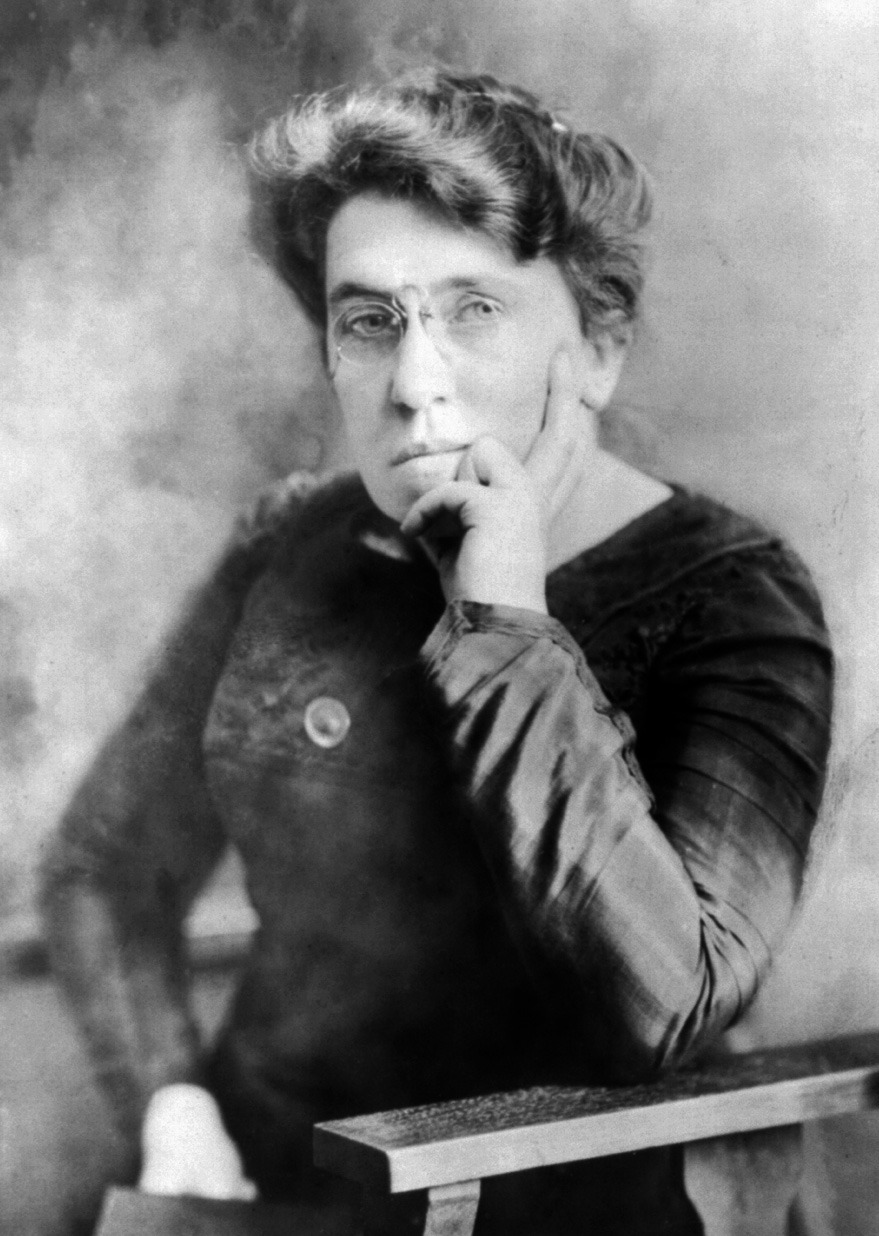
Emma Goldman is a name that reverberates through the annals of history as a fervent advocate for anarchism and a pioneer of feminist thought. Born in 1869 in Kaunas, Lithuania, Goldman’s life was marked by a relentless pursuit of justice, equality, and freedom. Her legacy is a complex tapestry of activism, intellectualism, and controversy, which continues to inspire and provoke discussions on social justice, political theory, and human rights. This article delves into the life of Emma Goldman, exploring her age, rise to fame, and the significant milestones that defined her journey.
Early Life and Influences
Emma Goldman was born on June 27, 1869, in Kaunas (then Kovno), Lithuania, which was part of the Russian Empire. Her early life was shaped by the oppressive atmosphere of Tsarist Russia, where her Jewish family faced rampant antisemitism. This environment of discrimination and repression was a fertile ground for the development of her revolutionary ideas.
At the age of 15, Goldman emigrated to the United States, where she would begin her journey as one of the most influential anarchists of her time. The move to America exposed her to the harsh realities of industrial capitalism, which only intensified her resolve to fight for the oppressed.
Goldman’s political awakening can be traced back to her teenage years. Two key events in particular left an indelible mark on her: the hanging of five anarchist labor activists in Chicago in 1887, known as the Haymarket Affair, and her exposure to the writings of Russian anarchists like Peter Kropotkin. These experiences steered her toward anarchism, and she quickly became involved in the radical movements of the time.
The Formation of Ideals
Goldman’s early exposure to anarchist thought was further solidified by her association with Johann Most, a prominent anarchist and editor of the newspaper Freiheit. Under Most’s mentorship, Goldman honed her oratory and writing skills, which would later make her one of the most formidable public speakers of her era. However, her relationship with Most eventually soured due to ideological differences, particularly after her partner, Alexander Berkman, attempted to assassinate industrialist Henry Clay Frick in 1892.
This event marked a turning point in Goldman’s life. While Berkman’s act of violence against Frick was in retaliation for the latter’s brutal suppression of a workers’ strike, it also highlighted the limits and consequences of violent resistance. Goldman distanced herself from Most and began to develop a more nuanced approach to activism, one that still embraced anarchism but was also deeply concerned with the ethical implications of political violence.
Rise to Fame: Red Emma
Emma Goldman’s fame as a radical activist began to rise in the late 19th and early 20th centuries. Her passionate speeches on anarchism, free speech, women’s rights, and birth control garnered widespread attention, earning her the nickname “Red Emma” in the press. Goldman’s ability to articulate complex ideas in a way that resonated with both intellectuals and the working class made her a unique and powerful figure in the anarchist movement.
In 1894, Goldman was arrested for “inciting to riot” after a speech she gave in New York City. She was sentenced to a year in prison, during which she further developed her political ideas and engaged in extensive reading. Her time in jail only strengthened her resolve, and upon her release, she resumed her activism with renewed vigor.
Goldman’s work during this period was not without its challenges. Her outspoken views made her a target for government surveillance, and she was arrested multiple times throughout her life. Despite these obstacles, Goldman remained undeterred, using each arrest as a platform to further her cause.
The Mother Earth Years
One of Goldman’s most significant contributions to the anarchist movement was the founding of the magazine Mother Earth in 1906. Edited by Goldman and her long-time partner Alexander Berkman, Mother Earth became a leading voice for anarchism in the United States, publishing essays on a wide range of topics, including labor rights, women’s suffrage, and anti-militarism.
The magazine provided Goldman with a platform to disseminate her ideas to a broader audience and to engage with other intellectuals and activists. Mother Earth was also a space where Goldman could explore the intersections of anarchism with other social movements, particularly feminism. She argued that true liberation for women could only be achieved through the dismantling of all forms of authority, including the state, the church, and the patriarchal family structure.
Anti-War Activism and Deportation
Goldman’s opposition to war was a central theme in her activism. During World War I, she was a vocal critic of the U.S. government’s involvement in the conflict and the conscription of young men into the military. Together with Berkman, Goldman founded the No Conscription League, which organized protests and distributed anti-war literature.
Their anti-war efforts did not go unnoticed by the authorities. In 1917, Goldman and Berkman were arrested and charged with conspiracy to obstruct the draft. They were both sentenced to two years in prison. Upon their release, they were immediately arrested again and, in 1919, were deported to Russia under the newly passed Immigration Act, which allowed the government to deport non-citizens considered to be anarchists or radicals.
Disillusionment in Russia
The deportation to Russia initially seemed like a return to the revolutionary ideals that had inspired Goldman in her youth. However, she quickly became disillusioned with the Bolshevik government. Goldman was horrified by the authoritarianism of Lenin’s regime and the brutal suppression of political dissent, particularly against anarchists.
In her book My Disillusionment in Russia, Goldman detailed her experiences in the Soviet Union, providing a scathing critique of the Bolsheviks. She argued that the Russian Revolution had betrayed its original ideals of freedom and equality, and had instead established a new form of tyranny. Disillusioned, Goldman left Russia in 1921 and spent the next several years living in various European countries.
Later Years and Legacy
In the later years of her life, Emma Goldman continued her activism, albeit on a smaller scale. She lived in several countries, including Sweden, Germany, and France, before settling in Canada. Despite the setbacks and challenges she faced, Goldman remained committed to her ideals until the end of her life.
Goldman’s legacy is a testament to her unwavering dedication to the principles of anarchism and social justice. She was a pioneer in the struggle for women’s rights, particularly in advocating for birth control and sexual freedom. Her writings on anarchism, feminism, and civil liberties have influenced generations of activists and continue to be studied by scholars today.
Goldman passed away on May 14, 1940, in Toronto, Canada, just a few weeks before her 71st birthday. Her funeral was attended by hundreds of mourners, a testament to the impact she had on those who knew her and on the broader social movements of her time.
Historical Context and Nuances
To fully appreciate Emma Goldman’s contributions, it’s important to consider the historical context in which she lived and worked. The late 19th and early 20th centuries were a time of great social and political upheaval. The rise of industrial capitalism brought with it significant social inequality, leading to the growth of various radical movements, including anarchism, socialism, and communism.
Goldman’s ideas were shaped by this turbulent period, as well as by her personal experiences of oppression and injustice. Her advocacy for anarchism was not merely theoretical; it was a response to the real and pressing issues of her time. The struggles she fought against—capitalism, patriarchy, state repression—are issues that continue to resonate today.
Goldman’s life also highlights the complexities and contradictions inherent in radical politics. While she was a fierce advocate for freedom and equality, her support for violent resistance, particularly in her early years, has been a subject of debate among historians and activists. Her later disillusionment with the Russian Revolution further underscores the challenges faced by those who seek to create a just and equitable society.
Conclusion
Emma Goldman remains a towering figure in the history of anarchism and feminism. Her life was a testament to the power of ideas and the enduring struggle for justice and equality. Goldman’s legacy continues to inspire activists around the world, reminding us of the importance of challenging authority and fighting for a better world.
Her story is not just one of personal courage and conviction, but also a reflection of the broader social and political currents of her time. As we reflect on her life and work, we are reminded of the ongoing relevance of her ideas and the need to continue the struggle for a more just and equitable world.


