
Introduction
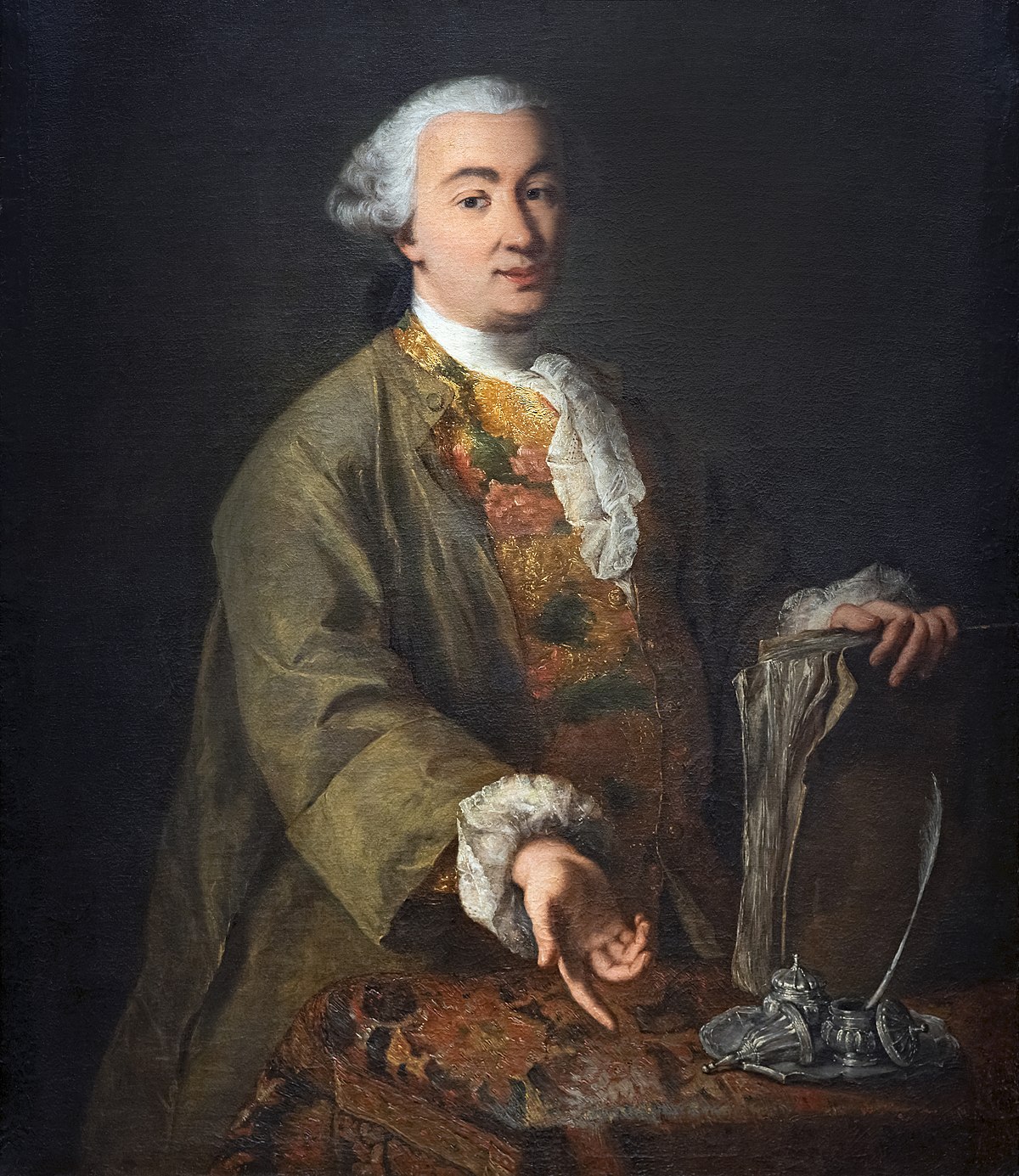
Carlo Goldoni, often hailed as the “Father of Modern Italian Comedy,” was a prolific playwright whose works transformed the landscape of Italian theater. Born in Venice on February 25, 1707, Goldoni’s influence on comedy and theater has left an indelible mark, not only in Italy but across Europe. This article delves into the life of Carlo Goldoni, exploring his age, rise to fame, and the significant milestones that defined his remarkable journey through the world of theater.
Early Life and Education
Carlo Osvaldo Goldoni was born during the final days of the Venetian Carnival, a fitting start for a man who would go on to become one of the greatest comic playwrights in Italian history. His father, Giulio Goldoni, was a physician, and his mother, Margherita, managed the household. From an early age, Goldoni showed a keen interest in literature, particularly in the works of comic authors, and developed a passion for the theater. By the age of nine, he had already written a short play, an early indication of his future career.
Goldoni’s early education took place under the guidance of the Jesuits in Perugia, followed by a brief stint at a Dominican school in Rimini. However, the strict and rigid educational environment did not suit the young Goldoni, who described this period as a source of great frustration. His distaste for formal education led him to abandon his studies temporarily, only to rejoin his family later.
Despite these early setbacks, Goldoni’s parents recognized his passion for theater and literature, eventually allowing him to pursue his interests. His father’s death in 1731 marked a turning point in his life, pushing him to take his studies more seriously. Goldoni eventually completed his legal studies at the University of Padua, earning a degree in law. However, his heart remained with the theater, and it wasn’t long before he began to dedicate himself entirely to the world of drama.
The Road to Theatrical Fame
Carlo Goldoni’s journey to fame began with his association with various theatrical companies. His first notable success came with the play Belisario in 1734, performed at the San Samuele Theater in Venice. This marked the beginning of Goldoni’s long and illustrious career as a playwright. However, it was his revolutionary approach to comedy that truly set him apart.
At the time, Italian theater was dominated by the Commedia dell’arte, a form of theater characterized by improvised performances and stock characters wearing masks. While this form of comedy was immensely popular, it had grown stale and repetitive. Goldoni sought to bring a new sense of realism and character depth to Italian comedy. He introduced fully scripted plays that focused on the intricacies of human relationships and societal norms, moving away from the traditional reliance on masks and improvisation.
One of Goldoni’s earliest works to reflect this new approach was Il Momolo Cortesan (1738), which marked the beginning of a radical transformation in Italian comic theater. Goldoni’s innovative style earned him the position of director at the San Giovanni Grisostomo Theater, where he continued to refine his craft.
The Goldoni Method: Revolutionizing Italian Theater
Goldoni’s impact on Italian theater cannot be overstated. He is credited with transforming the Commedia dell’arte into a more sophisticated form of drama that resonated with the middle class. His plays often depicted the lives of ordinary people, with characters that were relatable and grounded in reality. This was a significant departure from the traditional Commedia dell’arte, which relied heavily on exaggerated characters and situations.
Goldoni’s most significant contribution was the introduction of character-driven narratives. He believed that the essence of comedy lay in the portrayal of real people and their interactions. This approach is evident in his famous play La Donna di Garbo (1743), which was one of the first Italian comedies to be fully scripted. The play was a critical success and solidified Goldoni’s reputation as a leading playwright.
His commitment to realism and character depth was further exemplified in his masterpiece La Locandiera (1753). The play is widely regarded as one of the finest examples of Goldoni’s work, featuring a strong female protagonist who navigates the complexities of love and social expectations with wit and intelligence. La Locandiera remains one of the most frequently performed Italian plays, a testament to Goldoni’s enduring legacy.
Challenges and Rivalries
Despite his success, Goldoni’s career was not without its challenges. The theater world in Venice was fiercely competitive, and Goldoni faced significant opposition from rival playwrights, most notably Pietro Chiari and Carlo Gozzi. Chiari, envious of Goldoni’s success, often attempted to undermine him by staging parodies of his plays. This rivalry culminated in a bitter public feud, with both playwrights accusing each other of plagiarism and artistic theft.
Gozzi, on the other hand, was a staunch defender of the traditional Commedia dell’arte and viewed Goldoni’s reforms as an affront to Italian theatrical heritage. In response to Goldoni’s modern comedies, Gozzi created a series of fantastical plays known as Fiabe, which were intended to ridicule Goldoni’s emphasis on realism and social commentary.
These rivalries, while challenging, also served to fuel Goldoni’s creativity. In 1750, he famously promised to write 16 new comedies in a single season, a challenge he successfully met with a series of works that are still celebrated today. Among these were Il Teatro Comico, La Bottega del Caffè, and Il Bugiardo, all of which showcased Goldoni’s ability to blend humor with social critique.
Move to France and Later Years
By the 1760s, Goldoni had grown weary of the constant battles with his rivals and the increasingly restrictive atmosphere in Venice. In 1762, he accepted an invitation to move to Paris, where he was appointed as the director of the Comédie-Italienne, a prestigious theater company. The move to France marked a new chapter in Goldoni’s career, allowing him to reach a broader audience and further refine his craft.
In France, Goldoni continued to write and produce plays, though he faced challenges in adapting his style to French tastes. Despite these difficulties, he found success with plays such as Le Bourru Bienfaisant (1771), which was well-received by French audiences. Goldoni’s time in France also saw him take on the role of Italian tutor to the daughters of King Louis XV, a position that provided him with financial stability and social standing.
However, the French Revolution brought an abrupt end to Goldoni’s comfortable life. The upheaval of the revolution resulted in the loss of his royal pension, plunging him into financial hardship. Goldoni spent his final years in relative obscurity, living in poverty and dealing with failing health. He passed away on February 6, 1793, in Paris, never having returned to his beloved Venice.
Historical Context and Nuances
Carlo Goldoni’s work must be understood within the broader context of 18th-century Europe, a period marked by significant social, political, and cultural change. The Enlightenment was in full swing, and ideas about individualism, reason, and the rights of the common man were beginning to challenge the old social orders. Goldoni’s plays reflect these changing attitudes, particularly in their focus on the lives and concerns of ordinary people.
Goldoni’s emphasis on realism and character-driven narratives can also be seen as part of a broader movement towards naturalism in the arts, which sought to depict life as it truly was, rather than through the exaggerated lens of traditional art forms. His rejection of the Commedia dell’arte’s masks and improvisation was not just a stylistic choice, but a philosophical one, reflecting a belief in the power of theater to engage with the real world and provoke thought and discussion.
Goldoni’s influence extended far beyond Italy, with his works being translated and performed across Europe. His reforms laid the groundwork for the development of modern European theater, influencing playwrights such as Molière in France and even later figures like Chekhov and Shaw.
Conclusion
Carlo Goldoni’s legacy as the “Father of Modern Italian Comedy” is well-deserved. His innovations in the structure and content of comedic plays not only revitalized Italian theater but also set the stage for future developments in European drama. Goldoni’s commitment to realism, character depth, and social commentary continues to resonate with audiences today, and his plays remain a staple of theater repertoires around the world.
From his early days in Venice to his final years in Paris, Goldoni’s life was a testament to his passion for the theater and his belief in its power to reflect and shape society. Despite the challenges and rivalries he faced, Goldoni’s work has endured, offering timeless insights into human nature and the complexities of social life.
As we reflect on Goldoni’s contributions, we are reminded of the transformative power of art and the enduring relevance of his vision for a theater that speaks to the lives and experiences of ordinary people. Carlo Goldoni’s story is not just that of a playwright, but of a visionary who saw the potential for comedy to be more than mere entertainment—a tool for social change and a mirror to the human soul.


