
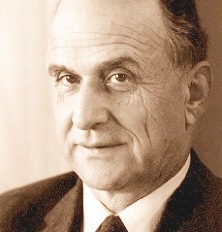
Nelson Goodman, born on August 7, 1906, in Somerville, Massachusetts, is one of the most influential philosophers of the 20th century. Known for his groundbreaking work in logic, epistemology, and aesthetics, Goodman left a lasting impact on various fields, from philosophy of science to the theory of art. His intellectual journey took him through some of the most prestigious academic institutions, and his contributions continue to shape contemporary thought. This article explores the life and legacy of Nelson Goodman, offering detailed insights into his academic achievements, philosophical contributions, and the broader historical context in which he worked.
Early Life and Education
Nelson Goodman was born into a family with a strong emphasis on education and intellectual pursuits. His early life in Somerville, Massachusetts, was marked by a deep curiosity and a passion for learning. This intellectual drive led him to Harvard University, where he graduated in 1928 with a degree in philosophy. His time at Harvard was formative, exposing him to the works of prominent philosophers and igniting his interest in the rigorous analysis of language, logic, and the nature of knowledge.
After completing his undergraduate studies, Goodman continued his education at Harvard, eventually earning his Ph.D. in 1941. His doctoral work laid the foundation for his later contributions to philosophy, particularly in the areas of nominalism and the philosophy of science. Goodman’s dissertation, which explored the nature of logical construction, reflected his growing interest in how we understand and categorize the world around us.
Academic Career and Philosophical Contributions
Goodman’s academic career began at Tufts College (now Tufts University), where he taught from 1945 to 1946. He then moved to the University of Pennsylvania, where he was a faculty member from 1946 to 1964. During this period, Goodman developed many of the ideas that would define his philosophical legacy. His work was characterized by a commitment to rigorous analysis and a willingness to challenge established norms in both philosophy and science.
One of Goodman’s most significant contributions came with the publication of his 1951 book, The Structure of Appearance. In this work, Goodman examined the ways in which we organize and interpret sensory data, proposing a system of “constructional” nominalism. This approach challenged the prevailing realist and empiricist paradigms by arguing that our understanding of the world is fundamentally shaped by the conceptual schemes we impose on our experiences. Goodman’s insistence that the world is not given but constructed was a radical departure from traditional philosophical views and has had a profound influence on subsequent debates in philosophy.
Goodman’s interest in how we create and use symbols led him to explore the philosophy of language and meaning. His 1968 book, Languages of Art: An Approach to a Theory of Symbols, is perhaps his most famous work. In it, Goodman developed a theory of symbols that extended beyond linguistic meaning to include artistic and aesthetic symbols. He argued that artworks are not merely objects but are symbols that convey meaning in ways that are often more complex and nuanced than language. This work has been hugely influential in the field of aesthetics, helping to establish the study of art as a legitimate area of philosophical inquiry.
In addition to his work on aesthetics, Goodman made significant contributions to the philosophy of science. His 1954 book, Fact, Fiction, and Forecast, introduced the “new riddle of induction,” a problem that has since become a central topic in the philosophy of science. Goodman challenged the traditional understanding of induction, questioning how we can justify the inferences we make from observed cases to unobserved cases. His work in this area highlighted the role of convention and context in scientific reasoning, emphasizing that our inductive practices are not merely a matter of following logical rules but are deeply embedded in our conceptual frameworks.
Project Zero and Educational Philosophy
In 1967, Goodman founded Project Zero at the Harvard Graduate School of Education. This research initiative was designed to explore the processes involved in learning, particularly in the arts. Goodman believed that the arts had a unique role to play in education, offering insights into the nature of creativity, perception, and understanding that were not accessible through traditional academic subjects. Under his leadership, Project Zero became a leading center for research on arts education, influencing educational practices worldwide.
Goodman’s work with Project Zero reflected his broader commitment to the idea that philosophy should have practical applications. He was deeply interested in how abstract philosophical ideas could inform and improve real-world practices, particularly in education. His work in this area has had a lasting impact on the field of education, particularly in the development of curricula that emphasize critical thinking, creativity, and the integration of the arts into broader educational frameworks.
Later Years and Legacy
Goodman’s later years were marked by continued academic activity and recognition of his contributions to philosophy. In 1968, he returned to Harvard as a professor, where he taught until his retirement in 1977. Even after retiring, Goodman remained an active figure in the philosophical community, giving lectures and continuing to publish on a wide range of topics. He also held visiting professorships at several prestigious institutions, including Oxford, Princeton, and the University of London.
Throughout his career, Goodman was known for his sharp intellect, rigorous approach to philosophical problems, and his ability to bridge the gap between abstract theory and practical application. His work was characterized by a deep skepticism of simplistic or reductive explanations, whether in science, art, or philosophy. Goodman believed that the world is far more complex and multifaceted than we often acknowledge and that our understanding of it is always mediated by the symbols and concepts we use to interpret it.
Nelson Goodman passed away on November 25, 1998, in Needham, Massachusetts, leaving behind a rich legacy of philosophical inquiry. His work continues to be studied and debated by philosophers, artists, and educators alike. Goodman’s insistence on the importance of symbols and his challenges to conventional thinking have had a lasting impact on a wide range of fields, from the philosophy of science to aesthetics and education.
The Broader Impact of Goodman’s Work
Goodman’s influence extends beyond the confines of academic philosophy. His ideas about the nature of symbols and the construction of reality have permeated many other disciplines, including cognitive science, linguistics, and even artificial intelligence. In cognitive science, for example, Goodman’s work on the ways we construct and categorize knowledge has informed theories of mental representation and the processes by which we understand and interpret the world.
In the field of linguistics, Goodman’s theories about the symbolic nature of language have influenced research on meaning, reference, and communication. His work has also been cited in discussions about the nature of artificial intelligence, particularly in relation to how machines might be programmed to understand and generate symbols in ways that mimic human cognition.
In the arts, Goodman’s ideas have had a profound impact on how we think about the nature of artistic creation and interpretation. His assertion that art is a form of symbolic expression has influenced not only the study of art history and criticism but also the practice of art itself. Artists and curators have drawn on Goodman’s theories to explore new ways of thinking about the relationship between art and meaning, and his work continues to inspire new generations of artists and thinkers.
Conclusion: The Enduring Relevance of Nelson Goodman
Nelson Goodman’s work remains as relevant today as it was during his lifetime. His contributions to philosophy, particularly in the areas of logic, epistemology, and aesthetics, have left an indelible mark on the intellectual landscape. Goodman’s ideas about the nature of symbols, the construction of reality, and the role of art in human understanding continue to influence a wide range of disciplines.
As we move further into the 21st century, the questions Goodman raised about how we understand and interpret the world are more pertinent than ever. In an age of rapid technological change, increasing cultural diversity, and growing complexity in all areas of life, Goodman’s insistence on the importance of symbols and the constructed nature of reality offers valuable insights into how we navigate and make sense of our world.
Goodman’s legacy is not only found in the specific contributions he made to philosophy but also in his broader commitment to intellectual rigor, critical thinking, and the practical application of philosophical ideas. His work challenges us to think more deeply about the world around us and to question the assumptions that underlie our understanding of reality.
In the end, Nelson Goodman’s life and work remind us of the enduring power of philosophy to shape our understanding of the world and to inspire new ways of thinking about the most fundamental questions of human existence.


