
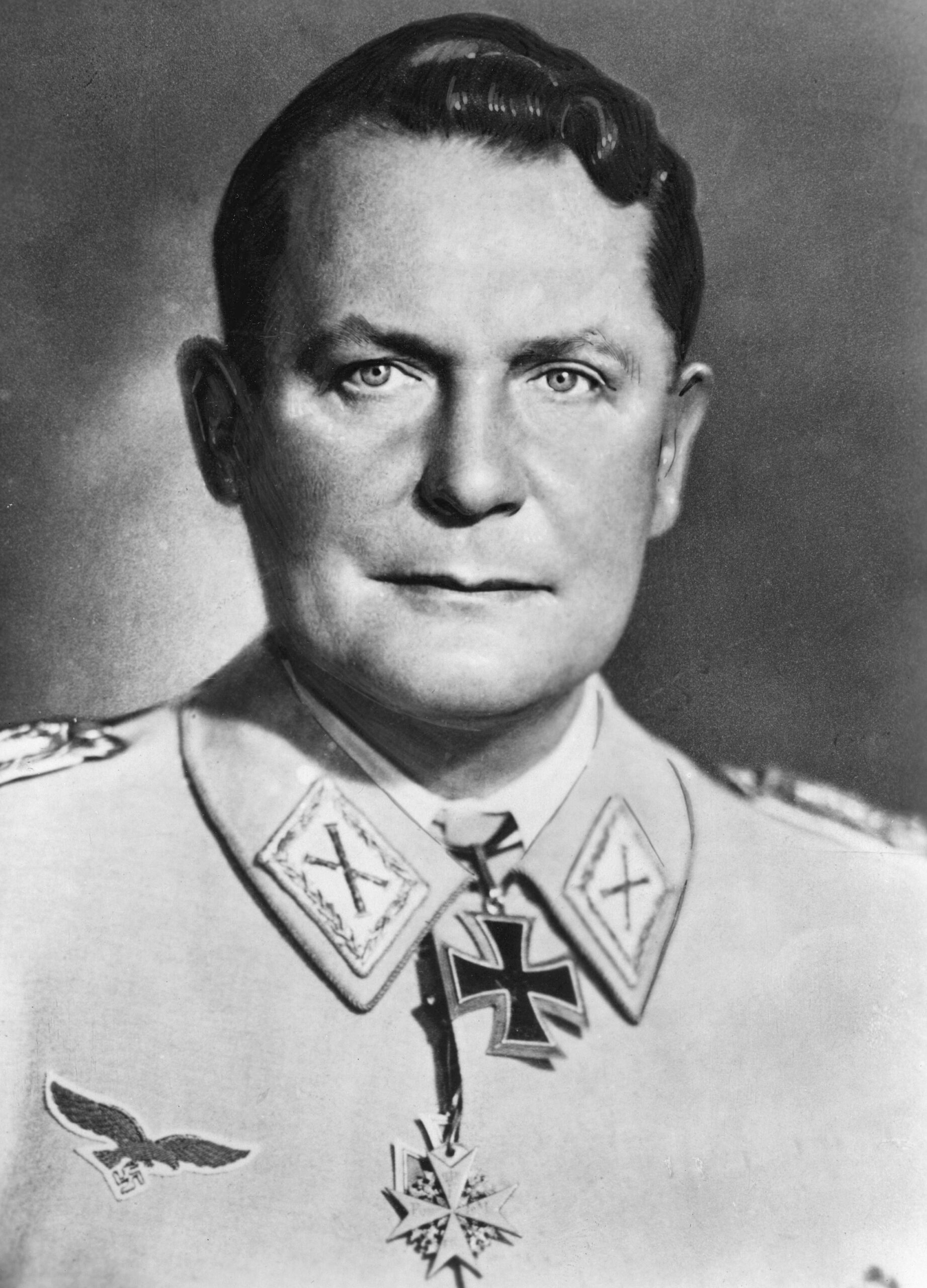
Hermann Wilhelm Göring was a central figure in the political and military landscape of Nazi Germany, known for his complex personality and significant influence on the Nazi Party. Born on January 12, 1893, in Bavaria, Germany, Göring’s life was marked by both military achievements and notorious actions that have made him a controversial historical figure.
Early Life and Military Career
Göring was born to Heinrich Ernst Göring, a diplomat in the German Empire, and his second wife, Franziska “Fanny” Tiefenbrunn. His early years were spent in an environment of privilege, though not without its peculiarities. His father served as a consul general in Haiti, and Göring’s early childhood was influenced by his father’s career and their subsequent return to Germany.
From a young age, Göring demonstrated a keen interest in military life. At 12, he was admitted to the military academy in Karlsruhe, where he thrived. His military education continued, and he was eventually assigned to the Infantry Regiment Prinz Wilhelm, where he began his military career in earnest. With the onset of World War I, Göring’s ambitions were fully realized on the battlefield.
Initially serving in the trenches, Göring’s experience of World War I was transformative. The grim reality of trench warfare, coupled with severe rheumatism, led to his temporary hospitalization. During this period, Göring was inspired by stories of aerial combat, which ignited his passion for aviation—a passion that would define his early military career.
Upon recovering, Göring transferred to the Luftstreitkräfte, the German Air Service, where he quickly established himself as a skilled pilot. His prowess in the air earned him command of a fighter squadron, and by 1918, he had achieved 20 aerial victories. Göring was awarded the “Pour le Mérite,” Germany’s highest military honor for aviators. When Manfred von Richthofen, the famed “Red Baron,” was killed in action, Göring was chosen to succeed him as commander of the prestigious fighter wing, Jagdgeschwader 1, solidifying his status as a national hero.
Post-War Disillusionment and Entry into Politics
After World War I, Germany was left in economic and political turmoil, and Göring, like many others, struggled to find his place in this new reality. His wartime heroism was quickly overshadowed by the nation’s defeat and the Treaty of Versailles. Unable to find work that matched his status, Göring’s disenchantment grew, leading him to explore political avenues.
Göring moved to Denmark, working as a commercial pilot, and later to Sweden, where he met his first wife, Carin. Their marriage, marked by personal and health struggles, coincided with Göring’s increasing involvement in the nascent Nazi movement. In 1922, at a political rally in Munich, Göring first met Adolf Hitler. Recognizing Göring’s military background and charismatic appeal, Hitler quickly appointed him to leadership roles within the Nazi Party, including head of the SA (Sturmabteilung or Brownshirts), the party’s paramilitary wing.
In 1923, Göring played a prominent role in the Beer Hall Putsch, Hitler’s failed coup attempt in Munich. The putsch was a pivotal moment for Göring; he was wounded and subsequently fled Germany to avoid arrest. His injuries and subsequent addiction to morphine during his recovery marked the beginning of a lifelong struggle with substance abuse.
Rise within the Nazi Party
Despite these setbacks, Göring returned to Germany as the Nazi Party’s popularity surged in the late 1920s and early 1930s. By 1928, he was elected to the Reichstag, the German parliament, as one of the twelve Nazi representatives. Following the Nazis’ electoral success in 1932, Göring became President of the Reichstag, further consolidating his power within the party.
With Hitler’s rise to Chancellor in 1933, Göring’s influence grew exponentially. He was appointed Minister of the Interior for Prussia, Germany’s largest state, giving him control over the police force, which he used to suppress political opponents and solidify Nazi control. His establishment of the Gestapo, the secret police, and his orchestration of the Night of the Long Knives, where hundreds of political rivals were purged, demonstrated his ruthless approach to power.
Göring’s ambition and loyalty to Hitler secured him multiple high-profile roles, including Minister of Aviation and Head of the Luftwaffe, Germany’s air force. Under his leadership, the Luftwaffe expanded significantly, becoming a crucial component of Germany’s military strategy.
World War II and Decline in Influence
At the outbreak of World War II, Göring was at the height of his power. He was named Hitler’s designated successor and was promoted to Reichsmarschall, a rank created specifically for him as the highest-ranking officer in the German military. Göring played a significant role in the early successes of the German military, particularly during the invasions of Poland and France.
However, his fortunes began to decline during the Battle of Britain in 1940, where the Luftwaffe suffered significant losses. Göring’s failure to achieve air superiority over Britain was a turning point in his career. The failed air campaign marked the beginning of a series of military blunders and diminishing returns for the Luftwaffe under his command.
As the war dragged on, Göring’s influence waned. His failure to adequately supply German forces during the Siege of Stalingrad in 1942 further eroded Hitler’s confidence in him. Göring’s lavish lifestyle, marked by opulence and corruption, became a liability for the Nazi regime, which was increasingly strained by the war effort.
Role in the Holocaust
Göring’s role in the Holocaust is one of the darkest aspects of his legacy. In July 1941, he signed an order authorizing Reinhard Heydrich to prepare a plan for the “Final Solution to the Jewish Question,” which led to the systematic extermination of six million Jews across Europe. While Göring was not directly involved in the day-to-day operations of the Holocaust, his position and authority made him complicit in the atrocities committed.
Capture, Trial, and Death
As Nazi Germany crumbled in 1945, Göring attempted to position himself as a potential successor to Hitler. However, Hitler, infuriated by Göring’s perceived disloyalty and political maneuvering, stripped him of all titles and ordered his arrest.
After Germany’s defeat, Göring was captured by American forces and tried at the Nuremberg Trials, where he was one of the highest-ranking Nazis to be prosecuted. Charged with war crimes, crimes against humanity, and conspiracy to wage aggressive war, Göring was found guilty on all counts. Despite his conviction and death sentence, Göring managed to commit suicide by ingesting cyanide on October 15, 1946, just hours before his scheduled execution.
Legacy and Historical Controversy
Hermann Göring remains one of the most controversial figures of the Nazi regime. His life was characterized by ambition, ruthlessness, and a pursuit of power that ultimately led to his downfall. Göring’s actions during the Nazi era, particularly his involvement in the war and the Holocaust, have left a lasting stain on his legacy.
While some have tried to paint Göring as a man caught in the currents of history, his active participation in Nazi policies and the crimes of the regime speak to a more complicit and ambitious figure. His story serves as a stark reminder of the dangers of unchecked power and the moral complexities faced by individuals in positions of authority.
Göring’s life, from his early military exploits to his dramatic fall from grace, offers a compelling narrative of ambition, power, and moral failure. It is a narrative that continues to be studied and debated by historians seeking to understand the intricacies of the Nazi regime and the individuals who played key roles in its rise and fall.


