
Introduction
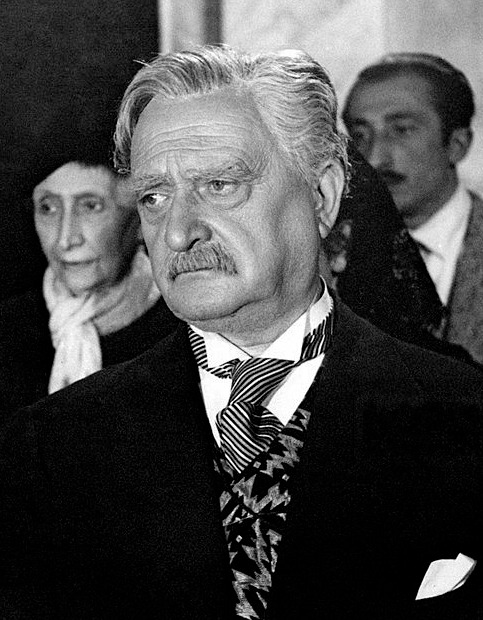
Gilberto Govi, born Amerigo Armando on October 22, 1885, in Genoa, Italy, is an iconic figure in the history of Italian theater. Widely recognized as the embodiment of Genoese cultural identity, Govi’s contributions to theater, particularly his work in the dialect of Genoa, have left an enduring legacy. His ability to capture the essence of the Genoese people through humor, wit, and an authentic portrayal of everyday life made him a beloved figure not only in Italy but across the world. This article explores the life, fame, and highlights of Gilberto Govi, providing a comprehensive look at his remarkable career.
Early Life and Education
Gilberto Govi was born into a family with Mantuan roots, a heritage that would subtly influence his cultural perspective. Despite his future fame in theater, Govi’s early life was marked by a different form of creativity. He enrolled in the Accademia di Belle Arti (Academy of Fine Arts) where he studied drawing for three years. At the age of sixteen, Govi began working as a draftsman for the Officine Elettriche Genovesi, a position that reflected his early inclination towards the visual arts rather than performing arts.
However, Govi’s passion for theater was undeniable. Even as a young boy, he was deeply interested in acting, and this interest grew into a lifelong passion. His involvement in local theater groups provided him with an outlet to explore his talents, and soon, he found himself gravitating towards the stage. This passion led him to enroll in the Accademia Filodrammatica Italiana, housed in the Teatro Nazionale in Genoa’s Stradone Sant’Agostino. It was here that Govi’s theatrical journey truly began.
The Beginnings of a Theatrical Legend
Govi’s early years in theater were marked by experimentation and gradual recognition. Around 1914, under the mentorship of Davide Castelli, a seasoned actor, Govi started performing in various plays. These initial performances were crucial in shaping his unique style, which combined elements of traditional Italian theater with the specific cultural nuances of Genoa.
In 1916, a significant turning point occurred when Govi and his group of “dialectal” actors were expelled from the Accademia Filodrammatica due to their focus on regional dialects rather than the standard Italian language. This rejection, however, did not deter Govi; instead, it spurred him to form his own troupe, the “Compagnia Dialettale Genovese” (Genoese Dialect Theater Company). This company became the platform through which Govi would develop and perfect his craft, eventually leading to national and international acclaim.
Rise to National Fame
Gilberto Govi’s rise to national fame began in earnest in the early 1920s. After several successful performances in Genoa and other regional theaters, Govi’s big break came in 1923 when he performed I manezzi pe maja na figgia (The Maneuvers to Marry Off a Daughter) by Nicolò Bacigalupo at the Teatro Filodrammatici in Milan. The play was a resounding success, marking Govi’s entry into the national theater scene.
The success of this performance was a turning point for Govi. On December 31, 1923, buoyed by the acclaim he received, he made the bold decision to leave his job as a draftsman and commit fully to his acting career. This decision proved to be a wise one, as it allowed Govi to dedicate himself entirely to the development of his theatrical style, which would soon make him a household name.
The Art of Capturing Genoese Identity
One of the most remarkable aspects of Gilberto Govi’s career was his ability to capture and portray the essence of Genoese identity through his performances. Govi’s characters were often seen as the epitome of the Genoese spirit—cunning, humorous, and sometimes gruff, but always with a deep sense of humanity and self-awareness. His portrayals went beyond mere caricatures; they were rich, layered representations that resonated deeply with audiences, particularly those familiar with the Genoese dialect and culture.
Govi’s mastery of the Genoese dialect was central to his appeal. He used the dialect not just as a linguistic tool, but as a means of expressing the unique worldview and sensibilities of the Genoese people. His plays often explored the contradictions inherent in Genoese life—the tension between public and private personas, the interplay between external appearances and inner emotions, and the constant balancing act between humor and seriousness. These themes were explored in plays such as Pignasecca e Pignaverde (The Pignasecca and Pignaverde Families) and Colpi di timone (Rudder Blows), both of which became staples of his repertoire.
International Recognition and Film Career
Govi’s fame was not confined to Italy. In 1926, he embarked on his first international tour, performing in Latin America. This tour marked the beginning of Govi’s international recognition, as his performances were met with enthusiasm by Italian expatriates and local audiences alike. His ability to convey the universal aspects of human experience, even through the specific lens of Genoese culture, made his work accessible and appreciated by a broad audience.
In addition to his stage work, Gilberto Govi also ventured into the world of cinema. Although his film career was relatively brief, it added a new dimension to his artistic legacy. His first film, Colpi di timone (1942), was an adaptation of one of his most popular plays. The film allowed Govi to bring his theatrical characters to life on the silver screen, reaching an even wider audience. He went on to star in three more films: Che tempi! (What Times!, 1947), Il diavolo in convento (The Devil in the Convent, 1950), and Lui, lei e il nonno (Him, Her, and Grandpa, 1961). While these films never eclipsed his stage work in terms of impact, they remain an important part of his legacy, showcasing his versatility as an actor.
The Govi Phenomenon
Gilberto Govi became more than just a popular actor; he became a phenomenon. For audiences, particularly in Genoa, Govi was not just an entertainer but a cultural icon who represented the very essence of their identity. His performances were a celebration of Genoese culture, filled with the humor, wit, and idiosyncrasies that defined the people of this historic port city.
Govi’s popularity also stemmed from his ability to make the specific universal. While his characters were unmistakably Genoese, the themes he explored—family dynamics, social status, human folly—were relatable to audiences everywhere. This ability to transcend cultural boundaries while staying true to his roots is what made Govi’s work so enduring and beloved.
Later Years and Legacy
In the later years of his career, Govi continued to perform and delight audiences with his unique brand of theater. His partnership with Caterina Franchi Gaioni, both on and off the stage, was a cornerstone of his success. The two were married in 1917 and remained together for the rest of Govi’s life, with Gaioni often performing alongside him in many of his most famous roles.
As television became more prominent in Italy, Govi adapted to the new medium, bringing his performances to a broader audience through televised plays. Some of these performances were also recorded and released on vinyl, ensuring that his work would be preserved for future generations. Even today, recordings of Govi’s plays continue to be celebrated and studied, both for their artistic merit and their cultural significance.
Gilberto Govi passed away on April 28, 1966, in his beloved city of Genoa. His death marked the end of an era, but his influence on Italian theater and culture remains profound. Govi is remembered not only as a master of the Genoese dialect but as a symbol of the enduring power of regional identity in an increasingly globalized world. His ability to capture the nuances of Genoese life with humor and humanity has ensured that his work remains relevant and cherished to this day.
Conclusion
Gilberto Govi’s life and career are a testament to the power of theater to both entertain and preserve cultural identity. Through his performances, Govi brought the spirit of Genoa to life, capturing the unique blend of humor, cunning, and depth that characterizes the Genoese people. His work transcended regional boundaries, making him a beloved figure not only in Italy but around the world.
As a cultural icon, Govi’s legacy continues to inspire new generations of actors and playwrights who seek to explore and celebrate regional identities through the performing arts. His work serves as a reminder of the rich diversity within Italian culture and the importance of preserving and honoring local traditions.
Govi’s story is one of passion, dedication, and a deep connection to his roots. From his early days as a draftsman to his rise as one of Italy’s most celebrated actors, Gilberto Govi’s journey is a remarkable example of how art can both reflect and shape cultural identity. His performances remain a vital part of Italy’s cultural heritage, ensuring that the wit, wisdom, and warmth of Genoese life continue to resonate with audiences around the world.


