
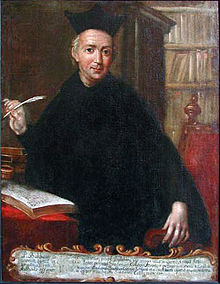
Baltasar Gracián y Morales, known simply as Baltasar Gracián, stands as a towering figure in the realm of Spanish literature and philosophy. Born on January 8, 1601, in Belmonte de Gracián, Spain, Gracián’s contributions to literature and thought during Spain’s Golden Age solidified his place as one of the most influential writers of his time. This exploration delves into Gracián’s life, his enduring fame, and the significant milestones that marked his career.
Early Life and Education
Baltasar Gracián was born into a modest family, and while details about his early childhood are sparse, it is known that he began his education at a young age. Gracián’s initial studies were likely conducted at the Jesuit school in Calatayud, a nearby town where he would have been exposed to the rigorous intellectual environment characteristic of Jesuit education.
In 1617, Gracián moved to Toledo to live with his uncle, Antonio Gracián, who was a chaplain at San Juan de los Reyes. During this period, Gracián honed his skills in logic and Latin, laying a strong foundation for his future scholarly endeavors. His intellectual capabilities and eagerness to learn became evident, setting him on a path toward a distinguished academic and literary career.
By 1619, Gracián began studying philosophy, which soon became his primary academic focus. He joined the Jesuit novitiate in Tarragona, where he excelled in his studies, thanks in part to his previous intellectual preparation. After completing his novitiate, he returned to Calatayud to continue his philosophical studies, with a particular interest in ethics—a field that would significantly influence his later writings.
Gracián’s formal education concluded at the University of Zaragoza, where he focused on theology. This period of study was crucial in shaping his religious and philosophical perspectives.
Clerical Career and Teaching
In 1627, Gracián was ordained as a priest, marking the beginning of his professional journey within the Jesuit order. He initially taught literature at the Jesuit college in Calatayud, but his career soon took him to various locations across Spain, including Valencia, Lerida, and Gandia, where he taught subjects ranging from theology to philosophy.
During his tenure in Valencia in 1630, Gracián began to experience conflicts with Jesuit authorities, which would continue to affect his career. Despite these challenges, he made significant contributions to the intellectual and spiritual life of the institutions where he served. His teaching was characterized by a deep engagement with philosophical and theological questions, reflecting his broad intellectual range.
Major Works and Philosophical Contributions
Gracián’s literary output is marked by his focus on aphoristic writing, a style that reflects his keen observations on human nature and society. His most notable works include “El Héroe” (The Hero), published in 1637, and “El Político” (The Politician), published in 1640. These works are celebrated for their insightful analysis of human virtues and the complexities of political and social behavior.
In “El Héroe,” Gracián explores the qualities necessary for an individual to become a true hero. His approach was innovative for the time, emphasizing traits such as talent, self-awareness, discretion, and adaptability. This work reflects Gracián’s modern and advanced perspective on heroism, presenting a nuanced view of personal and social virtues.
Gracián’s “El Político” continues this exploration of human behavior, offering practical advice on governance and leadership. His writings in this area demonstrate his deep understanding of political dynamics and his commitment to applying philosophical principles to real-world challenges.
Another significant work by Gracián is “Arte de Ingenio” (The Art of Wit), published in 1642. This treatise delves into literary aesthetics, particularly within the context of the Baroque era. Gracián’s insights into the art of writing and the use of wit are influential in understanding the literary culture of his time.
The Legacy of Gracián’s Thought
Baltasar Gracián’s philosophical and literary contributions extend far beyond his own era. His works are considered seminal in the development of Spanish literature and thought, and his aphoristic style has influenced many writers and thinkers. Gracián’s emphasis on the practical application of philosophical ideas and his exploration of human nature resonate with readers even today.
His writings are characterized by a keen psychological insight and a pragmatic approach to philosophical questions. Gracián’s ability to distill complex ideas into concise, memorable aphorisms reflects his mastery of both language and thought.
Later Life and Decline
Despite his literary successes, Gracián’s later years were marked by significant challenges. His outspoken nature and unconventional ideas often put him at odds with the Jesuit hierarchy. This friction culminated in his eventual downfall.
In 1657, Gracián faced accusations from Jacinto Piquer, the head of the Jesuit order in Aragón. These charges led to his forced relocation to a remote village in the Pyrenees, where he lived in isolation. The final years of his life were spent in relative obscurity, overshadowed by the controversies and conflicts that marred his later career.
Gracián’s final years were marked by a continued focus on his literary work, despite the challenges he faced. His final major work, the third part of “El Critico,” was published posthumously in 1657. This work builds upon his earlier explorations of human intellect and judgment, offering further insights into the nature of wisdom and prudence.
Baltasar Gracián passed away on December 6, 1658, in Tarazona, near Zaragoza. His death marked the end of a remarkable career that had a lasting impact on Spanish literature and philosophy.
Conclusion
Baltasar Gracián’s life and work represent a fascinating intersection of literature, philosophy, and religious thought. His innovative approach to writing and his exploration of human virtues and political dynamics continue to influence scholars and readers. Gracián’s legacy is a testament to the enduring power of insightful thought and the impact of a well-crafted aphorism.
As we reflect on his contributions, it becomes clear that Baltasar Gracián remains a significant figure in the history of literature and philosophy. His works offer valuable insights into the human condition and continue to resonate with contemporary audiences.


