
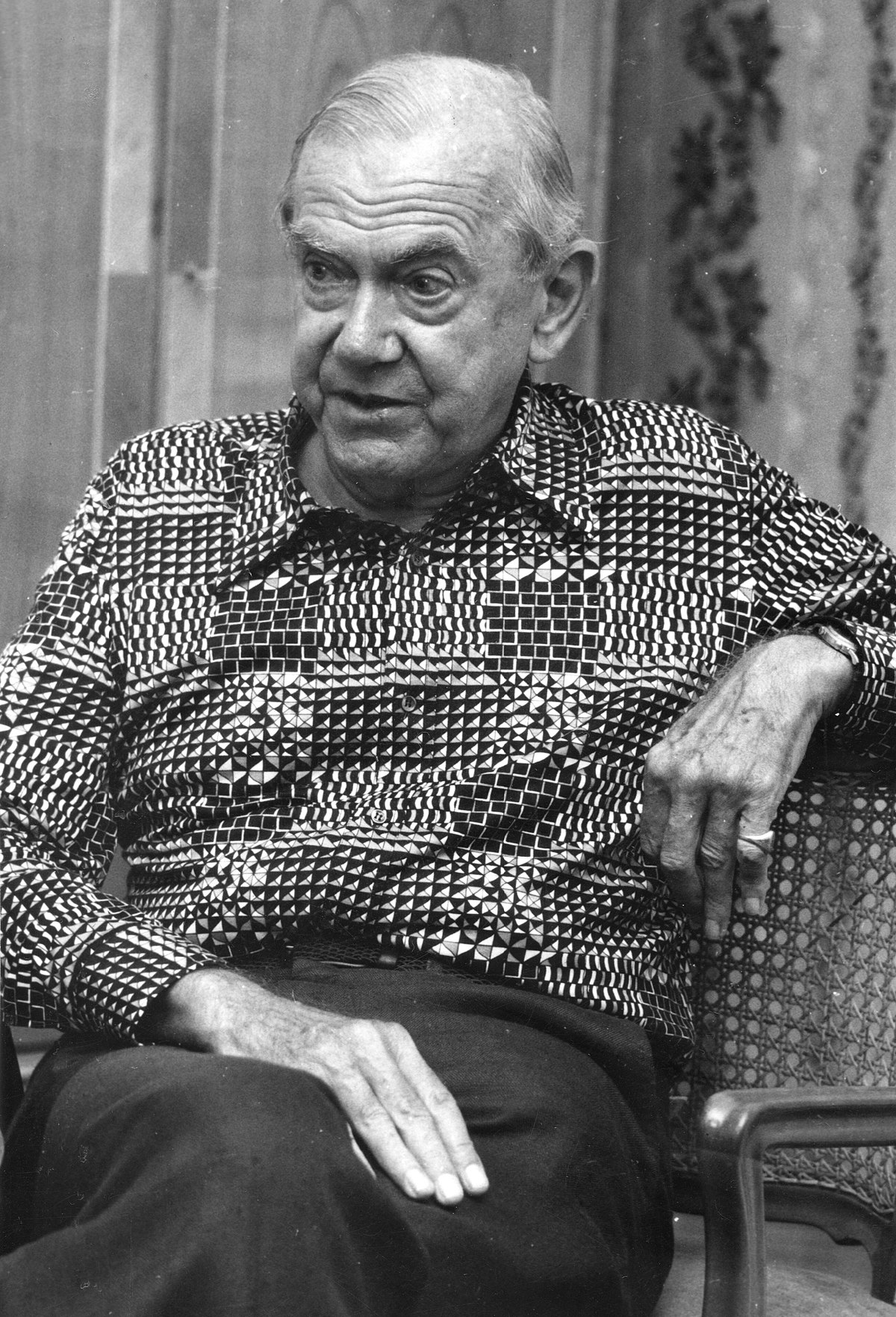
Graham Greene, a name synonymous with literary brilliance, stands as one of the most influential writers of the 20th century. His work spans numerous genres, including novels, screenplays, and essays, showcasing his profound understanding of human nature and the complexities of the world around him. Born on October 2, 1904, in Berkhamsted, England, Greene’s life and career were marked by a deep exploration of moral and political themes, often set against the backdrop of international conflict and personal turmoil.
Early Life and Education
Graham Greene was born into a family with a strong educational background. His father, Charles Henry Greene, was the headmaster of Berkhamsted School, where Graham began his formal education. The environment was both nurturing and stifling for the young Greene, who often felt alienated. His early years were marked by a sense of disillusionment, leading to several attempts at running away from school and a period of severe depression. This sense of inner conflict and alienation would later become a recurring theme in his works.
At the age of 14, Greene was sent to a psychoanalyst in London, a move that would profoundly affect his outlook on life. This early exposure to psychological analysis likely influenced his later writing, where he frequently delved into the complexities of the human psyche. After completing his education at Berkhamsted, Greene went on to study at Balliol College, Oxford. It was during his time at Oxford that he began to engage more deeply with political and literary circles, becoming a member of the Communist Party for a brief period. However, his flirtation with communism was short-lived, lasting only a few weeks, but it reflected his lifelong interest in political ideologies.
Conversion to Catholicism
One of the most significant events in Greene’s life was his conversion to Catholicism in 1926, following a personal crisis of faith. This religious conversion had a profound impact on his writing, imbuing his works with a deep sense of spiritual conflict and moral ambiguity. Greene’s exploration of faith, doubt, and redemption would become central themes in many of his most famous works, including The Power and the Glory and The Heart of the Matter.
His conversion was closely linked to his marriage to Vivien Dayrell-Browning, a devout Catholic, whom he married the same year. Although their marriage was not particularly happy and eventually led to separation, it was pivotal in shaping Greene’s religious outlook. His Catholicism was not one of blind faith but of constant questioning and doubt, which resonated with many readers who grappled with similar issues in a rapidly changing world.
Literary Career and Rise to Fame
Greene’s literary career began in earnest with the publication of his first novel, The Man Within, in 1929. The novel was well-received, and Greene soon became known for his ability to combine thrilling plots with deep psychological and moral explorations. His early work was often categorized as “entertainments,” a term he used to describe his lighter, more commercially driven novels. However, even these works, such as Brighton Rock and The Ministry of Fear, were rich with complex characters and moral dilemmas.
Throughout the 1930s, Greene’s reputation as a novelist grew, and he began to gain international recognition. His work was increasingly adapted for the screen, further cementing his fame. The 1949 film adaptation of his novel The Third Man, directed by Carol Reed and starring Orson Welles, became a classic of British cinema. Greene himself wrote the screenplay, showcasing his versatility as a writer.
The War Years and Espionage
During World War II, Greene worked for the British Secret Intelligence Service (MI6) in Sierra Leone, an experience that would heavily influence his writing. His time in Africa and his involvement in espionage provided him with a wealth of material for his novels. Greene’s work during this period reflected the tension and paranoia of the wartime era, as well as his own complex feelings about the morality of espionage and the role of the individual in a time of global conflict.
His novel The Heart of the Matter, published in 1948, is often regarded as one of his masterpieces and was directly inspired by his experiences in Africa. The novel explores themes of guilt, responsibility, and the nature of good and evil, all set against the backdrop of a war-torn world. It was also during this time that Greene solidified his reputation as a writer who could deftly blend popular fiction with profound philosophical inquiry.
Post-War Success and Screenwriting
The post-war period was one of great productivity and success for Greene. He continued to write novels, many of which were adapted into successful films. Greene’s relationship with Hollywood was complex; while he appreciated the broader audience that film adaptations brought to his work, he was often critical of the film industry’s tendency to simplify his complex characters and themes. Despite these misgivings, Greene worked on several successful screenplays, including the adaptation of his own novel The Fallen Idol, which earned him an Academy Award nomination.
Greene’s work during this period was marked by a continued exploration of the moral complexities of the modern world. His novel The Quiet American, published in 1955, is a powerful critique of American involvement in Vietnam and remains one of his most influential works. The novel’s portrayal of the destructive consequences of idealism and interventionism was both prescient and controversial, reflecting Greene’s deep skepticism of political ideologies.
Later Life and Legacy
In his later years, Greene continued to write, though his output slowed. He spent much of his time traveling, often to politically unstable regions, which continued to inform his writing. His later works, such as The Honorary Consul and The Human Factor, reflect a more subdued, reflective tone, though they maintain the moral and political engagement that characterized his earlier work.
Greene’s health began to decline in the 1980s, and he eventually settled in Switzerland, where he continued to write until his death on April 3, 1991. He left behind a body of work that is both vast and varied, encompassing not only novels but also plays, screenplays, and essays. Greene’s work has been translated into numerous languages, and his influence can be seen in the work of countless writers who followed him.
Historical Context and Influence
Graham Greene’s work cannot be fully understood without considering the historical context in which he wrote. The 20th century was a time of immense change, marked by two world wars, the rise and fall of empires, and the constant threat of nuclear annihilation during the Cold War. Greene’s work is deeply rooted in this historical milieu, and his novels often reflect the anxieties and uncertainties of the age.
Greene was particularly interested in the moral and ethical dilemmas faced by individuals in a world where traditional values were being constantly challenged. His characters are often caught in situations where they must choose between competing loyalties and conflicting moral imperatives. This focus on the individual’s struggle to navigate a complex and often hostile world is one of the defining features of Greene’s work.
Moreover, Greene’s work was influenced by his extensive travels and his experiences in various conflict zones. His novels often feature characters who are displaced, alienated, or otherwise caught between different worlds. This sense of displacement and the search for meaning in an uncertain world is a recurring theme in his work.
Conclusion
Graham Greene’s legacy as one of the greatest writers of the 20th century is secure. His work continues to be read and studied around the world, and his influence on literature, film, and even political thought is undeniable. Greene’s ability to combine gripping narratives with deep philosophical inquiry set him apart from many of his contemporaries, and his exploration of the moral and ethical challenges of the modern world remains as relevant today as it was during his lifetime.
In examining the life and work of Graham Greene, one cannot help but be struck by the breadth of his vision and the depth of his insight into the human condition. Whether through his novels, his screenplays, or his essays, Greene consistently challenged his readers to think more deeply about the world around them and their place within it. His work is a testament to the power of literature to illuminate the complexities of life and to provoke thoughtful reflection on the most pressing issues of the day.


