
Introduction
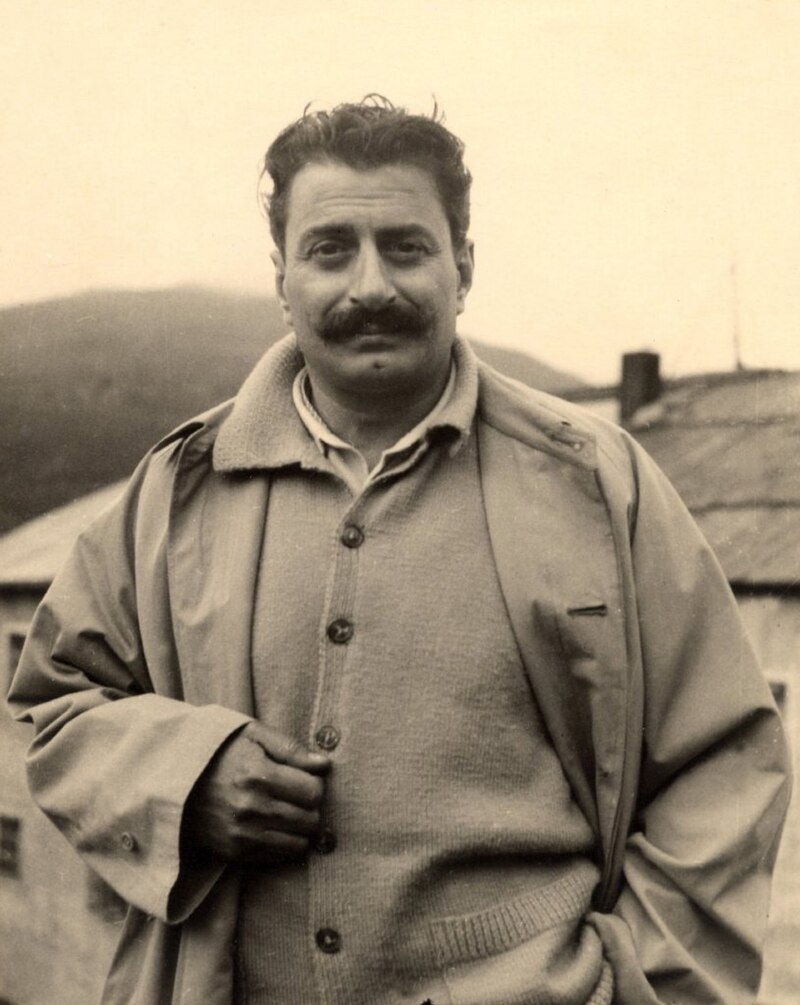
Giovannino Guareschi, one of Italy’s most influential 20th-century writers and satirists, is best known for creating the beloved characters Don Camillo and Peppone. His work, deeply rooted in the socio-political landscape of post-war Italy, offers a unique blend of humor, irony, and keen social commentary. Guareschi’s legacy goes beyond literature; his writings have been adapted into films and television series, making him a household name in Italy and beyond. This article delves into the life of Giovannino Guareschi, exploring his journey from a young journalist to a celebrated writer, his contributions to Italian culture, and the historical context that shaped his work.
Early Life and Beginnings
Giovannino Oliviero Giuseppe Guareschi was born on May 1, 1908, in Fontanelle di Roccabianca, a small town in the province of Parma, Italy. Growing up in a modest household, Guareschi’s early life was marked by the socio-economic struggles that were common in rural Italy during that period. Despite these challenges, he exhibited a strong character and an early interest in writing, which led him to pursue a career in journalism.
In his youth, Guareschi moved to Milan, a city that was rapidly becoming the cultural and economic hub of Italy. There, he began his career as a journalist, working for various publications. One of his early notable roles was as a writer for “Bertoldo,” a popular satirical magazine of the time. His work at “Bertoldo” allowed him to hone his satirical style, which would later become the hallmark of his literary career. Despite the political climate of the 1930s, dominated by the Fascist regime, Guareschi did not shy away from using humor and satire to critique the government’s policies and the socio-political landscape of Italy.
The War Years and Imprisonment
The outbreak of World War II had a profound impact on Guareschi’s life and career. Like many of his contemporaries, he was caught in the maelstrom of war, both as a participant and a commentator. In 1943, following the collapse of the Fascist regime and the subsequent occupation of Italy by Nazi Germany, Guareschi was arrested and deported to Germany. He spent two harrowing years in a German POW camp, an experience that deeply affected him and would later influence much of his writing.
Guareschi’s time in the POW camp was marked by hardship and deprivation, but it also reinforced his resilience and his belief in the power of humor as a tool for survival. This period of his life is captured in his “Diario clandestino” (Clandestine Diary), a poignant account of his experiences during the war. The diary, written with a blend of irony and stoicism, provides a unique insight into the struggles of POWs during the war and is a testament to Guareschi’s indomitable spirit.
Post-War Italy and the Birth of Don Camillo
After the war, Guareschi returned to Italy, where he resumed his career as a journalist and writer. In 1945, he founded “Il Candido,” a satirical weekly magazine that quickly gained popularity for its sharp critiques of the Italian political scene. “Il Candido” became a platform for Guareschi to express his views on post-war Italian society, often targeting both the government and the growing influence of the Communist Party.
It was during this period that Guareschi created his most famous characters, Don Camillo and Peppone. The first story featuring these characters was published in 1948, and it quickly became a sensation. Set in the fictional town of Brescello in Northern Italy, the stories revolve around the humorous and often contentious relationship between Don Camillo, a Catholic priest, and Peppone, the Communist mayor. Through these characters, Guareschi explored the political and social tensions of post-war Italy, using humor and satire to highlight the absurdities of the time.
Don Camillo and Peppone represent two opposing forces in Italian society—the Church and the Communist Party—yet their relationship is marked by mutual respect and a shared commitment to their community. Guareschi’s portrayal of these characters struck a chord with readers, and the stories were eventually adapted into a successful series of films, further cementing their place in Italian popular culture.
Literary Style and Themes
Guareschi’s writing is characterized by its simplicity, clarity, and a deep understanding of human nature. His use of humor and satire to address serious social and political issues is a defining feature of his work. Guareschi believed that humor could be a powerful tool for exposing the truth and challenging authority, and this belief is evident in much of his writing.
One of the central themes in Guareschi’s work is the conflict between tradition and modernity. This theme is particularly evident in the Don Camillo stories, where the characters often find themselves at odds with the changing social and political landscape of post-war Italy. Guareschi uses this conflict to explore broader issues such as the role of the Church in society, the rise of Communism, and the challenges of modernity.
Another important theme in Guareschi’s work is the idea of community. Despite their differences, Don Camillo and Peppone are united by their shared commitment to their community. This theme reflects Guareschi’s own belief in the importance of community and his concern for the social and moral fabric of Italian society.
Challenges and Controversies
Despite his popularity, Guareschi’s career was not without its challenges and controversies. His outspoken views and his satirical critiques of the government and the Communist Party often brought him into conflict with the authorities. In 1954, Guareschi was sentenced to prison for defamation after publishing a series of letters purportedly written by Alcide De Gasperi, the then-Prime Minister of Italy. The letters, which were later proven to be forgeries, accused De Gasperi of collaborating with the Nazis during the war.
Guareschi served a year in prison, but the experience did not dampen his spirit or his commitment to his work. If anything, it reinforced his belief in the importance of speaking truth to power. His imprisonment became a cause célèbre in Italy, and it highlighted the tensions between freedom of expression and political authority in post-war Italy.
Legacy and Impact
Giovannino Guareschi’s legacy is one of resilience, humor, and a deep commitment to the values he believed in. His work, particularly the Don Camillo series, has had a lasting impact on Italian culture and continues to be celebrated for its wit, humor, and social commentary. The stories of Don Camillo and Peppone have been translated into numerous languages and adapted into films, television series, and stage plays, making them accessible to audiences around the world.
Guareschi’s influence extends beyond his literary work. He is remembered as a fierce advocate for freedom of expression and as a critic of both the government and the Communist Party. His satirical critiques of post-war Italian society continue to resonate today, and his work remains relevant in discussions about the role of humor and satire in political discourse.
Conclusion
Giovannino Guareschi was more than just a writer; he was a cultural icon whose work reflected the complexities and contradictions of post-war Italy. Through his characters Don Camillo and Peppone, Guareschi explored the social and political tensions of his time with humor, insight, and compassion. His legacy as a writer, journalist, and satirist continues to inspire and influence generations of readers and writers.
As we reflect on Guareschi’s life and work, it is clear that his contributions to Italian literature and culture are both significant and enduring. His ability to combine humor with serious social commentary is a testament to his skill as a writer and his deep understanding of human nature. Giovannino Guareschi remains a beloved figure in Italian culture, and his work continues to be celebrated for its wit, humor, and timeless appeal.


