
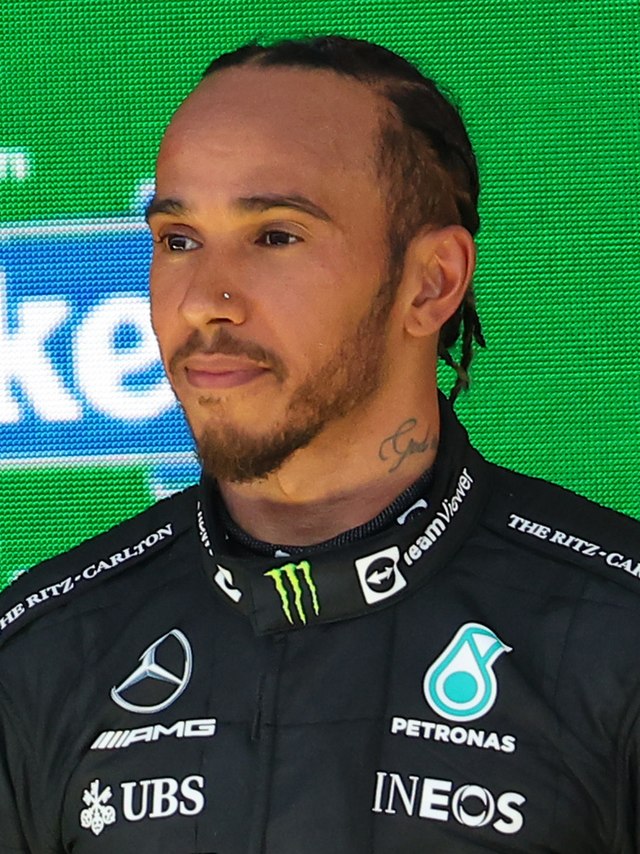
Lewis Hamilton is a name synonymous with speed, precision, and excellence in the world of motorsport. Born on January 7, 1985, in Stevenage, United Kingdom, Hamilton has not only rewritten the record books in Formula 1 but has also become a global icon, transcending the boundaries of sports to influence fashion, music, and social activism. His journey from a young karting prodigy to a seven-time Formula 1 World Champion is a testament to his unparalleled talent, relentless determination, and the ability to overcome adversity.
Early Life and Passion for Racing
Lewis Carl Davidson Hamilton’s passion for racing was evident from a young age. Born to a mixed-race family, with a Black British father, Anthony Hamilton, and a White British mother, Carmen Larbalestier, Lewis grew up in a modest household. His parents separated when he was young, and he lived with his mother and half-sisters while maintaining a close relationship with his father. Anthony played a crucial role in nurturing Lewis’s racing ambitions, working multiple jobs to support his son’s early career in karting.
At the age of eight, Hamilton received a go-kart from his father, marking the beginning of his illustrious racing career. His natural talent quickly became apparent as he dominated the local karting circuits. By the age of 10, he had already won the British Karting Championship, a feat that caught the attention of the racing world.
Breakthrough and Early Success
In 1995, at just 12 years old, Hamilton was signed to the McLaren and Mercedes-Benz Young Driver Support Programme, an unprecedented move that set the stage for his future in Formula 1. This contract was a testament to his prodigious talent and the confidence that McLaren’s then-team principal, Ron Dennis, had in him. Hamilton’s journey through the junior racing categories was nothing short of spectacular. He won the European Karting Championship in 2000 and quickly progressed through the ranks of Formula Renault, Formula 3, and GP2.
By 2006, Hamilton had firmly established himself as one of the most promising young drivers in the world. He won the GP2 championship in his debut season, securing 10 victories out of 15 races. This success paved the way for his entry into Formula 1, the pinnacle of motorsport.
Formula 1 Debut and Early Years
Hamilton made his Formula 1 debut with McLaren in 2007, partnering with the reigning World Champion, Fernando Alonso. The young Briton stunned the motorsport world with his performances, becoming the first rookie to finish on the podium in his debut race at the Australian Grand Prix. Throughout the season, Hamilton displayed remarkable consistency and maturity, battling Alonso and Ferrari’s Kimi Räikkönen for the championship.
The 2007 season culminated in a dramatic finale at the Brazilian Grand Prix, where Hamilton narrowly missed out on the championship by just one point to Räikkönen. Despite this heartbreak, Hamilton’s debut season was hailed as one of the greatest in Formula 1 history, and he was quickly recognized as a future World Champion.
First World Championship and Establishing Dominance
Hamilton’s first World Championship came in 2008, making him the youngest ever World Champion at the time, a record later broken by Sebastian Vettel. The season was a rollercoaster, filled with intense battles, controversies, and dramatic finishes. The climax came again at the Brazilian Grand Prix, where Hamilton secured the title by overtaking Timo Glock on the final lap in treacherous wet conditions, finishing fifth, which was just enough to edge out Ferrari’s Felipe Massa by a single point.
This victory not only solidified Hamilton’s status as one of the sport’s elite drivers but also marked a significant milestone as he became the first Black driver to win the Formula 1 World Championship, breaking barriers in a sport traditionally dominated by white drivers.
Challenges and Growth
After his initial success, Hamilton faced several challenges. The 2009 season was particularly difficult due to a significant overhaul in regulations that saw McLaren struggle with an uncompetitive car. Despite the setbacks, Hamilton managed to secure two victories that year, showcasing his resilience and ability to extract the maximum from his machinery.
In 2010, McLaren’s fortunes improved, and Hamilton found himself in contention for the championship once again. However, fierce competition from Red Bull’s Sebastian Vettel and his teammate, Mark Webber, meant that Hamilton would finish fourth in the standings. The following years saw Hamilton consistently battling at the front, but he was unable to add to his championship tally, often hampered by reliability issues and on-track incidents.
The Mercedes Era: A New Dynasty
In 2013, Hamilton made a bold move by switching from McLaren to Mercedes, replacing the retiring Michael Schumacher. The decision raised eyebrows at the time, as Mercedes had not yet established itself as a dominant force in Formula 1. However, Hamilton’s gamble paid off handsomely when the 2014 season saw the introduction of new turbo-hybrid engines, which Mercedes had mastered better than any other team.
From 2014 onwards, Hamilton and Mercedes ushered in a new era of dominance in Formula 1. He won his second World Championship in 2014, followed by further titles in 2015, 2017, 2018, 2019, and 2020. During this period, Hamilton broke numerous records, including the most pole positions, most wins, and most podium finishes. His rivalry with teammate Nico Rosberg during this time was intense, particularly in 2016 when Rosberg narrowly beat Hamilton to the title.
Hamilton’s success with Mercedes is often compared to the dominance of Michael Schumacher with Ferrari in the early 2000s. However, Hamilton’s achievements are unique in their own right, particularly in an era where the competition is fierce, and the margins between success and failure are razor-thin.
Beyond Racing: Activism and Influence
Lewis Hamilton’s influence extends far beyond the racetrack. He has used his platform to advocate for social justice, environmental sustainability, and diversity in motorsport. Hamilton has been a vocal supporter of the Black Lives Matter movement, taking the knee before races and encouraging the sport to address its lack of diversity. His activism has earned him admiration from many but has also brought criticism from those who believe sports and politics should remain separate.
In 2020, Hamilton launched the Hamilton Commission, an initiative aimed at increasing diversity in British motorsport. He has also pledged to live a more sustainable lifestyle, adopting a plant-based diet and advocating for environmental causes. Hamilton’s commitment to using his platform for positive change has set him apart as not just a champion on the track, but also a leader and role model off it.
Legacy and Records
Lewis Hamilton’s legacy in Formula 1 is unparalleled. As of 2020, he has matched Michael Schumacher’s record of seven World Championships, a feat many thought would never be equaled. In 2021, Hamilton surpassed Schumacher’s record of 91 race wins, setting a new benchmark for future generations. His records include the most pole positions, the most wins at different Grands Prix, and the most consecutive points finishes, among others.
Hamilton’s driving style is characterized by his incredible speed, precision, and racecraft. He is known for his ability to manage races, making strategic decisions that often put him in the best position to win. His consistency and ability to perform under pressure have made him one of the most successful and respected drivers in the history of the sport.
Personal Life and Public Image
Hamilton’s personal life has often been in the spotlight, particularly his high-profile relationship with Nicole Scherzinger, the lead singer of the Pussycat Dolls. The couple’s on-again, off-again relationship was a favorite subject of tabloids until they finally split in 2015. Since then, Hamilton has been linked to several other celebrities, but he has largely kept his personal life private.
Beyond his relationships, Hamilton is known for his love of fashion and music. He has collaborated with designers and has even expressed interest in pursuing a career in music. His unique style and charismatic personality have made him a global brand, attracting sponsorships from some of the world’s biggest companies.
Hamilton’s public image is that of a confident, outspoken, and fiercely competitive individual. He is admired for his dedication to his craft and his willingness to speak out on issues that matter to him. However, his outspoken nature has also made him a polarizing figure, with some criticizing his activism and lifestyle choices.
The Future: Continuing to Break Barriers
As Hamilton enters the latter stages of his career, questions about his future inevitably arise. He has signed a contract extension with Mercedes, indicating that he has no immediate plans to retire. However, Hamilton has hinted at exploring other interests beyond racing, including his work in fashion, music, and activism.
Regardless of when he chooses to retire, Hamilton’s impact on Formula 1 and the world at large will be long-lasting. He has redefined what it means to be a Formula 1 driver, using his platform to influence positive change and inspire millions around the world.
Conclusion: A Champion On and Off the Track
Lewis Hamilton’s journey from a young karting prodigy to a global icon is a story of talent, determination, and breaking barriers. His success on the track is unmatched, with a legacy that will endure for generations. Off the track, Hamilton’s influence as a social activist, fashion icon, and role model has made him one of the most significant figures in the world of sports.
As he continues to compete at the highest level, Hamilton remains focused on winning more championships while also using his voice to advocate for the causes he believes in. Whether on the track or off, Lewis Hamilton’s impact is undeniable, and his story is far from over.


