
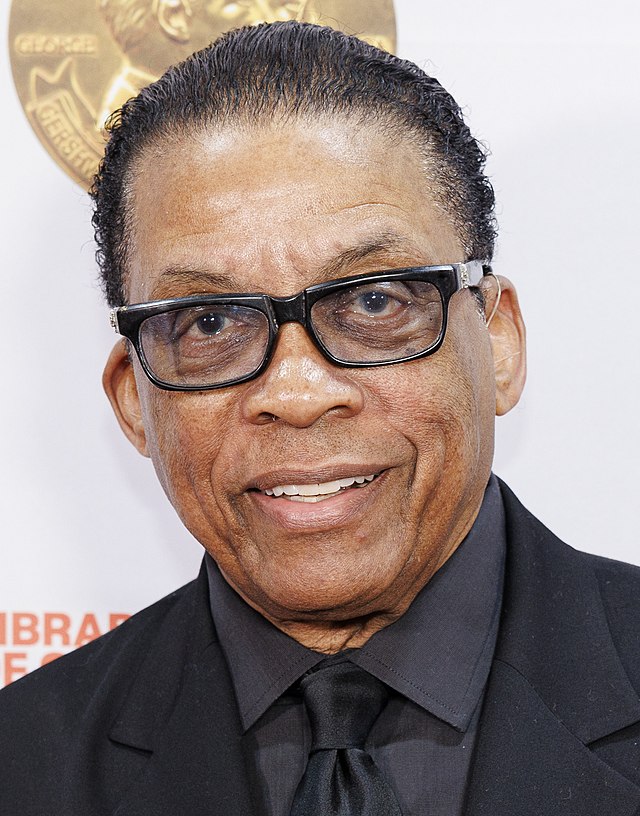
Herbert Jeffrey Hancock, better known as Herbie Hancock, is an iconic figure in the world of jazz and beyond. Born on April 12, 1940, in Chicago, Illinois, Hancock’s career spans over six decades, during which he has consistently pushed the boundaries of music, embracing and influencing various genres, from jazz to funk, to electronic music. His life and work not only reflect his prodigious talent but also the evolving landscape of modern music.
Early Life and Musical Beginnings
Herbie Hancock was born into a middle-class African American family in Chicago, a city that would play a pivotal role in shaping his musical career. From an early age, Hancock displayed an extraordinary aptitude for music. At just seven years old, he began studying classical piano, quickly revealing himself as a child prodigy. His early mastery of the instrument led to a remarkable performance at the age of 11 when he played the first movement of Mozart’s Piano Concerto No. 26 in D Major, K. 537 with the Chicago Symphony Orchestra. This early success set the stage for what would become a legendary career.
Despite his classical training, Hancock’s interests soon expanded beyond the classical repertoire. As a teenager, he developed an ear for jazz, even though he had no formal jazz instruction. Influenced by recordings of the vocal group The Hi-Lo’s and the music he heard on the radio, Hancock began to cultivate a deep appreciation for harmony and improvisation, laying the foundation for his future innovations in jazz.
Education and Early Career
In 1960, Hancock encountered the pianist Chris Anderson, whose playing had a profound impact on him. Hancock implored Anderson to take him on as a student, and Anderson agreed. Under Anderson’s mentorship, Hancock refined his understanding of jazz, deepening his knowledge of harmony and improvisation. During this period, Hancock attended Grinnell College, where he initially majored in electrical engineering before switching to music.
Hancock’s professional career took off in the early 1960s when he began working with notable jazz musicians such as Coleman Hawkins and Donald Byrd. Byrd, who was studying at the Manhattan School of Music at the time, suggested that Hancock study composition with the renowned composer Vittorio Giannini. This recommendation led Hancock to New York City, where he immersed himself in the vibrant jazz scene, performing with artists like Phil Woods and Oliver Nelson.
In 1962, Hancock released his debut album, Takin’ Off, on the Blue Note label. The album was a success, particularly the track “Watermelon Man,” which became a hit after being covered by Mongo Santamaria. This early success caught the attention of one of jazz’s most influential figures, Miles Davis.
The Miles Davis Quintet and Beyond
In 1963, Herbie Hancock was invited by Miles Davis to join his new quintet, an opportunity that would prove to be a turning point in Hancock’s career. The quintet, which also included Ron Carter on bass, Tony Williams on drums, and Wayne Shorter on saxophone, became one of the most celebrated ensembles in jazz history. Together, they recorded several groundbreaking albums, including Seven Steps to Heaven (1963) and E.S.P. (1965).
During his time with Davis, Hancock continued to release solo albums on Blue Note, including Empyrean Isles (1964) and Maiden Voyage (1965). These albums showcased Hancock’s growing compositional prowess and his ability to blend traditional jazz with innovative, forward-thinking ideas. Tracks like “Cantaloupe Island” and “Maiden Voyage” became jazz standards, further cementing Hancock’s reputation as a leading figure in the jazz world.
Embracing Funk and Fusion
As the 1960s progressed, Hancock began to explore new musical territories. In 1968, after leaving the Miles Davis Quintet, he recorded Fat Albert Rotunda, an album heavily influenced by funk music. This was a significant departure from his earlier, more straight-ahead jazz recordings and marked the beginning of Hancock’s exploration of electronic instruments and new sonic textures.
The early 1970s saw Hancock delve deeper into electronic music and jazz fusion. His albums Mwandishi (1971), Crossings (1972), and Sextant (1973) featured experimental sounds and complex rhythms, blending jazz with elements of rock, funk, and electronic music. These albums, though not commercial successes at the time, are now considered milestones in the development of jazz fusion.
In 1973, Hancock released Head Hunters, an album that would become one of the best-selling jazz albums of all time. Featuring the iconic track “Chameleon,” Head Hunters was a bold fusion of funk, jazz, and electronic music, characterized by its infectious grooves and innovative use of synthesizers. The album’s success introduced Hancock to a broader audience and solidified his position as a pioneer of jazz fusion.
Continued Innovation and Mainstream Success
Throughout the 1970s and 1980s, Hancock continued to push the boundaries of music, constantly reinventing himself and his sound. Albums like Man-Child (1975), Sunlight (1978), and Future Shock (1983) saw Hancock exploring everything from disco to electronic music. The single “Rockit,” from Future Shock, became a worldwide hit, thanks in part to its groundbreaking music video, which won several MTV Video Music Awards.
Hancock’s ability to adapt to new musical trends while maintaining his unique voice set him apart from many of his contemporaries. Whether he was experimenting with synthesizers, collaborating with hip-hop artists, or composing film scores, Hancock’s work always bore the mark of his innovative spirit and deep musicality.
Honors and Awards
Herbie Hancock’s contributions to music have been recognized with numerous awards and honors throughout his career. He has won 14 Grammy Awards, including Album of the Year for River: The Joni Letters (2007), a tribute to his friend and fellow musician Joni Mitchell. This album, which featured collaborations with artists like Norah Jones, Tina Turner, and Leonard Cohen, was only the second jazz album in history to win the prestigious award.
In addition to his Grammy wins, Hancock has received several other accolades, including the Kennedy Center Honors in 2013, recognizing his lifetime contributions to American culture through the performing arts. He has also been named a UNESCO Goodwill Ambassador and was awarded the prestigious Polar Music Prize in 2018.
Personal Life and Legacy
Herbie Hancock’s influence extends beyond his recordings and performances. He has been an advocate for music education, serving as the chairman of the Herbie Hancock Institute of Jazz, which provides free education programs for young musicians. Hancock has also been a vocal supporter of technology in music, embracing new instruments and production techniques throughout his career.
Hancock’s personal life has been marked by his commitment to Buddhism, which he credits with helping him navigate the challenges of his career and personal life. He has often spoken about how his spiritual practice has influenced his music, helping him to stay grounded and focused on his creative goals.
Hancock’s autobiography, Possibilities, published in 2014, offers an intimate look at his life and career, providing insights into the experiences and influences that shaped his music. The book reflects Hancock’s ongoing curiosity and his belief in the power of music to bring people together.
Legacy and Influence
Herbie Hancock’s legacy as a musician and innovator is undeniable. His work has influenced countless artists across genres, from jazz to hip-hop to electronic music. His ability to adapt to changing musical landscapes while maintaining a distinct artistic voice has made him a towering figure in modern music.
Hancock’s pioneering use of electronic instruments, his exploration of jazz fusion, and his collaborations with a diverse range of artists have left a lasting impact on the music industry. His albums continue to be studied and celebrated for their innovation, creativity, and technical excellence.
Conclusion
Herbie Hancock’s life and career serve as a testament to the power of creativity and innovation in music. From his early days as a child prodigy in Chicago to his status as a global music icon, Hancock has consistently pushed the boundaries of what is possible in music. His willingness to embrace new technologies, explore different genres, and collaborate with artists from various backgrounds has made him one of the most versatile and influential musicians of the 20th and 21st centuries.
Hancock’s story is not just one of musical achievement, but also of personal growth and exploration. His commitment to his craft, his dedication to education, and his spiritual journey have all played a role in shaping the man behind the music. As we look back on his career, it is clear that Herbie Hancock’s contributions to music will continue to resonate for generations to come.
Herbie Hancock remains an enduring symbol of artistic excellence, a musician whose work transcends genres and defies easy categorization. His influence is felt not only in the world of jazz but across the entire spectrum of modern music. As he continues to create and inspire, Hancock’s legacy as a true musical innovator is secure.


