
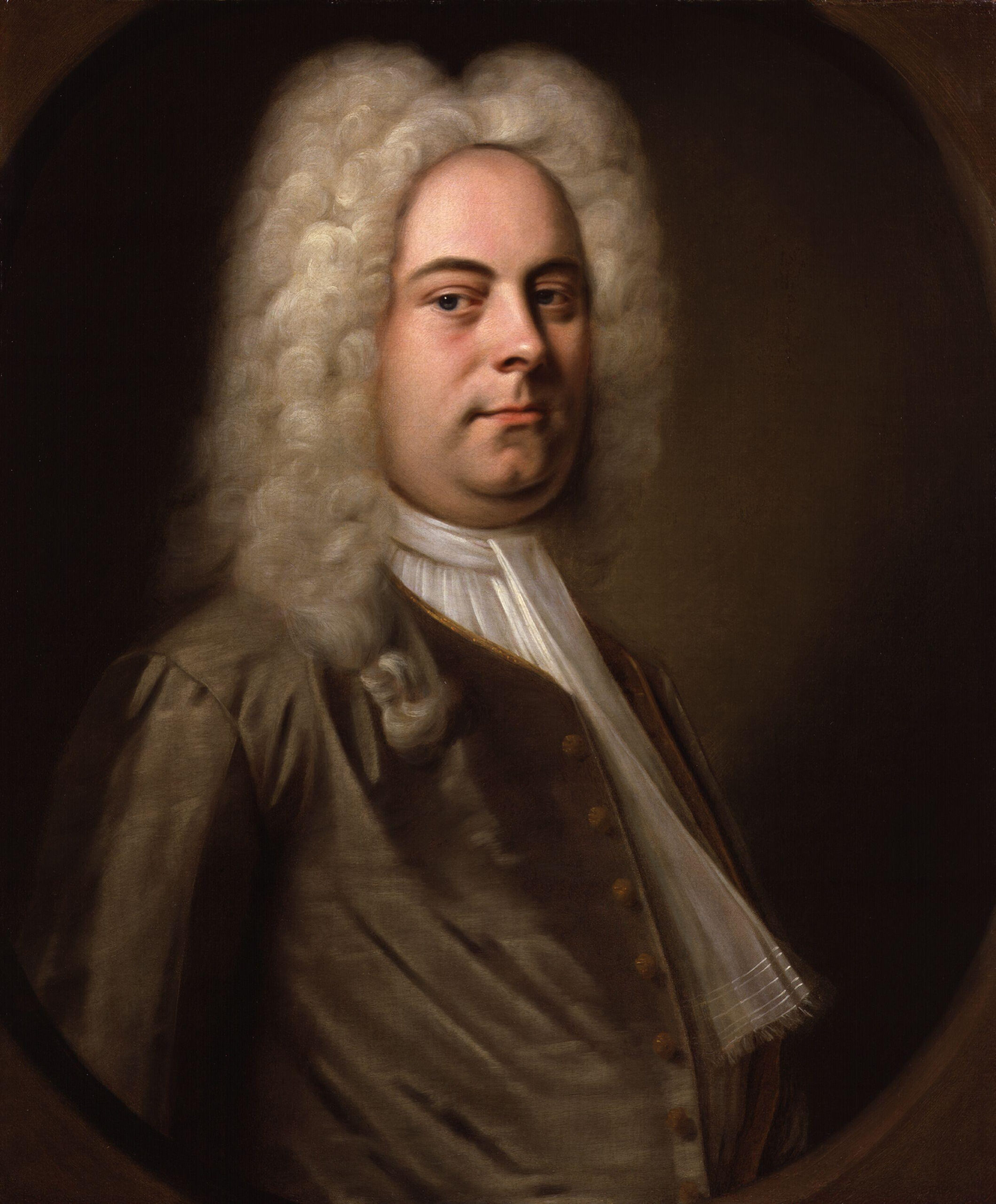
George Frideric Handel, born Georg Friedrich Händel on February 23, 1685, in Halle, Saxony (now Germany), is revered as one of the greatest composers of the Baroque era. His life, marked by extraordinary achievements and notable compositions, has left an indelible impact on the history of music. Handel’s journey from a young prodigy in Germany to a celebrated composer in England is a story of talent, perseverance, and the transformative power of music.
Early Life and Musical Beginnings
Handel was born into a family that did not initially support his musical inclinations. His father, Georg Händel, was a distinguished barber-surgeon who served the Duke of Saxony and envisioned a more stable and prestigious career for his son—ideally in law. However, Handel’s musical talent was evident from a very young age. Despite his father’s opposition, Handel managed to practice music in secret, using a small clavichord hidden in the attic.
Handel’s prodigious talent caught the attention of Duke Johann Adolf I of Saxony-Weissenfels. The Duke, upon hearing young Handel play the organ at a church, was so impressed that he persuaded Handel’s father to allow him to pursue formal music education. This marked the beginning of Handel’s journey in music. He was soon placed under the tutelage of Friedrich Wilhelm Zachow, the organist at Halle’s Liebfrauenkirche, who provided Handel with a comprehensive education in composition and performance.
By the age of 12, Handel had surpassed his teacher’s knowledge, and Zachow reportedly declared that there was nothing more he could teach the young prodigy. This early mastery of the organ, harpsichord, and violin, as well as a deep understanding of composition, set the foundation for Handel’s future success.
Education and Early Career
In 1702, at the age of 17, Handel enrolled at the University of Halle, ostensibly to study law, as his father had wished. However, his passion for music was unwavering. Within a year, Handel accepted a position as organist at the Cathedral of Brandenburg, signaling his full commitment to a career in music.
In 1703, Handel moved to Hamburg, then a significant center for opera in Germany. He joined the opera orchestra there as a violinist and harpsichordist under the direction of Reinhard Keiser, a prominent composer and opera impresario. It was in Hamburg that Handel composed his first operas, Almira and Nero, both premiering in 1705. These early works showcased his ability to blend the Italian style of opera with German musical traditions, laying the groundwork for his later successes.
The Italian Influence
Handel’s burgeoning reputation as a composer led him to Italy in 1706, where he spent three years absorbing the vibrant musical culture of cities like Venice, Rome, Florence, and Naples. Italy, at that time, was the epicenter of the Baroque musical tradition, particularly opera. During his stay, Handel composed a number of operas, oratorios, and cantatas, including Agrippina (1709) and Il trionfo del tempo e del disinganno (1707), which solidified his status as a composer of international repute.
In Rome, Handel was introduced to the highest echelons of the Catholic Church and the Roman aristocracy. He composed La Resurrezione (1708) for the Easter celebrations at the palace of the Marchese Ruspoli, one of his most important patrons during this period. The success of Agrippina, which was performed in Venice, marked the pinnacle of his Italian period, receiving an unprecedented 27 performances. Handel’s time in Italy was crucial in shaping his compositional style, particularly in opera, where he adopted the Italian style of dramatic expression and melodic embellishment that would characterize much of his later work.
Rise to Fame in England
In 1710, Handel returned to Germany to take up the position of Kapellmeister to the Elector of Hanover, who would later become King George I of England. Despite his obligations in Hanover, Handel was drawn to the thriving cultural scene in London, which at the time was emerging as one of Europe’s leading cities for music and the arts.
Handel made his first visit to London in 1710, and the following year, his opera Rinaldo premiered at the Queen’s Theatre in Haymarket. Rinaldo was a resounding success, captivating English audiences with its exotic settings, dramatic arias, and vivid orchestration. The success of Rinaldo marked the beginning of Handel’s long and fruitful relationship with England, where he eventually settled permanently in 1712.
Over the next three decades, Handel composed a remarkable series of operas for the London stage, including Giulio Cesare (1724), Tamerlano (1724), and Rodelinda (1725). These operas were celebrated for their emotional depth, intricate plots, and the expressive arias that showcased the virtuosity of the singers. Handel’s ability to blend the dramatic intensity of Italian opera with the grandeur of English Baroque made his works immensely popular with the London public.
Establishment as a Leading Composer
In 1714, Handel’s fortunes improved dramatically when his former employer, the Elector of Hanover, ascended to the British throne as King George I. This development cemented Handel’s position as a leading composer in England. In 1717, he was appointed as the music director for the Duke of Chandos, for whom he composed the famous Chandos Anthems and the masque Acis and Galatea.
Handel’s work during this period was not confined to opera. He also composed a vast body of sacred music, including oratorios, anthems, and hymns, which reflected his deep religious convictions. Among these works, the Utrecht Te Deum and Jubilate (1713) and Coronation Anthems (1727), written for the coronation of King George II, stand out as masterpieces of Baroque choral music.
In 1720, Handel was appointed the music director of the newly formed Royal Academy of Music, an institution dedicated to the promotion of Italian opera in London. During his tenure, he composed some of his most enduring operas and helped to establish London as a major center for opera.
Transition to Oratorio and Later Works
By the late 1730s, the popularity of Italian opera in London was waning, and Handel began to focus more on composing oratorios, a genre that combined elements of opera with sacred themes. Oratorios were performed without staging, costumes, or scenery, making them more accessible and appealing to a wider audience. This shift proved to be a defining moment in Handel’s career.
In 1739, Handel composed Israel in Egypt, an oratorio that showcased his mastery of choral writing. However, it was his oratorio Messiah (1741) that became one of the most famous and frequently performed works in Western music. Premiered in Dublin in 1742, Messiah is celebrated for its powerful choruses, including the iconic “Hallelujah” chorus. According to tradition, King George II was so moved by the “Hallelujah” chorus that he stood up during its performance, a gesture that led to the enduring custom of audiences standing during this part of the oratorio.
Handel continued to compose oratorios for the rest of his life, including Samson (1743), Judas Maccabaeus (1747), and Solomon (1749). These works, characterized by their dramatic intensity and rich orchestration, solidified Handel’s reputation as a composer of sacred music and contributed to his lasting legacy.
Personal Life and Legacy
Despite his fame, Handel remained a private individual, dedicated to his work. He never married and had few close friends, but he was known for his generosity, particularly towards charitable causes. In 1750, he organized a benefit performance of Messiah to raise funds for the Foundling Hospital in London, a charity for abandoned children. This tradition continued annually, reflecting Handel’s commitment to using his music for social good.
In his later years, Handel faced significant health challenges, including deteriorating eyesight that eventually led to blindness. Despite these difficulties, he continued to compose, dictating his music to assistants. His final work, Jephtha (1752), was completed just before he became completely blind.
Handel passed away on April 14, 1759, at the age of 74. He was buried in Westminster Abbey, a testament to his significance in English cultural life. Handel’s death marked the end of an era in music, but his works have continued to inspire generations of musicians and composers.
Influence and Impact
Handel’s influence on the development of Western music cannot be overstated. His synthesis of German, Italian, and English musical traditions helped to create a distinctly cosmopolitan style that resonated across Europe. Handel’s operas and oratorios set new standards for dramatic expression and musical complexity, influencing composers such as Haydn, Beethoven, and Mendelssohn.
Beethoven, in particular, held Handel in the highest regard, famously stating, “Handel is the greatest composer that ever lived. I would uncover my head and kneel before his tomb.” Handel’s music, with its blend of emotional depth and technical brilliance, continues to be performed and celebrated worldwide, making him one of the most enduring figures in classical music.
Conclusion
George Frideric Handel’s life and career are a testament to the power of music to transcend cultural and national boundaries. From his early days as a prodigy in Germany to his rise as one of England’s most celebrated composers, Handel’s journey was marked by creativity, innovation, and a deep commitment to his art. His works, particularly his oratorios, have become cornerstones of Western music, beloved by audiences for their emotional power and musical excellence.
As we reflect on Handel’s legacy, it is clear that his contributions to music will continue to resonate for centuries to come. His ability to blend different musical traditions into a cohesive and expressive whole has left an indelible mark on the history of music, ensuring that George Frideric Handel remains one of the greatest composers of all time.


