
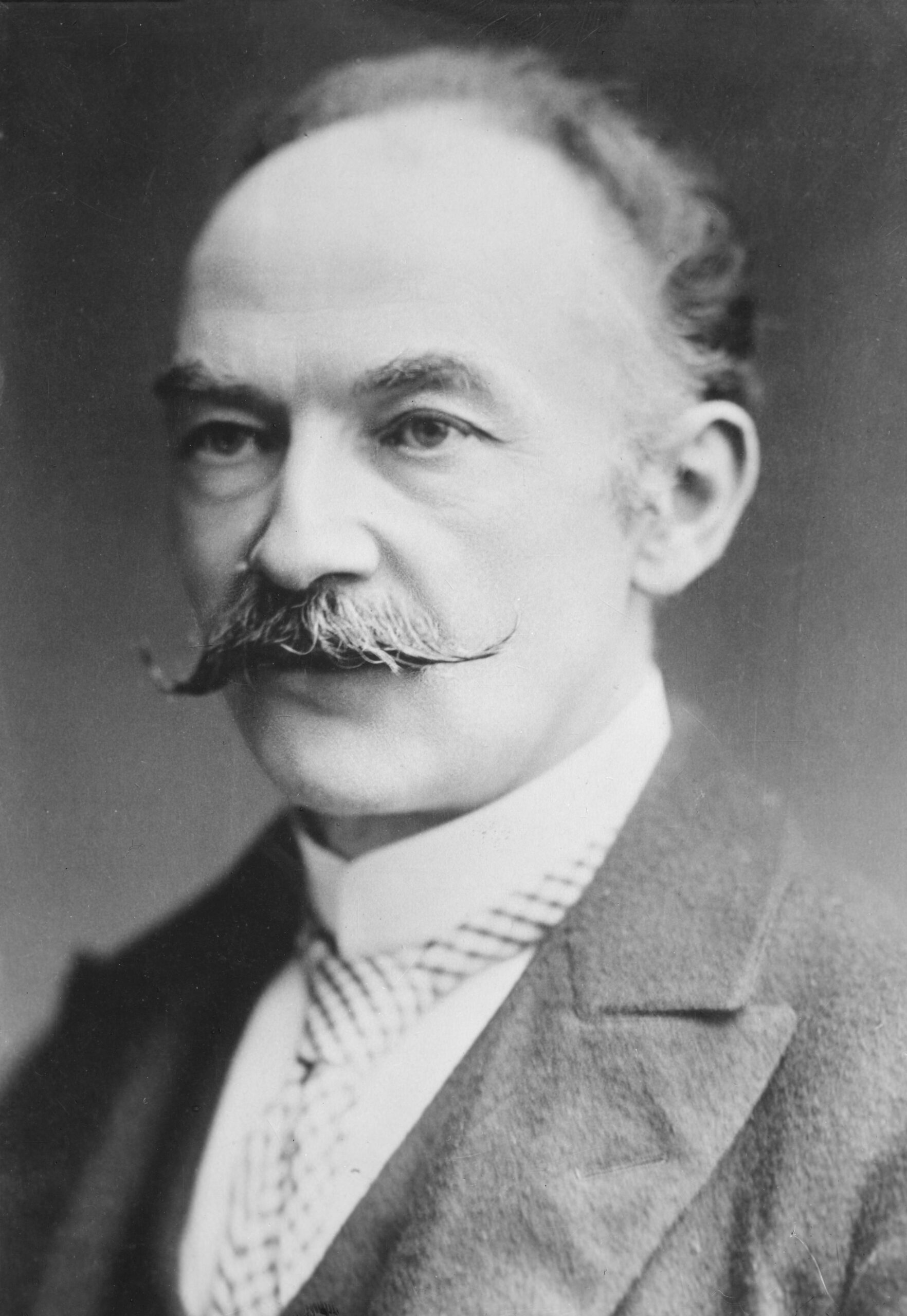
Thomas Hardy, a towering figure in English literature, is best known for his novels and poetry that delve into the human condition, social injustices, and the inevitability of fate. Born in the 19th century, Hardy’s work spans a period of great change in England, capturing the essence of a society in transition. His literary contributions have left an indelible mark on the world, influencing countless writers and readers alike.
Early Life and Education
Thomas Hardy was born on June 2, 1840, in Higher Bockhampton, a small hamlet in Dorset, England. The son of Thomas Hardy Sr., a stonemason, and Jemima Hardy, a woman with a deep interest in literature, music, and folklore, Hardy was exposed to cultural influences from an early age. His mother, in particular, played a significant role in nurturing his intellectual development.
Hardy’s early education took place at a local village school, where he displayed a talent for languages, particularly Latin. At the age of eight, he attended Mr. Last’s Academy for Young Gentlemen in Dorchester, where he excelled academically. However, due to his family’s financial constraints, Hardy was unable to attend university. This limitation, however, did not curb his intellectual pursuits. Instead, he began an apprenticeship with John Hicks, a local architect in Dorchester, at the age of 16. This training in architecture would later influence the detailed descriptions of settings and structures in his novels.
Career as an Architect and the Shift to Literature
Hardy’s work as an architect took him to London in 1862, where he furthered his education at King’s College. During this period, he received several awards from the Royal Institute of British Architects and the Architectural Association. Despite his success in architecture, Hardy found London life challenging, particularly due to the rigid class distinctions that made him feel like an outsider.
It was in London that Hardy began to explore literature more seriously, influenced by the works of John Stuart Mill, Auguste Comte, and Charles Fourier. His growing interest in social reform and the human condition began to shape his literary ambitions. By 1867, Hardy decided to return to Dorset, where he committed himself to writing full-time.
Early Literary Efforts and Initial Struggles
Hardy’s first novel, The Poor Man and the Lady, was completed in 1867 but never published. His mentor, the renowned Victorian novelist George Meredith, advised him against publishing it due to its controversial political content, which could have jeopardized Hardy’s future career. Following this advice, Hardy abandoned the manuscript, even going so far as to destroy it.
Undeterred, Hardy continued to write, and in 1871, he published his first novel, Desperate Remedies, followed by Under the Greenwood Tree in 1872. Both novels were published anonymously and met with moderate success. It wasn’t until the publication of A Pair of Blue Eyes in 1873 that Hardy began to gain recognition. This novel, which draws heavily on his courtship of his first wife, Emma Lavinia Gifford, introduced readers to his unique style, blending pastoral settings with deep psychological insight.
Rise to Fame: The Wessex Novels
The year 1874 marked a turning point in Hardy’s career with the publication of Far from the Madding Crowd. The novel was a commercial success and solidified Hardy’s reputation as a leading novelist of his time. In this work, Hardy introduced the concept of “Wessex,” a fictional region based on the rural counties of southwestern England. This setting became the backdrop for many of his subsequent novels, creating a rich and immersive world that resonated with readers.
Far from the Madding Crowd was followed by a series of novels that are now considered classics of English literature, including The Return of the Native (1878), The Mayor of Casterbridge (1886), and The Woodlanders (1887). These works are characterized by their exploration of tragic themes, complex characters, and a deep sense of place. Hardy’s portrayal of rural life, combined with his critique of social and moral issues, set him apart from his contemporaries.
The Controversy of Tess of the d’Urbervilles and Jude the Obscure
In 1891, Hardy published Tess of the d’Urbervilles, one of his most famous and controversial novels. The story of Tess, a young woman who falls victim to the harsh realities of Victorian society, challenged the moral standards of the time. Hardy’s sympathetic portrayal of Tess as a “fallen woman” was met with both praise and condemnation, sparking widespread debate.
Four years later, Hardy published Jude the Obscure, which provoked an even stronger reaction. The novel’s unflinching examination of marriage, religion, and societal expectations was deemed scandalous by many Victorian readers. Critics accused Hardy of immorality, and some even called for the book to be banned. The negative reception deeply affected Hardy, leading him to abandon novel-writing altogether. Instead, he turned his creative energies towards poetry, a medium in which he had always excelled.
Hardy’s Contribution to Poetry
Although Hardy is best known for his novels, his poetry is equally significant. After the publication of Jude the Obscure, Hardy devoted the rest of his life to poetry, producing a body of work that is highly regarded for its technical mastery and emotional depth. His poems often reflect on themes of love, loss, and the passage of time, drawing inspiration from his personal experiences and the landscapes of Wessex.
One of Hardy’s most poignant collections is Poems of 1912-13, written in the aftermath of his first wife Emma’s death. These poems capture Hardy’s profound grief and guilt over their estranged relationship, offering a deeply personal glimpse into his emotional world. The collection is widely considered one of the most moving elegiac sequences in English literature.
Later Life and Legacy
In 1914, Hardy married Florence Emily Dugdale, his secretary, who was nearly 40 years his junior. Despite this new relationship, Hardy remained deeply affected by the memory of his first wife, which continued to influence his work.
Hardy lived a long and productive life, continuing to write until his death. In 1910, he was awarded the Order of Merit, one of Britain’s highest honors, and he was also nominated for the Nobel Prize in Literature several times. Hardy’s work had a profound impact on both English literature and culture, influencing generations of writers and readers.
Thomas Hardy passed away on January 11, 1928, at the age of 87. His death marked the end of an era, but his literary legacy endures. Hardy was buried in Westminster Abbey’s Poets’ Corner, a testament to his significant contribution to English literature. However, in accordance with his wishes, his heart was buried alongside his first wife in Stinsford, Dorset, the land that had inspired so much of his work.
The Enduring Influence of Thomas Hardy
Thomas Hardy’s influence extends far beyond the realm of literature. His works have been adapted into numerous films, television series, and stage productions, keeping his stories alive for new audiences. The themes he explored—social inequality, the struggle against fate, and the complexities of human relationships—remain relevant today, resonating with readers across generations.
Hardy’s novels, with their richly detailed settings and complex characters, have left an indelible mark on English literature. His ability to capture the essence of rural life while addressing universal themes has ensured his place among the greatest writers in history. Moreover, his poetry, with its exploration of love, loss, and the passage of time, continues to be celebrated for its emotional depth and technical skill.
In a world where literature often grapples with the same issues that Hardy addressed—inequality, the impact of societal norms, and the individual’s place in the world—his work remains as vital and insightful as ever. Thomas Hardy was not just a chronicler of his time but a writer whose insights into the human condition continue to offer profound truths about our own.
Conclusion
Thomas Hardy’s life and work encapsulate the essence of the human experience—its struggles, its tragedies, and its moments of beauty. From his humble beginnings in Dorset to his rise as one of the most celebrated writers of his time, Hardy’s journey was one of perseverance, creativity, and an unyielding commitment to truth. His novels and poetry remain a testament to his genius, offering readers a window into the complexities of life in both the Victorian era and beyond. As we continue to explore his works, we find that Hardy’s insights are not bound by time, but speak to the enduring nature of the human spirit.


