
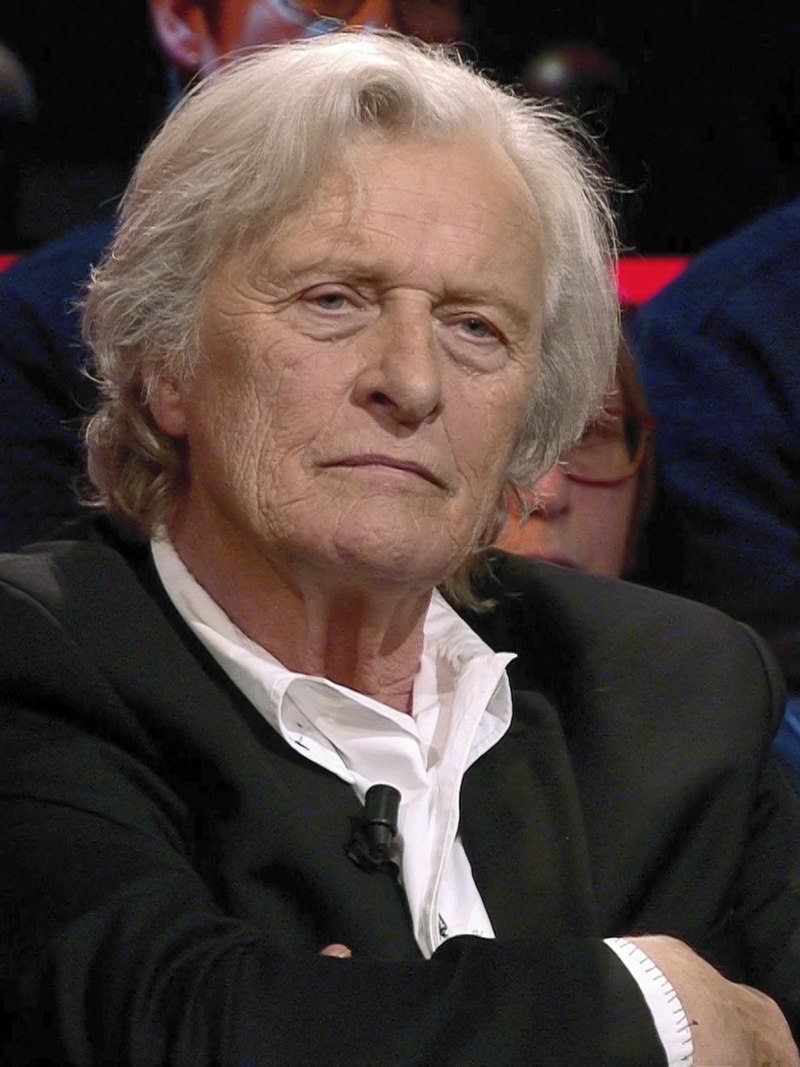
Rutger Hauer, born on January 23, 1944, in Breukelen, Netherlands, was a Dutch actor whose remarkable career spanned over five decades. Known for his intense and often enigmatic screen presence, Hauer was a versatile actor who seamlessly transitioned between European and Hollywood cinema. His roles in cult classics, particularly his iconic performance as Roy Batty in Ridley Scott’s “Blade Runner,” cemented his place in film history. This article delves into the life, career, and enduring legacy of Rutger Hauer, exploring the nuances of his work and the historical context that shaped his path to fame.
Early Life and Background
Rutger Oelsen Hauer was born into a family deeply rooted in the performing arts. His parents, Arend and Teunke Hauer, were both actors, and it was within this artistic environment that Hauer’s passion for acting began to take shape. Growing up in Amsterdam, he was surrounded by the world of theater, which would eventually lead him to the stage and, later, to the silver screen.
Despite his early exposure to the arts, Hauer’s journey to becoming an actor was not straightforward. At the age of 15, driven by a desire for adventure and inspired by his grandfather, who was a captain, Hauer left home and embarked on a ship as a merchant seaman. However, his career at sea was cut short due to his color blindness, a condition that made it difficult for him to navigate. This unexpected turn of events led him back to land, where he took on various manual jobs, including carpentry and electrical work, while attending night school for drama.
Early Career and Rise to Fame
Hauer’s formal acting training began in earnest when he enrolled at the Academy for Theatre and Dance in Amsterdam. After completing his studies, he quickly became involved in the experimental theater scene. In 1969, Hauer made his breakthrough with the Dutch television series “Floris,” a medieval adventure show directed by Paul Verhoeven. The series was a significant hit in the Netherlands, and it marked the beginning of a fruitful collaboration between Hauer and Verhoeven.
Hauer’s work with Verhoeven continued with the films “Turkish Delight” (1973) and “Katie Tippel” (1975). Both films were critical and commercial successes in the Netherlands, with “Turkish Delight” in particular becoming one of the most popular Dutch films of all time. Hauer’s performance in these films showcased his ability to convey both physicality and emotional depth, traits that would become hallmarks of his acting style.
Hollywood Breakthrough and Blade Runner
Hauer’s transition to international stardom came in the early 1980s when he began to attract the attention of Hollywood filmmakers. His first major English-language role was in the 1975 film “The Wilby Conspiracy,” where he starred alongside Sidney Poitier and Michael Caine. The film, set in apartheid-era South Africa, highlighted Hauer’s capacity to engage with complex political themes, a characteristic that would recur throughout his career.
However, it was his role in Ridley Scott’s 1982 science fiction masterpiece “Blade Runner” that truly catapulted Hauer to global fame. In the film, Hauer played Roy Batty, a rogue replicant who leads a group of escaped androids in a quest for more life. Hauer’s portrayal of Batty was both chilling and sympathetic, culminating in the now-famous “Tears in Rain” monologue, which he largely improvised. This performance is often cited as one of the greatest in science fiction cinema, and it established Hauer as a compelling and unique talent in Hollywood.
Career Highlights and Diverse Roles
Following the success of “Blade Runner,” Hauer continued to work steadily in both European and American films. His versatility as an actor allowed him to take on a wide range of roles, from heroes to villains, and from historical dramas to science fiction.
In 1985, Hauer starred in “Ladyhawke,” a fantasy film directed by Richard Donner, where he played a cursed knight alongside Michelle Pfeiffer. The film was a departure from his darker roles and demonstrated his ability to adapt to different genres. That same year, he appeared in “Flesh & Blood,” a gritty medieval adventure directed by Verhoeven, which further solidified his reputation for choosing complex and challenging roles.
Hauer’s ability to portray menacing characters was further showcased in “The Hitcher” (1986), where he played a sadistic drifter who terrorizes a young couple. His performance in this film was terrifyingly convincing, earning him critical acclaim and adding to his growing list of iconic roles.
In 1989, Hauer starred in “The Legend of the Holy Drinker,” directed by Ermanno Olmi. This film, based on the novella by Joseph Roth, allowed Hauer to explore more spiritual and introspective themes. His portrayal of Andreas, a homeless alcoholic who seeks redemption, was nuanced and deeply moving, earning him the Best Actor award at the Venice Film Festival.
Advocacy and Personal Life
Throughout his career, Hauer was known not only for his acting but also for his activism. He was deeply committed to social and environmental causes, particularly in the fight against HIV/AIDS. In 2000, he founded the Rutger Hauer Starfish Association, a nonprofit organization dedicated to raising awareness and funds for HIV/AIDS prevention and treatment. His humanitarian work earned him widespread respect and admiration, highlighting a side of the actor that went beyond his on-screen persona.
Hauer’s personal life was marked by his dedication to his craft and his causes. He was married twice, first to Heidi Merz, with whom he had a daughter, Aysha, and later to Ineke ten Kate, whom he remained with until his death. Despite his fame, Hauer maintained a relatively private life, often retreating to his home in the Netherlands when he was not working.
Later Career and Legacy
In the 1990s and 2000s, Hauer continued to work prolifically, appearing in a variety of films and television series. Notable films from this period include “Buffy the Vampire Slayer” (1992), where he played the vampire king Lothos, and “Sin City” (2005), directed by Robert Rodriguez, where he portrayed the corrupt Cardinal Roark. He also had a memorable role in Christopher Nolan’s “Batman Begins” (2005) as the manipulative CEO of Wayne Enterprises.
Despite being in his later years, Hauer showed no signs of slowing down. He continued to take on roles that challenged him, such as his portrayal of a vampire in Dario Argento’s “Dracula 3D” (2012) and his performance in “Hobo with a Shotgun” (2011), a grindhouse-inspired film that became a cult favorite.
Hauer’s final film role was in the 2018 film “The Sisters Brothers,” directed by Jacques Audiard, where he played the mysterious character of Commodore. Even in his final years, Hauer’s presence on screen remained as compelling as ever.
Rutger Hauer passed away on July 19, 2019, at the age of 75, after a short illness. His death marked the end of an era for fans of his work, but his legacy continues to live on through the many memorable performances he left behind.
Conclusion
Rutger Hauer’s life and career were marked by a dedication to his craft, a willingness to take on challenging roles, and a commitment to social causes. From his early days in Dutch television to his iconic roles in Hollywood, Hauer’s body of work is a testament to his versatility and talent as an actor. His portrayal of complex characters, often on the fringes of society, resonated with audiences and critics alike, making him one of the most respected actors of his generation.
Hauer’s impact on cinema, particularly in the science fiction genre, is undeniable. His performance as Roy Batty in “Blade Runner” remains a high point in the genre’s history, and his work in films like “The Hitcher” and “Ladyhawke” continues to be celebrated by fans and filmmakers.
Beyond his acting, Hauer’s humanitarian efforts demonstrated his compassion and his desire to make a difference in the world. His work with the Rutger Hauer Starfish Association and other charitable organizations has left a lasting impact, ensuring that his legacy extends beyond the screen.
As we reflect on Rutger Hauer’s life and career, it is clear that he was more than just an actor; he was a storyteller, an activist, and a man who lived his life with passion and purpose. His performances will continue to inspire and entertain future generations, ensuring that the name Rutger Hauer remains synonymous with excellence in acting.


