
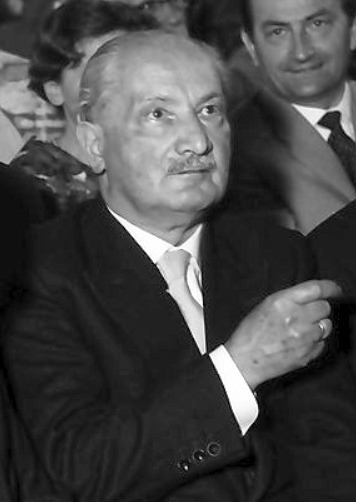
Martin Heidegger, a towering figure in 20th-century philosophy, remains one of the most influential, yet controversial, philosophers of our time. Born on September 26, 1889, in Messkirch, Germany, Heidegger’s work and life have been the subject of intense scrutiny and debate, particularly due to his complex relationship with Nazism and his profound influence on existentialism, phenomenology, and hermeneutics. This article delves deep into the life of Martin Heidegger, exploring his early years, philosophical contributions, controversies, and enduring legacy.
Early Life and Education
Martin Heidegger was born into a modest Catholic family in Messkirch, a small town in the German region of Baden-Württemberg. His upbringing in a devout Catholic environment initially shaped his worldview, leading him to explore religious studies. Heidegger even spent a brief period as a novice in a Jesuit seminary before abandoning this path due to a severe psychological crisis in 1911.
This crisis marked a turning point in Heidegger’s life, as he began to distance himself from theological studies and moved towards philosophy. He enrolled at the University of Freiburg, where he was deeply influenced by the works of Edmund Husserl, particularly Husserl’s Ideas: General Introduction to Pure Phenomenology. This period of intellectual exploration led Heidegger to focus on the intersections of logic, metaphysics, and existential questions, ultimately shaping his unique philosophical perspective.
Academic Career and the Birth of Being and Time
Heidegger’s academic career began to flourish after completing his dissertation on “The Doctrine of Judgment in Psychologism” under the supervision of Heinrich Rickert, a prominent Neo-Kantian philosopher. His early work demonstrated a deep engagement with phenomenology, which laid the groundwork for his later philosophical developments.
In 1918, Heidegger achieved Habilitation (a post-doctoral qualification) with a thesis on “The Doctrine of Categories and Meaning in Duns Scotus,” securing a position as a lecturer at the University of Freiburg. It was during this time that he became an assistant to Edmund Husserl, who would later become both a mentor and a pivotal figure in Heidegger’s intellectual journey.
Heidegger’s philosophical breakthrough came in 1927 with the publication of Being and Time (Sein und Zeit), a work that would cement his place as one of the leading philosophers of the 20th century. Being and Time explored the fundamental question of “Being” (Sein)—a concept that had been largely overlooked in the history of Western philosophy. Heidegger sought to revive the question of what it means “to be,” examining human existence (which he termed Dasein) in its temporal and finite nature. The book’s innovative approach, combining phenomenology with existential analysis, had a profound impact on the field and influenced a wide range of philosophical movements, including existentialism and deconstruction.
Heidegger and National Socialism: A Controversial Affiliation
Despite his intellectual achievements, Heidegger’s legacy is marred by his brief but troubling association with the Nazi regime. In 1933, following Adolf Hitler’s rise to power, Heidegger was appointed Rector of the University of Freiburg. During his tenure, he delivered a speech that many interpreted as supportive of the Nazi regime. Heidegger’s public endorsement of Nazism, coupled with his membership in the Nazi Party, has led to enduring controversy and debate about the extent of his complicity in the regime’s crimes.
Heidegger’s motives for supporting Nazism remain a subject of scholarly debate. Some argue that his initial support was motivated by a belief that the Nazi movement could bring about a moral and cultural renewal in Germany, aligning with his philosophical ideas about the crisis of modernity. Others suggest that his involvement was driven by opportunism and a desire for power within the academic establishment. Whatever the case, by 1934, Heidegger had become disillusioned with the Nazi regime and resigned from his position as Rector, subsequently distancing himself from active political involvement.
Post-War Life and Philosophical Evolution
After World War II, Heidegger’s past affiliations with the Nazi Party led to his temporary suspension from teaching by the Allied denazification commission. He was barred from teaching at the University of Freiburg until 1949. Despite this, Heidegger’s post-war work continued to exert a significant influence on philosophy. He corresponded with Jean-Paul Sartre, a leading existentialist who had drawn heavily on Heidegger’s ideas, particularly from Being and Time. However, Heidegger sought to distance himself from Sartre’s existentialism, criticizing it as a misinterpretation of his own work.
In the late 1940s, Heidegger penned the famous “Letter on Humanism,” where he explicitly rejected existentialism, which he viewed as a shallow interpretation of his philosophical project. Instead, Heidegger’s later work moved away from the existential focus on individual human experience and toward a more meditative and poetic exploration of Being itself. This shift was marked by an increasing engagement with the work of the German poet Friedrich Hölderlin, whose writings Heidegger believed offered deep insights into the nature of Being and the role of language in revealing it.
Heidegger’s Later Works and Legacy
Heidegger’s later philosophy, often referred to as the “turn” (Kehre), represented a significant departure from the existential themes of Being and Time. In works such as The Origin of the Work of Art and The Question Concerning Technology, Heidegger explored the ways in which art, language, and technology shape human understanding of the world. He argued that modern technology, in particular, posed a profound threat to authentic human existence by reducing the world to a mere “standing reserve” of resources to be exploited.
Heidegger’s later writings are characterized by a more enigmatic and poetic style, which has been both celebrated for its depth and criticized for its obscurity. His ideas about language, truth, and Being have had a lasting impact on a wide range of disciplines, including philosophy, literary theory, theology, and environmental studies.
Despite the controversies surrounding his political affiliations, Heidegger’s influence on Western thought is undeniable. His ideas have been foundational to the development of existentialism, post-structuralism, and hermeneutics, and continue to inspire new generations of thinkers. However, his legacy remains complicated by the moral and political questions raised by his involvement with Nazism.
Conclusion: The Enduring Enigma of Martin Heidegger
Martin Heidegger’s life and work present a complex and often contradictory portrait of a philosopher who sought to grapple with the most fundamental questions of human existence. His profound contributions to philosophy have left an indelible mark on the intellectual landscape of the 20th century and beyond. Yet, his legacy is also shadowed by his political missteps and the ethical implications of his thought.
Heidegger passed away on May 26, 1976, in Freiburg, Germany, but his work continues to provoke and inspire. As we continue to engage with his ideas, it is crucial to approach them with both appreciation for their philosophical depth and a critical awareness of the broader historical and ethical context in which they were developed.
The enigma of Martin Heidegger remains, inviting us to explore the tensions between his philosophical insights and the moral challenges posed by his life. In doing so, we gain a deeper understanding of the complexities of human thought and the enduring relevance of philosophical inquiry.


