
Introduction
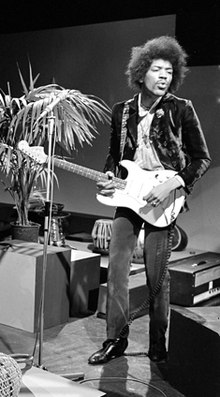
Jimi Hendrix, born James Marshall Hendrix on November 27, 1942, in Seattle, Washington, is universally regarded as one of the greatest electric guitarists in the history of music. His groundbreaking approach to the guitar, blending raw emotion with technical prowess, redefined the possibilities of rock music and left an indelible mark on the world of music. This article explores the life and career of Jimi Hendrix, delving into his age, rise to fame, and the key moments that defined his legendary career.
Early Life and Musical Beginnings
Jimi Hendrix’s journey to becoming a music legend was shaped by his complex heritage and challenging early life. Born to a family of mixed African American, Cherokee, and Mexican descent, Hendrix’s early years were marked by poverty and instability. His parents struggled to make ends meet, and young Jimi often found solace in the care of his grandmother, a full-blooded Cherokee who instilled in him a sense of pride in his Native American roots.
Hendrix’s love for music began at an early age. At just 12 years old, he received his first guitar, a humble acoustic instrument he affectionately named “Al.” Despite having no formal musical training, Hendrix quickly developed an extraordinary talent for playing by ear, a skill that would later become a defining characteristic of his music.
The Road to Fame: From Session Musician to Guitar Hero
In his late teens, Hendrix’s life took a dramatic turn when he was expelled from high school, reportedly due to racial discrimination in the conservative, segregated America of the 1950s. This setback, however, did not deter him. He joined the U.S. Army, where he trained as a paratrooper, but his true passion remained music. After his discharge, Hendrix began playing as a session musician, working with some of the biggest names in the music industry, including Little Richard, Wilson Pickett, Tina Turner, and King Curtis.
Hendrix’s time as a session musician was instrumental in honing his skills and expanding his musical horizons. He became known for his ability to create unique sounds and effects with his guitar, experimenting with techniques like feedback, distortion, and wah-wah pedals. These innovations would later become hallmarks of his style, setting him apart from other guitarists of his time.
The Birth of The Jimi Hendrix Experience
In 1965, Hendrix formed his first stable band in Greenwich Village, New York City, marking the beginning of his ascent to fame. His big break came when he was discovered by Chas Chandler, a former member of the British rock band The Animals, who saw potential in Hendrix’s raw talent and stage presence. Chandler convinced Hendrix to move to London, where he formed “The Jimi Hendrix Experience” with bassist Noel Redding and drummer Mitch Mitchell.
The Jimi Hendrix Experience quickly became a sensation in the UK, with their debut single “Hey Joe” staying on the charts for ten weeks and reaching the sixth position. This was followed by the release of their first album, Are You Experienced?, in 1967. The album, featuring iconic tracks like “Purple Haze,” “The Wind Cries Mary,” and “Foxy Lady,” was a critical and commercial success. It introduced the world to Hendrix’s revolutionary guitar playing and solidified his status as a rising star in the rock music scene.
Explosive Success and the Monterey Pop Festival
Despite his success in the UK, Hendrix’s impact on the American music scene was limited until his performance at the Monterey International Pop Festival in June 1967. This performance is often cited as the moment when Hendrix truly “arrived” in the United States. His electrifying rendition of “Wild Thing,” which culminated in him setting his guitar on fire, became one of the most iconic moments in rock history.
The Monterey Pop Festival catapulted Hendrix to international stardom, and he quickly became one of the most sought-after performers in the world. His next two albums, Axis: Bold As Love (1967) and Electric Ladyland (1968), further cemented his reputation as a musical innovator. Electric Ladyland, in particular, is considered a masterpiece of psychedelic rock, showcasing Hendrix’s unparalleled skill in the studio as he took complete control of the production process.
Hendrix’s Musical Innovations and Influence
Jimi Hendrix was more than just a guitarist; he was a musical visionary who pushed the boundaries of what was possible with the electric guitar. His innovative use of effects like feedback, distortion, and the wah-wah pedal created a sound that was entirely his own. Hendrix was able to extract a wide range of tones from his guitar, often pushing his equipment to its limits and beyond. His approach to music was deeply rooted in the blues, but he infused it with elements of rock, jazz, and even classical music, creating a sound that was both timeless and ahead of its time.
Hendrix’s influence extended far beyond his technical innovations. His performances were marked by an intensity and passion that resonated with audiences on a deeply emotional level. He was known for his wild on-stage antics, such as playing the guitar with his teeth or behind his back, but these were more than just gimmicks. They were an expression of his deep connection to his music and his desire to push the limits of what was possible in a live performance.
The Downward Spiral and the Decline of The Jimi Hendrix Experience
By 1968, the pressures of fame and relentless touring began to take a toll on Hendrix. The constant demands of recording and performing, coupled with the growing tensions within The Jimi Hendrix Experience, led to the band’s eventual breakup in 1969. Hendrix’s involvement with the Black Panther movement, which criticized his association with white musicians, also contributed to the dissolution of the band.
Despite these challenges, Hendrix continued to create music, forming a new group called “Band of Gypsys” with bassist Billy Cox and drummer Buddy Miles. The Band of Gypsys marked a departure from Hendrix’s earlier work, focusing more on funk and soul influences. Their live performances, particularly the New Year’s Eve concerts at the Fillmore East, are considered some of the most powerful in Hendrix’s career. However, the band was short-lived, and Hendrix soon reformed The Jimi Hendrix Experience with Cox and drummer Mitch Mitchell.
The Legacy of Woodstock and the Vietnam War
One of the defining moments of Hendrix’s career came in August 1969, when he performed at the Woodstock Music and Art Fair. His performance of “The Star-Spangled Banner,” which he famously distorted to mimic the sounds of bombs and gunfire, became a powerful anti-war statement. This rendition of the national anthem, delivered during the height of the Vietnam War, remains one of the most iconic moments in the history of rock music.
Hendrix’s performance at Woodstock was not just a musical triumph; it was a cultural milestone that reflected the deep divisions and tensions of the era. His interpretation of “The Star-Spangled Banner” was both a tribute to and a critique of American ideals, capturing the contradictions and complexities of the 1960s. It solidified his status as not just a musician, but a symbol of the countercultural movement.
Tragic End and Posthumous Legacy
Tragically, Jimi Hendrix’s life was cut short on September 18, 1970, when he was found dead in London at the age of 27. His death, officially attributed to asphyxia caused by barbiturate intoxication, has been the subject of much speculation and controversy. Like many other rock legends who died young, Hendrix’s death has been shrouded in mystery, with various theories suggesting foul play or a deliberate overdose.
In the years following his death, Hendrix’s music has continued to inspire generations of musicians and fans. His influence can be heard in countless genres, from rock and blues to hip-hop and electronic music. Hendrix’s posthumous releases, including live recordings and unreleased studio tracks, have further cemented his legacy as one of the greatest musicians of all time.
The Impact of Hendrix’s Music and Cultural Significance
Jimi Hendrix’s impact on music and culture is immeasurable. He revolutionized the way the electric guitar is played, introducing new techniques and sounds that have become standard in rock music. His music transcended racial and cultural boundaries, appealing to a diverse audience and influencing artists across genres.
Hendrix’s legacy is also deeply intertwined with the social and political movements of the 1960s. His music was a reflection of the turbulent times in which he lived, addressing themes of war, civil rights, and personal freedom. Hendrix himself became a symbol of the countercultural movement, embodying the spirit of rebellion and experimentation that defined the era.
In addition to his musical innovations, Hendrix’s influence can be seen in the way he challenged societal norms and pushed the boundaries of what was considered acceptable in popular culture. His flamboyant style, both in his music and his fashion, broke down barriers and paved the way for future generations of artists to express themselves more freely.
Conclusion
Jimi Hendrix’s life and career were marked by a relentless pursuit of artistic expression and a desire to push the limits of what was possible with music. His contributions to the world of rock and roll are unparalleled, and his influence continues to resonate with musicians and fans alike. Though his life was tragically short, Hendrix’s legacy endures, a testament to his genius and his impact on the world of music.
As we look back on the life and legacy of Jimi Hendrix, it is clear that he was more than just a guitarist; he was a visionary artist who changed the course of music history. His music remains as powerful and relevant today as it was over fifty years ago, a reminder of the enduring power of creativity and the human spirit.


