
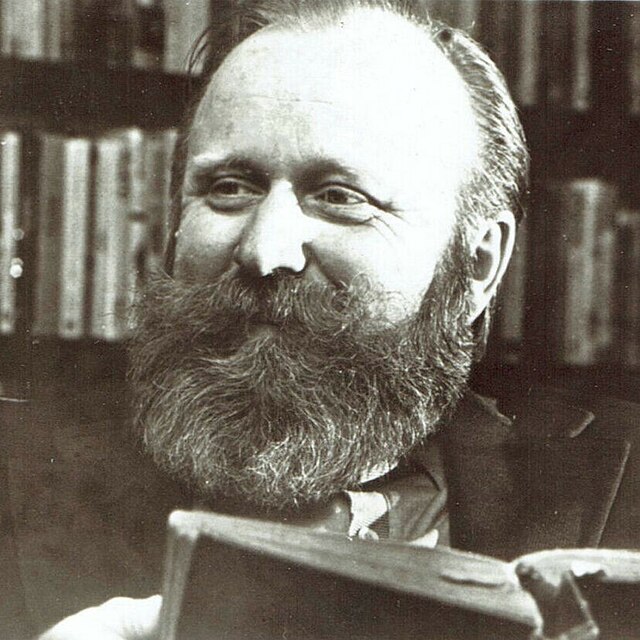
Frank Herbert, born Frank Patrick Herbert on October 8, 1920, in Tacoma, Washington, is a name that resonates profoundly in the world of science fiction and literature. Best known as the author of the groundbreaking novel Dune, Herbert’s work has transcended the boundaries of genre fiction, influencing everything from environmental thought to political philosophy. His life, like his work, is a tapestry of intellectual exploration, creative mastery, and relentless dedication to his craft. This article delves into the life of Frank Herbert, exploring his age, rise to fame, and the significant highlights that have solidified his place in literary history.
Early Life and Education: Foundations of a Visionary
Frank Herbert’s early life was marked by curiosity and a voracious appetite for knowledge. Born into a working-class family during the Great Depression, Herbert’s upbringing was shaped by the economic challenges of the time. Despite these hardships, he exhibited an early interest in reading and writing, showing a particular fascination with the natural world and human behavior.
Herbert’s formal education began in Tacoma, but he often found the rigid structure of school at odds with his independent nature. This led him to seek out knowledge on his own terms, devouring books on a wide range of subjects. By the time he reached adulthood, Herbert had developed a deep understanding of geology, psychology, anthropology, ecology, navigation, and botany. Although he never pursued a traditional scientific career, these interests profoundly influenced his writing, particularly in the creation of the intricate world of Dune.
The Path to Writing: Early Career and Influences
Frank Herbert’s career as a writer began in the early 1950s, a time when the science fiction genre was gaining popularity but still struggling for mainstream acceptance. Herbert’s first published story, “Looking for Something?”, appeared in Startling Stories in 1952. This debut marked the beginning of Herbert’s long and prolific writing career, during which he published numerous short stories and novels.
Herbert’s early work reflected his broad intellectual interests and his desire to explore complex themes within the framework of science fiction. Unlike many of his contemporaries, Herbert was not content to write simple adventure stories set in outer space. Instead, he sought to explore deeper questions about human nature, society, and the environment. These themes would later become central to his most famous work, Dune.
During the 1950s, Herbert also worked as a journalist, writing for newspapers in California, Oregon, and Washington. His experiences as a reporter honed his writing skills and exposed him to a wide range of ideas and perspectives. It was during this period that Herbert began to develop the concepts that would eventually coalesce into Dune.
The Birth of a Masterpiece: Dune and Its Impact
In 1963, Frank Herbert began writing what would become his magnum opus, Dune. The novel was initially published in serial form in Analog Science Fiction and Fact magazine, under the editorship of John W. Campbell Jr., before being released as a standalone book in 1965. The publication of Dune marked a turning point in Herbert’s career and in the world of science fiction.
Dune is set in a distant future where noble families control planets across the galaxy, and the story centers on the desert planet Arrakis, the only source of the most valuable substance in the universe: the spice melange. The novel is a complex tapestry of political intrigue, ecological themes, and deep philosophical questions about power, religion, and human nature.
Herbert’s meticulous world-building is one of the novel’s most remarkable features. He created not only a detailed physical environment but also a rich cultural and religious backdrop, complete with its own language, customs, and mythology. To achieve this, Herbert conducted extensive research, studying over 200 books on topics such as ecology, desert ecosystems, and the history of religion. This depth of detail and realism set Dune apart from other science fiction novels of the time and contributed to its enduring popularity.
The novel was an immediate success, winning the Hugo Award in 1966 and the inaugural Nebula Award for Best Novel. Dune has since been recognized as one of the greatest science fiction novels of all time, and it remains a cornerstone of the genre. Its influence can be seen in a wide range of subsequent works, from the Star Wars franchise to the ecological science fiction of authors like Kim Stanley Robinson.
Expanding the Universe: The Dune Series
Following the success of Dune, Frank Herbert continued to explore the universe he had created, writing five sequels over the next two decades. These novels expanded on the themes and characters introduced in the original book, further developing the complex political and ecological systems of the Dune universe.
-
Dune Messiah (1969): The first sequel, Dune Messiah, picks up the story several years after the events of Dune, focusing on the challenges faced by Paul Atreides as he struggles with the consequences of his rise to power.
-
Children of Dune (1976): In Children of Dune, the third novel in the series, Herbert explores the impact of Paul’s legacy on his children and the future of the galaxy. The novel delves deeper into the themes of prophecy, destiny, and the cyclical nature of history.
-
God Emperor of Dune (1981): God Emperor of Dune takes the series in a new direction, focusing on the reign of Leto II, Paul’s son, who has transformed himself into a human-sandworm hybrid to ensure the survival of humanity.
-
Heretics of Dune (1984) and Chapterhouse: Dune (1985): The final two books in the original series, Heretics of Dune and Chapterhouse: Dune, explore the consequences of Leto II’s reign and the ongoing struggle for control of the spice and the galaxy.
The Dune series is notable not only for its intricate plotting and rich character development but also for its exploration of complex themes such as the nature of power, the role of religion in society, and the importance of environmental stewardship. Herbert’s work has been praised for its intellectual depth and its ability to engage readers on multiple levels, from the personal to the cosmic.
Beyond Dune: Other Works and Contributions to Science Fiction
While Dune is undoubtedly Frank Herbert’s most famous work, it is far from his only contribution to the world of science fiction. Throughout his career, Herbert wrote numerous other novels and short stories, many of which explore similar themes to those found in the Dune series.
One of Herbert’s most notable non-Dune works is the Destination: Void series, which he co-wrote with Bill Ransom. This series, which includes The Jesus Incident (1979), The Lazarus Effect (1983), and The Ascension Factor (1988), explores themes of artificial intelligence, human evolution, and the nature of consciousness. The series is a testament to Herbert’s ability to tackle complex scientific and philosophical concepts within the framework of speculative fiction.
Another significant work is the Jorj X. McKie series, which includes Whipping Star (1970) and The Dosadi Experiment (1977). These novels are set in a future where humanity has encountered and integrated with a vast array of alien species. The series explores the ethical and psychological implications of these interactions, as well as the challenges of governing a multicultural and multi-species society.
Herbert also published several anthologies of his short stories, including The Worlds of Frank Herbert (1970) and The Best of Frank Herbert (1975). These collections showcase the breadth of Herbert’s imagination and his ability to craft compelling stories across a wide range of settings and themes.
Legacy and Influence: Frank Herbert’s Enduring Impact
Frank Herbert’s impact on the world of science fiction cannot be overstated. His work has influenced countless writers, filmmakers, and thinkers, and his ideas continue to resonate in contemporary discussions about ecology, politics, and the future of humanity.
One of the most significant aspects of Herbert’s legacy is his influence on the science fiction genre itself. Dune has been credited with elevating science fiction to a new level of literary and intellectual sophistication, paving the way for more complex and nuanced works in the genre. The novel’s exploration of ecological themes, in particular, has had a lasting impact, inspiring a generation of writers to consider the relationship between humanity and the environment in their work.
Herbert’s influence extends beyond literature, as well. The Dune series has been adapted into multiple films, television series, and even video games, each of which has introduced new audiences to Herbert’s universe. The 1984 film adaptation directed by David Lynch, while not universally acclaimed, has become a cult classic, and the more recent 2021 adaptation by Denis Villeneuve has brought Dune to a new generation of fans.
Herbert’s work has also had a profound impact on the field of environmental thought. His depiction of the desert planet Arrakis, with its intricate ecological systems and the struggle for control of its resources, has been interpreted as a metaphor for real-world environmental issues. Dune has been praised for its prescient exploration of the consequences of ecological exploitation and the importance of sustainability, making it a touchstone for environmentalists and ecologists.
Conclusion: The Timeless Appeal of Frank Herbert
Frank Herbert’s life and work are a testament to the power of imagination and the enduring relevance of science fiction as a tool for exploring complex ideas. His ability to weave together themes of politics, religion, ecology, and human nature has made his work not only entertaining but also deeply thought-provoking.
Herbert passed away on February 11, 1986, in Madison, Wisconsin, leaving behind a legacy that continues to inspire and challenge readers and thinkers around the world. His work, particularly the Dune series, remains a cornerstone of science fiction, and his ideas continue to resonate in contemporary discussions about the future of humanity and our relationship with the natural world.
As we look to the future, Frank Herbert’s work reminds us of the importance of imagination, curiosity, and the relentless pursuit of knowledge. His vision of a complex and interconnected universe serves as both a warning and a source of hope, encouraging us to consider the consequences of our actions and the potential for a better future.


