
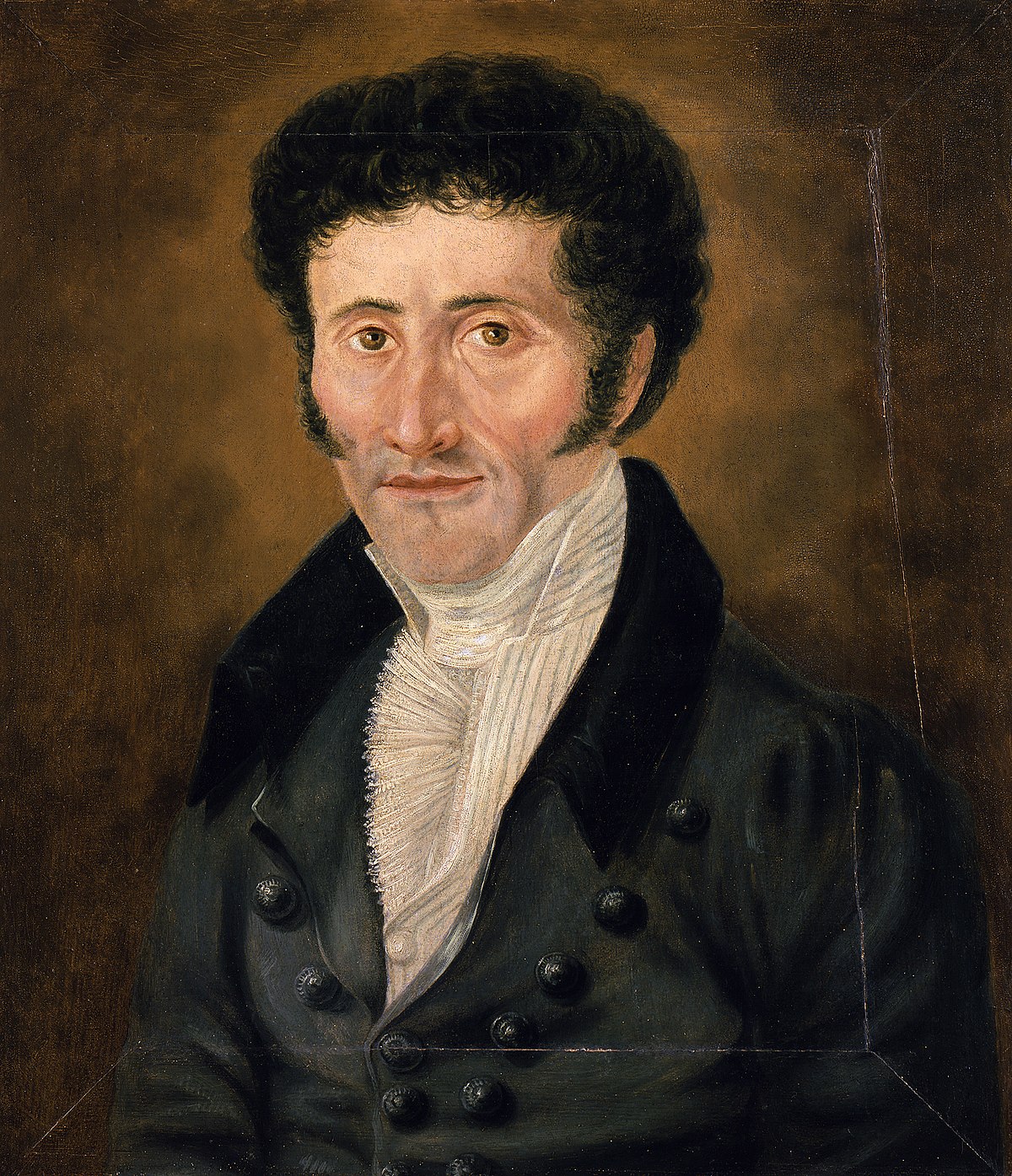
Ernst Theodor Amadeus Hoffmann, often referred to by his initials E.T.A. Hoffmann, is a towering figure in the realm of German Romanticism. Born on January 24, 1776, in Königsberg, Germany, Hoffmann was a multifaceted personality—a jurist, composer, music critic, and most famously, a writer. His legacy endures in the fields of literature, music, and art, where his innovative blend of fantasy and reality has inspired generations. This article delves into the life, fame, and significant milestones of Ernst Theodor Amadeus Hoffmann, exploring the nuances of his work and his lasting impact on culture.
Early Life and Education: The Formative Years
Ernst Theodor Wilhelm Hoffmann was born into a family steeped in legal tradition. His father, Christoph Ludwig Hoffmann, was a jurist, and his mother, Luise Albertine Doerffer, came from a respectable family in Königsberg. The young Hoffmann was raised primarily by his mother after his parents separated in 1778. His upbringing was influenced significantly by his maternal uncle, Otto Dörfer, and particularly by his great-uncle, Johann Ludwig Vöthory, a magistrate who steered him toward a career in law.
Hoffmann’s education began in Königsberg, where he enrolled at the local university in 1792 to study law. However, his true passion lay in the arts. While pursuing his legal studies, Hoffmann simultaneously nurtured his love for music, studying violin, piano, and composition. This duality—law and the arts—would come to define much of Hoffmann’s life, as he constantly balanced the demands of his legal career with his creative endeavors.
Early Career: Law, Love, and Loss
In 1795, Hoffmann graduated from university with a degree in law and embarked on a career as a jurist. Despite his professional success, his personal life was fraught with turmoil. The death of his mother in 1796 was a significant blow, marking the beginning of a period of emotional instability. This period was further complicated by a failed romantic relationship with a young woman named Cora Hatt, a violin student of Hoffmann’s. The relationship ended due to the disapproval of Hatt’s family, which feared that Hoffmann’s unconventional lifestyle would tarnish their reputation.
Following the breakup, Hoffmann’s uncle secured him a position at the court in Glogau, Silesia. There, Hoffmann was introduced to a circle of artists and intellectuals, including the painter Molinari, the musician Hampe, and the writer von Voss. These relationships deepened Hoffmann’s appreciation for the arts and further distanced him from the legal profession.
The Move to Poland and the Birth of a Writer
Hoffmann’s career as a jurist took him to Plock, Poland, in 1800. His time in Poland was marked by further personal upheavals, including the end of his engagement to his cousin Minna Döerffer and a passionate affair with a Polish woman named Maria Thekla Rorer. Despite these distractions, Hoffmann’s literary ambitions began to take shape during this period.
In 1803, Hoffmann published his first literary work, “Letter to a Monk in a Convent from His Friend in the Capital,” in the magazine Der Freimutige. This marked the beginning of Hoffmann’s serious engagement with literature. His early works, often infused with elements of fantasy and the supernatural, foreshadowed the themes that would later define his most famous stories.
The Napoleonic Wars and a Shift to the Arts
The onset of the Napoleonic Wars in 1806 had a profound impact on Hoffmann’s life. When French forces occupied Warsaw, where Hoffmann was stationed, he refused to swear allegiance to the occupiers and was subsequently dismissed from his position. This loss of employment, though devastating at the time, proved to be a turning point in Hoffmann’s life. Freed from the constraints of his legal career, Hoffmann turned his full attention to the arts.
Hoffmann’s artistic output during this period was prodigious. He composed music, painted, and wrote extensively. However, his work was often met with mixed reactions. His paintings, characterized by a caricatural realism, were not well received, and much of his music, including symphonies, arias, sonatas, and theatrical works, failed to find an audience. Despite these setbacks, Hoffmann’s passion for the arts remained undiminished.
Literary Success and Fame: The Rise of a Romantic Icon
Hoffmann’s fortunes began to change in 1809 when a magazine published his novella “The Knight Gluck.” This work marked the beginning of Hoffmann’s rise to literary fame. Over the next decade, Hoffmann produced some of his most celebrated works, including the novel The Devil’s Elixirs and the first volume of his Fantasiestücke (Fantasy Pieces). These works, with their blend of reality and fantasy, established Hoffmann as a leading figure in the Romantic movement.
Hoffmann’s writing is characterized by its exploration of the dark and the bizarre. His stories often blur the lines between reality and the supernatural, creating a sense of unease and disorientation in the reader. This ability to evoke the uncanny is perhaps best exemplified in his famous story The Sandman, which delves into themes of madness, doppelgängers, and the terror of the unknown.
The Intersection of Music and Literature
Music played a central role in Hoffmann’s life and work. In addition to his literary output, Hoffmann was an accomplished composer and music critic. His reviews of works by composers such as Ludwig van Beethoven, Johann Sebastian Bach, and Wolfgang Amadeus Mozart are still regarded as some of the most insightful critiques of the time.
Hoffmann’s deep reverence for Mozart is particularly noteworthy. In fact, Hoffmann changed his third name from Wilhelm to Amadeus in homage to the composer. This reverence is evident in Hoffmann’s critiques, which often place Mozart’s work on a pedestal. However, Hoffmann’s attachment to the classical style of Mozart sometimes blinded him to the revolutionary nature of Beethoven’s later works. Hoffmann’s critiques of Beethoven reveal a tension between his admiration for the composer’s genius and his discomfort with the emotional intensity of Beethoven’s music.
Personal Life and Later Years: Love, Marriage, and Struggle
In his personal life, Hoffmann continued to be a man of intense passions and deep emotional complexity. In 1809, he began a relationship with Julia Mark, a student to whom he gave singing lessons. The relationship culminated in marriage, and Julia became a central figure in Hoffmann’s life. Despite the stability that marriage brought, Hoffmann’s life was far from peaceful. The political turmoil following Napoleon’s defeat brought Hoffmann back into the legal profession, thanks to the intervention of his friend and colleague Hippel.
Even as he resumed his duties as a magistrate, Hoffmann’s literary career continued to flourish. He published the fourth volume of his Fantasiestücke, which included his most famous novel, The Devil’s Elixirs, and the first of his Night Pieces. These works solidified Hoffmann’s reputation as a master of the macabre and the fantastical. Themes of duality, madness, and the supernatural pervade these stories, reflecting Hoffmann’s fascination with the darker aspects of the human psyche.
The Legacy of E.T.A. Hoffmann: A Lasting Influence
Ernst Theodor Amadeus Hoffmann’s influence extends far beyond his own time. His exploration of the uncanny, the doppelgänger, and the intersection of reality and fantasy has had a profound impact on literature, music, and the arts. Hoffmann’s stories have inspired countless writers, including Robert Louis Stevenson and Fyodor Dostoevsky, both of whom grappled with themes of duality and the darker sides of human nature.
Hoffmann’s influence is also evident in the world of music. His life and work served as the inspiration for Jacques Offenbach’s opera The Tales of Hoffmann, which remains a staple of the operatic repertoire. The opera, with its haunting Barcarolle and its blending of the real and the fantastical, captures the essence of Hoffmann’s artistic vision.
Death and Posthumous Recognition
Ernst Theodor Amadeus Hoffmann died on June 25, 1822, in Berlin, at the age of 46. His death was a significant loss to the artistic and literary communities of the time. However, Hoffmann’s legacy has only grown in the years since his passing. Today, he is remembered as one of the pioneers of the Gothic and Romantic movements, and his works continue to be studied and celebrated for their originality and depth.
Conclusion
Ernst Theodor Amadeus Hoffmann was a man of many talents—a jurist, composer, music critic, and writer whose work transcends the boundaries of genre and medium. His life was marked by personal struggles, professional challenges, and a relentless pursuit of artistic expression. Hoffmann’s stories, with their blend of fantasy and reality, continue to captivate readers and inspire artists across disciplines.
As we reflect on Hoffmann’s life and work, we are reminded of the enduring power of the imagination. Hoffmann’s ability to weave the fantastical into the fabric of everyday life speaks to the limitless potential of creativity and the importance of embracing the strange and the unknown. In a world that often seeks to categorize and confine, Hoffmann’s work stands as a testament to the beauty of the bizarre and the magic of the mysterious.


