
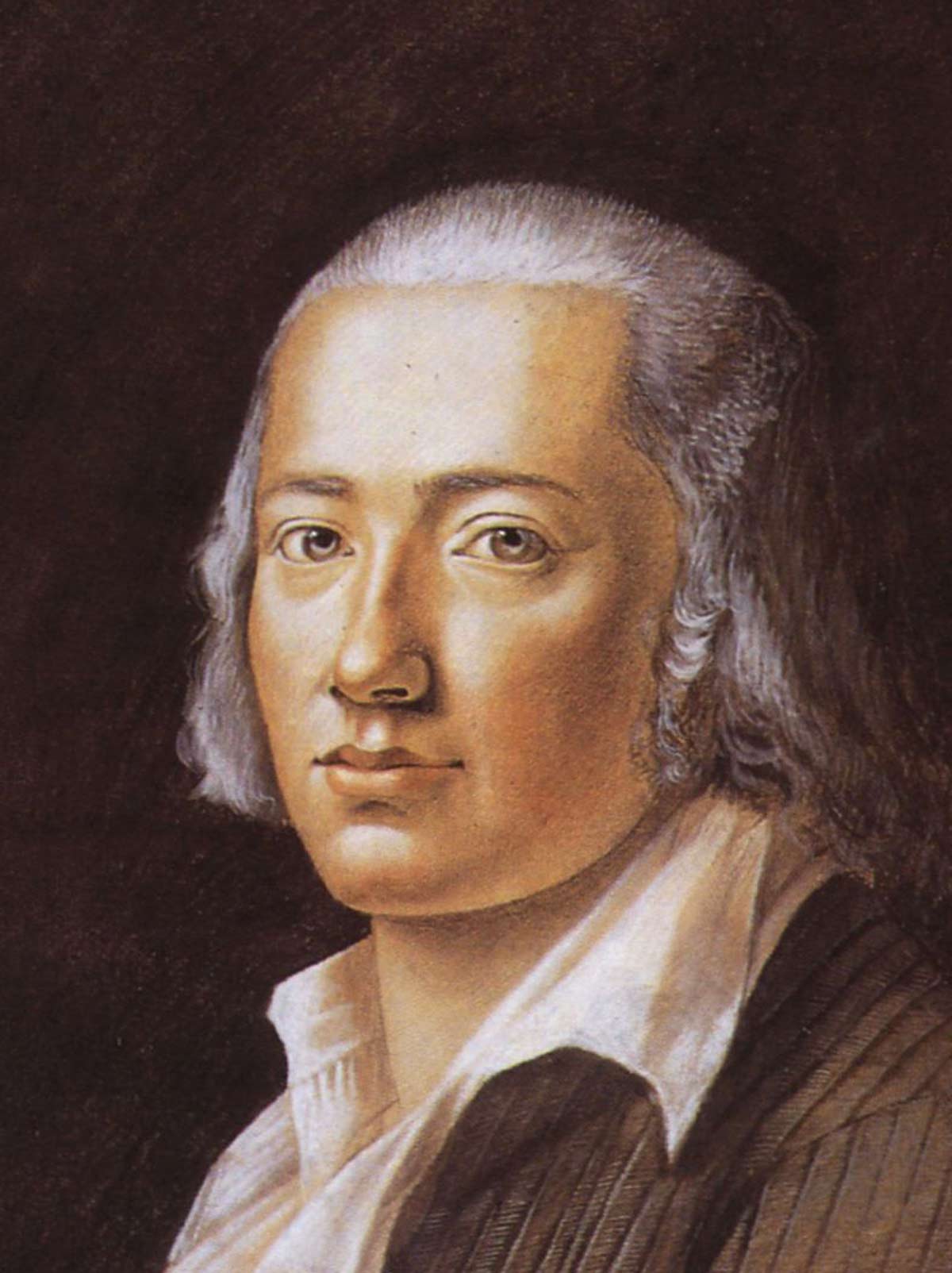
Friedrich Hölderlin, born Johann Christian Friedrich Hölderlin on March 20, 1770, in Lauffen am Neckar, Germany, is often regarded as one of the most influential and enigmatic figures in German literature. His life and work straddle the tumultuous period of the late 18th and early 19th centuries, a time marked by profound cultural, political, and intellectual transformations across Europe. Hölderlin’s poetry, infused with deep philosophical and spiritual musings, continues to resonate with readers and scholars alike. In this article, we explore the life, fame, and key highlights of Hölderlin’s journey, delving into the historical context and nuanced influences that shaped his remarkable legacy.
Early Life and Family Background
Hölderlin was born into a family deeply rooted in the austere traditions of Lutheranism, which had a significant impact on his upbringing and early education. His father, Heinrich Friedrich, was a small landowner and managed a convent, while his mother, Johanna Christiana Heyn, came from a lineage of pastors and officials closely associated with the ducal administration. Tragically, Hölderlin’s father passed away when Friedrich was just two years old, leaving his mother to raise him and his younger sister, Maria Eleonora Heinrike, in a household steeped in religious and moral rigor.
The family moved to Nürtingen after his mother remarried Johann Christoph Gock, a local mayor and former scribe. Gock’s death in 1779 further solidified Hölderlin’s relationship with his mother, who became the primary influence in his life. She was determined that her son would follow in the footsteps of his maternal grandfather, a pastor, and thus set him on a path toward theological studies.
Education and Early Influences
Hölderlin’s education was thorough and demanding, reflecting the expectations of his social class. He studied Greek, Latin, rhetoric, and dialectics under the guidance of Nathanael Köstlin, a pietist deacon and uncle of the philosopher Friedrich Schelling. It was during this period that Hölderlin developed a close friendship with Schelling, a relationship that would later influence his philosophical and literary pursuits.
In 1784, Hölderlin entered the seminary at Denkendorf, a rigid institution where literature outside the approved curriculum was forbidden. Despite the strict environment, he found solace in the works of Klopstock and Ossian, which ignited his passion for poetry. His early compositions reflect a growing tension between his religious upbringing and his emerging desire to pursue a literary career.
In 1788, Hölderlin enrolled at the Tübinger Stift, a renowned theological seminary where he studied alongside future luminaries like Georg Wilhelm Friedrich Hegel and Schelling. The intellectual climate of Tübingen, marked by the burgeoning ideas of the Enlightenment and the French Revolution, profoundly influenced Hölderlin. Together with Hegel and Schelling, he read Spinoza, Rousseau, and Kant, and became deeply engaged with the revolutionary ideas spreading across Europe.
Break with Tradition and the Pursuit of Poetry
Despite the expectations placed upon him, Hölderlin gradually distanced himself from the path of the clergy. His first significant break came with the composition of his early poems and odes, where he began to articulate his vision of a new, idealized humanity. His poetry from this period reflects a deep engagement with Greek mythology and philosophy, themes that would dominate his later work.
Hölderlin’s decision to pursue poetry over the church was further solidified during his time as a tutor. In 1793, he became a private tutor in Waltershausen, where he was introduced to key figures of the German literary world, including Friedrich Schiller. Schiller recognized Hölderlin’s talent and helped him publish his early work, marking the beginning of Hölderlin’s public literary career.
The Hyperion Years and Romantic Relationships
Hölderlin’s most famous work, Hyperion, was conceived during a period of intense personal and creative turmoil. The novel, structured as a series of letters, reflects Hölderlin’s deep philosophical and political convictions, as well as his unfulfilled romantic longings. The central character, Hyperion, embodies Hölderlin’s ideal of the poetic hero, torn between the pursuit of beauty and the harsh realities of life.
It was also during this time that Hölderlin began his ill-fated love affair with Susette Gontard, the wife of a Frankfurt banker. Gontard, whom Hölderlin referred to as “Diotima” in his poetry, became the muse for much of his work. Their relationship, though passionate and intellectually stimulating, was ultimately doomed by societal norms and personal circumstances. The pain of their separation is poignantly captured in Hölderlin’s later poetry, where he often invokes Diotima as a symbol of lost idealism and unattainable beauty.
Decline and Isolation
Hölderlin’s later years were marked by a gradual descent into mental illness, a condition that has been the subject of much speculation and debate among scholars. By 1802, his relationship with Susette Gontard had ended, and his mental state began to deteriorate. He took on various tutoring positions, including a brief stint in Bordeaux, but his erratic behavior and worsening health made it difficult for him to maintain employment.
In 1806, Hölderlin was admitted to a clinic in Tübingen, where he was diagnosed with a form of schizophrenia. After a brief period of treatment, he was placed in the care of Ernst Zimmer, a carpenter in Tübingen, who provided him with a room in a tower overlooking the Neckar River. Hölderlin spent the remaining 37 years of his life in this tower, living in a state of quiet seclusion, writing fragmented poems under the pseudonym “Scardanelli.”
Despite his mental decline, Hölderlin’s work continued to attract attention. His poems from this period, though often obscure and difficult to interpret, reveal a profound engagement with themes of nature, time, and eternity. These late works, characterized by their visionary and prophetic tone, have been hailed as some of the most innovative and influential in German literature.
Legacy and Influence
Friedrich Hölderlin’s legacy as a poet and thinker has grown significantly since his death in 1843. His work, once marginalized due to its complexity and his mental illness, is now recognized as a cornerstone of German Romanticism. Hölderlin’s poetry has inspired generations of writers, philosophers, and artists, including figures like Rainer Maria Rilke, Martin Heidegger, and Paul Celan.
Hölderlin’s exploration of the tension between the ideal and the real, the divine and the human, continues to resonate in contemporary discussions of literature and philosophy. His unique blend of classical form and romantic content, combined with his deep philosophical insights, makes his work a rich field of study for scholars and readers alike.
In recent years, there has been a renewed interest in Hölderlin’s life and work, with numerous biographies, academic studies, and translations bringing his poetry to a broader audience. His influence extends beyond literature, touching on fields as diverse as theology, aesthetics, and political theory.
Conclusion: The Timeless Appeal of Hölderlin
Friedrich Hölderlin’s life was one of profound highs and devastating lows, marked by a relentless pursuit of beauty and truth. His poetry, with its deep emotional resonance and philosophical depth, offers a unique window into the soul of one of Germany’s greatest literary figures. Hölderlin’s work challenges us to reflect on the nature of existence, the search for meaning, and the role of the poet in society.
In an age where the boundaries between the spiritual and the material are constantly being questioned, Hölderlin’s poetry remains as relevant as ever. His exploration of the human condition, through the lens of classical mythology and romantic idealism, speaks to the timeless quest for understanding and transcendence. As we continue to grapple with the complexities of modern life, Hölderlin’s voice echoes across the centuries, reminding us of the enduring power of poetry to illuminate the human experience.


