
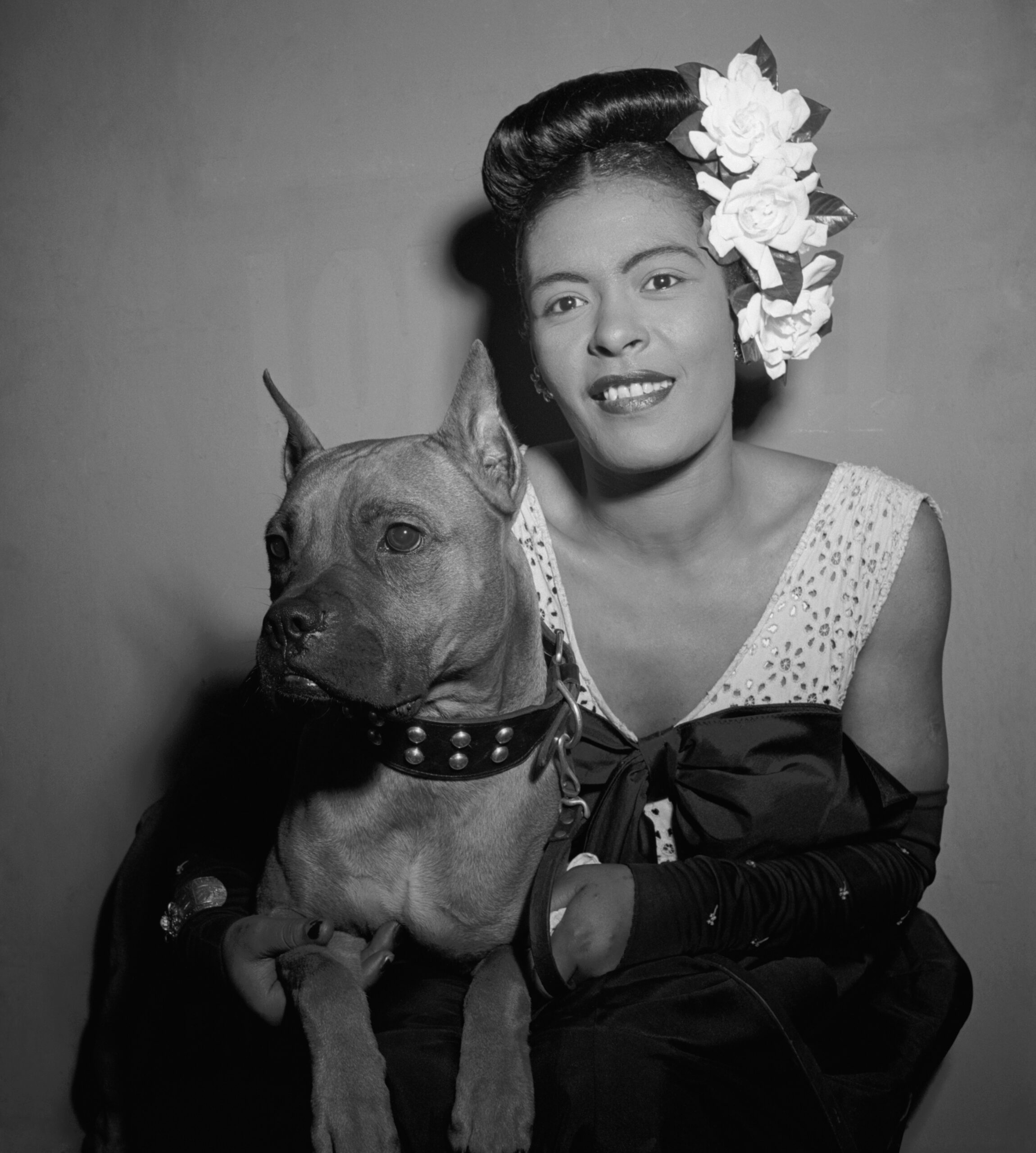
Billie Holiday, born Eleanora Fagan on April 7, 1915, in Philadelphia, Pennsylvania, is a name that resonates deeply in the history of American music, particularly in the genres of jazz and blues. Known affectionately as “Lady Day,” Holiday’s life was as complex and poignant as the music she created. This article delves into her life, exploring her rise to fame, the challenges she faced, and the legacy she left behind.
Early Life and Struggles
Billie Holiday’s early life was marked by hardship and adversity. Born to Clarence Holiday, a teenage banjo player, and Sadie Fagan, a young chorus girl, Billie faced a turbulent childhood. Her father abandoned the family early on, leaving her mother to raise her alone. The circumstances of her upbringing in Baltimore were far from ideal; she often found herself neglected and struggling with significant behavioral issues.
These early struggles shaped Holiday’s character and future. One of the many stories that circulate about her youth, though grounded in unfortunate reality, is that she turned to prostitution at a young age to escape the dire poverty that enveloped her and her mother. This bleak beginning, however, would set the stage for a remarkable journey of resilience and talent.
The Path to Fame
Holiday’s life took a significant turn when she moved to New York City, a hub for burgeoning artists and musicians. In the early 1930s, her talent was discovered by John Hammond, a producer and talent scout with deep connections in the music industry. Hammond was instrumental in launching her career, arranging for her to perform with Benny Goodman, one of the most renowned clarinetists in both classical and jazz music.
By 1933, Billie Holiday had made her first recordings with Goodman, marking the beginning of her professional career. Her voice, characterized by its emotional depth and unique phrasing, quickly caught the attention of the jazz community. That same year, she appeared in Duke Ellington’s film “Symphony in Black,” further solidifying her rising star status.
Holiday’s career continued to ascend as she collaborated with some of the most significant figures in jazz. She performed with the orchestras of Count Basie and Artie Shaw, two of the most prominent bands of the era. Her work with these ensembles, particularly with saxophonist Lester Young, who famously nicknamed her “Lady Day,” helped to establish her as a leading voice in jazz.
The Height of Her Career
As the 1930s progressed, Billie Holiday’s reputation grew, and she became a fixture in the New York jazz scene. In 1939, she achieved one of her most iconic successes with the recording of “Strange Fruit.” This haunting song, a powerful protest against the lynching of African Americans in the South, showcased Holiday’s ability to convey deep emotion and social commentary through her music. Despite its controversial subject matter, or perhaps because of it, “Strange Fruit” became one of Holiday’s signature pieces, cementing her place in the annals of American music history.
The 1940s and 1950s were both the pinnacle of Holiday’s career and the beginning of her personal decline. She performed in clubs across the United States, bringing her unique voice to audiences far and wide. In 1946, she appeared in the film “New Orleans” alongside Louis Armstrong, another giant of jazz. However, it was during this period that Holiday’s struggles with substance abuse began to take a toll on her life and career.
Struggles and Decline
Holiday’s battle with addiction, particularly her use of heroin, became a significant and tragic aspect of her life story. The pressures of fame, combined with the racial discrimination she faced as an African American woman in a predominantly white society, contributed to her substance abuse. As a black woman in the early 20th century, Billie Holiday was subjected to the harsh realities of systemic racism, both in her personal life and in her career. This discrimination, coupled with her own personal traumas, led her down a path of self-destruction.
Heroin addiction began to interfere with her ability to perform, leading to missed shows, erratic behavior, and a deterioration of her once magnificent voice. The toll of her lifestyle was evident not just in her career, but also in her health. In 1956, Holiday penned her autobiography, “Lady Sings the Blues,” which was later adapted into a film starring Diana Ross in 1973. The autobiography provided a candid look into her tumultuous life, offering insights into her struggles with addiction, her relationships, and her experiences with racism.
Despite her personal demons, Billie Holiday continued to perform and record music throughout the 1950s. However, her health was in rapid decline. In 1959, after her final recording session, she was hospitalized for cirrhosis of the liver. Her condition was further complicated by heart failure, and on July 17, 1959, at the age of 44, Billie Holiday passed away with police officers stationed outside her hospital room, as she was under arrest for drug possession at the time of her death.
Legacy and Impact
Billie Holiday’s legacy is one of profound influence on the world of jazz and popular music. Her voice, with its distinctive phrasing and emotional depth, has inspired countless artists across genres. Holiday’s ability to convey the complexities of human emotion through song has made her one of the most enduring figures in American music.
Her recording of “Strange Fruit” remains a powerful reminder of the role that music can play in social activism. The song’s stark portrayal of racial violence in America resonated deeply with audiences and continues to be relevant today. Holiday’s interpretation of the song brought the horrors of lynching to the forefront of American consciousness, making it an indelible part of the nation’s cultural history.
In addition to “Strange Fruit,” Holiday’s discography includes a number of other classic recordings, such as “God Bless the Child,” “Lover Man,” and “Summertime.” These songs, along with many others, showcase her ability to infuse each performance with a level of emotion that few artists have ever matched. Her work with musicians like Lester Young, Teddy Wilson, and Count Basie produced some of the most memorable recordings in the history of jazz.
The Enduring Influence of Lady Day
Billie Holiday’s influence extends far beyond her own era. She has been a source of inspiration for generations of musicians, from jazz singers to rock stars. Artists like Nina Simone, Etta James, and Amy Winehouse have all cited Holiday as a significant influence on their work. Her ability to connect with listeners on an emotional level, to tell stories through her music, and to express the pain and joy of the human experience is a legacy that continues to resonate.
Moreover, Holiday’s life story has become a symbol of the struggles faced by many artists who battle personal demons while trying to navigate the pressures of fame. Her story is one of both triumph and tragedy, a reminder of the costs of greatness in a world that can be both uplifting and unforgiving.
Holiday’s induction into the Grammy Hall of Fame and her posthumous Grammy Lifetime Achievement Award are testaments to her enduring impact on the music industry. Her recordings continue to be celebrated and studied, and her life remains a topic of fascination for biographers, historians, and music lovers alike.
In conclusion, Billie Holiday was more than just a singer; she was a cultural icon whose life and music reflected the complexities of the American experience. Her voice, filled with pain and beauty, told the stories of a life lived on the edges of society, but one that left an indelible mark on the world. As we continue to listen to her music and remember her story, we are reminded of the power of art to transcend time, to heal, and to inspire.


