
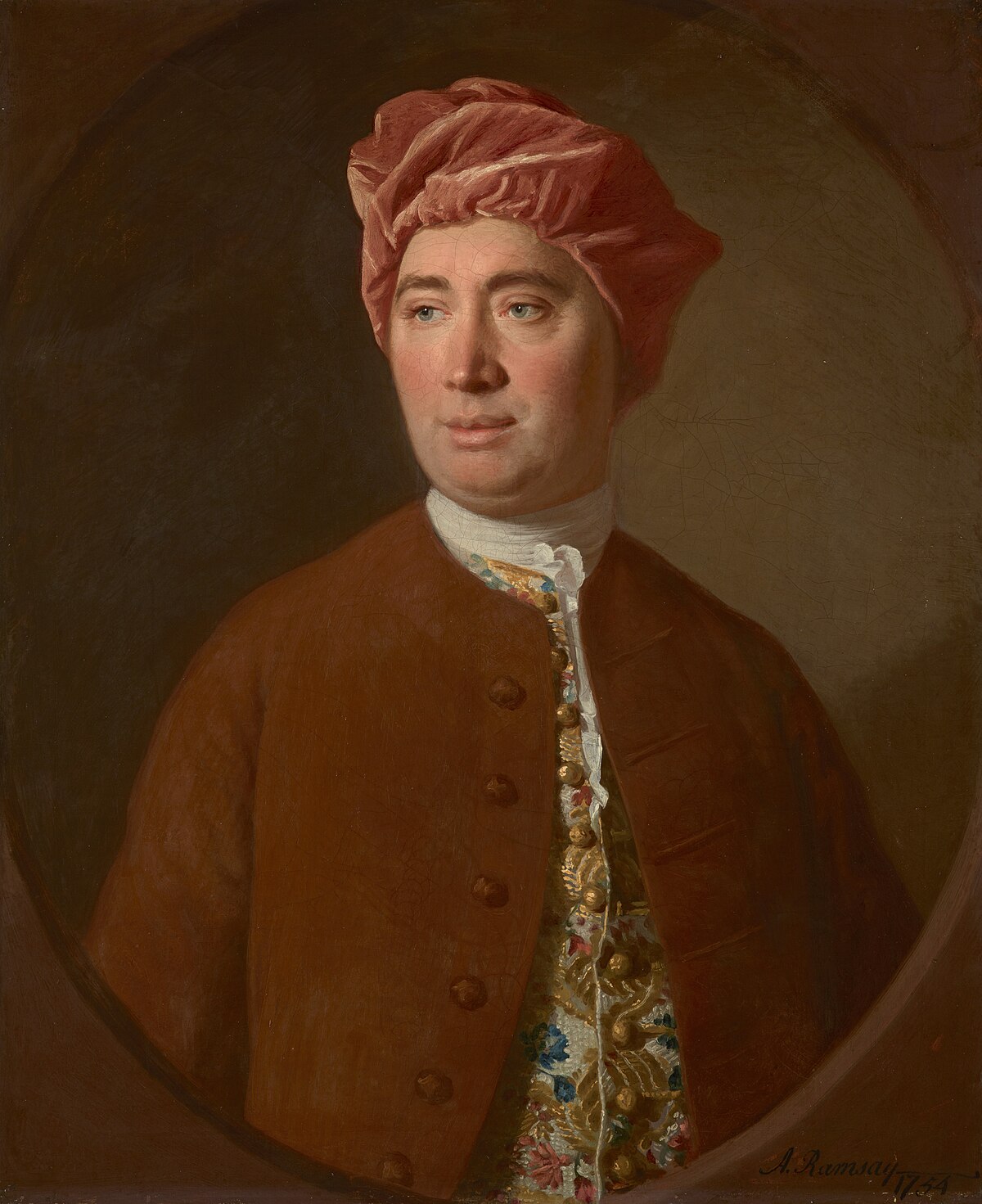
David Hume, born on May 7, 1711, in Edinburgh, Scotland, is widely regarded as one of the most influential philosophers of the Enlightenment. His works have had a profound impact on a wide range of fields, including philosophy, history, economics, and religion. Known for his skepticism and intellectual rigor, Hume’s ideas challenged established beliefs and laid the groundwork for modern philosophical inquiry. This article delves into the life and legacy of David Hume, exploring his philosophical contributions, the historical context of his work, and the enduring influence of his ideas.
Early Life and Education
David Hume was born into a family of modest means but with noble connections. His father died when Hume was a child, leaving his mother to raise him and his siblings. Despite the family’s financial constraints, Hume received a solid education, attending the University of Edinburgh at a young age. His early education was steeped in the classics, which provided a foundation for his later intellectual pursuits.
From a young age, Hume was drawn to philosophy and literature, despite being initially steered toward a career in law. His true passion, however, lay in understanding human nature and the principles that govern human thought and behavior. This passion drove him to abandon his legal studies and devote himself entirely to philosophical inquiry.
The Move to France and the Birth of a Philosopher
In 1734, at the age of 23, Hume moved to La Flèche in France, a town known for its Jesuit college where René Descartes had once studied. It was here, away from the distractions of everyday life, that Hume began working on what would become one of his most significant contributions to philosophy, A Treatise of Human Nature. Written between 1734 and 1737, the Treatise was Hume’s attempt to apply the scientific method of observation to the study of human nature.
The Treatise was ambitious in scope, seeking to lay out a comprehensive theory of human cognition, emotions, and social behavior. Hume argued that all human knowledge arises from experience and that our understanding of the world is shaped by habits and customs rather than by reason alone. He famously asserted that reason is “the slave of the passions,” suggesting that our emotions play a more significant role in shaping our beliefs and actions than previously thought.
Despite the groundbreaking nature of the Treatise, it was met with indifference upon its publication in 1739. Hume himself admitted that the work “fell dead-born from the press,” receiving little attention or acclaim. Undeterred, Hume continued to refine his ideas, publishing An Abstract of a Treatise of Human Nature in an attempt to make his theories more accessible to a broader audience.
The Enlightenment Context and Hume’s Intellectual Environment
David Hume’s intellectual development occurred during the Enlightenment, a period characterized by an emphasis on reason, science, and skepticism of traditional authority. The Enlightenment was a time of profound change in Europe, with thinkers across the continent challenging established religious, political, and social norms. Hume’s work was deeply influenced by this intellectual climate, and he, in turn, became one of its leading figures.
In addition to his philosophical work, Hume was part of a vibrant intellectual community that included some of the most prominent thinkers of the time. His contemporaries included Jean-Jacques Rousseau, Adam Smith, and Voltaire. Hume’s relationships with these figures were complex; while he shared many of their Enlightenment ideals, he also engaged in heated debates with them, particularly on matters of religion and human nature.
Hume’s skepticism extended to religion, where he questioned the rationality of religious belief and criticized the idea of miracles. His Dialogues Concerning Natural Religion, though published posthumously in 1779, remains one of the most important critiques of the arguments for the existence of God. In this work, Hume presents a fictional dialogue between three characters who discuss the nature of religion and the existence of a deity. Through these dialogues, Hume systematically dismantles the traditional arguments for God’s existence, such as the design argument, which claims that the complexity of the world implies a designer.
Major Works and Philosophical Contributions
While the Treatise laid the foundation for Hume’s philosophy, it was in his later works that he solidified his reputation as a leading thinker of the Enlightenment. In 1748, Hume published An Enquiry Concerning Human Understanding, a revised and more accessible version of the first part of the Treatise. The Enquiry introduced many of the ideas that have become central to Hume’s legacy, including his theory of causation, his analysis of human perception, and his famous problem of induction.
Hume’s theory of causation, which argues that our belief in cause and effect is not the result of logical deduction but of habit and experience, was particularly revolutionary. He contended that we never observe causation directly; instead, we only see one event following another. Our mind, through repeated observation, forms the expectation that one event will cause another, but this expectation is not grounded in reason or evidence. This idea challenged the prevailing notions of causality and had a profound impact on the development of both philosophy and science.
The problem of induction, another key concept from the Enquiry, questions the justification for our belief that the future will resemble the past. Hume argued that while we rely on past experiences to predict future events, there is no logical basis for this assumption. This skepticism about induction remains a central issue in the philosophy of science, influencing thinkers such as Immanuel Kant and Karl Popper.
Hume’s An Enquiry Concerning the Principles of Morals, published in 1751, further developed his ideas on human nature and ethics. In this work, Hume argued that moral judgments are not derived from reason but from sentiment. He posited that our sense of right and wrong is rooted in our feelings of sympathy and empathy for others, rather than in any objective moral truths. This view, known as moral sentimentalism, contrasted sharply with the rationalist approaches to ethics that were dominant at the time.
The Historian and the Essayist
In addition to his philosophical work, David Hume was a prolific essayist and historian. His Essays, Moral and Political (1741-1742) covered a wide range of topics, from economics to politics to religion. These essays were well-received and helped establish Hume’s reputation as a leading intellectual of his time. His clear and engaging writing style made complex ideas accessible to a broader audience, contributing to the popularization of Enlightenment thought.
Hume’s most significant contribution to history was his six-volume History of England, published between 1754 and 1762. This monumental work covered the history of England from the Roman invasion to the Glorious Revolution of 1688. Hume’s History was notable for its use of primary sources and its emphasis on the social and economic factors that shaped historical events. It became the standard work on English history for many years and was praised for its balanced and impartial approach.
Hume’s historical writings were not without controversy. His portrayal of certain historical figures, such as Oliver Cromwell and Charles I, sparked debates and criticism. Nevertheless, his History of England was widely read and had a lasting influence on the study of history.
Personal Life and Legacy
Despite his intellectual achievements, David Hume’s personal life was marked by a degree of isolation. He never married and spent much of his life moving between Scotland, England, and France. In 1763, he was appointed secretary to the British embassy in Paris, where he became acquainted with many of the leading French intellectuals of the time, including Voltaire and Jean-Jacques Rousseau. Hume’s relationship with Rousseau was particularly fraught, culminating in a public falling out that ended their friendship.
Hume returned to Edinburgh in 1769, where he spent the remainder of his life. By this time, he had achieved considerable financial success from his writings and was able to live comfortably. Hume’s final years were spent revising his works and corresponding with other intellectuals. He died on August 25, 1776, in Edinburgh, leaving behind a legacy that would shape the course of Western philosophy.
Hume’s influence extended beyond philosophy. His ideas on human nature, causation, and skepticism have had a lasting impact on fields as diverse as psychology, economics, and political theory. His insistence on empirical observation and his critique of dogma laid the groundwork for the development of modern scientific and philosophical thought.
Historical Context and Cultural Impact
David Hume’s work must be understood within the broader context of the Enlightenment, a period that sought to challenge traditional authority and promote reason, science, and individualism. Hume’s skepticism and empirical approach were emblematic of this intellectual movement, which sought to apply the principles of the scientific revolution to the study of human nature and society.
Hume’s challenge to religious orthodoxy, in particular, was a significant contribution to the secularization of European thought. His arguments against miracles and his critique of the design argument for the existence of God influenced later atheistic and agnostic thinkers, contributing to the decline of religious authority in the intellectual sphere.
Hume’s work also had a profound impact on the development of political philosophy. His ideas on government, economics, and society influenced figures such as Adam Smith, who is often regarded as the father of modern economics. Hume’s skepticism about the ability of reason to dictate moral and political truths led him to advocate for a more pragmatic approach to politics, emphasizing the importance of custom, tradition, and gradual reform.
Conclusion
David Hume’s life and work represent a pinnacle of Enlightenment thought. His rigorous skepticism, empirical approach to philosophy, and contributions to history and economics have left an indelible mark on Western intellectual history. Hume’s legacy is one of intellectual courage and a relentless pursuit of truth, qualities that continue to inspire thinkers to this day.
As one of the most important philosophers of the Enlightenment, Hume’s ideas continue to resonate in contemporary debates about knowledge, ethics, religion, and politics. His challenge to established beliefs and his insistence on the importance of experience and observation remain relevant in a world where the boundaries of knowledge and belief are continually tested.


