
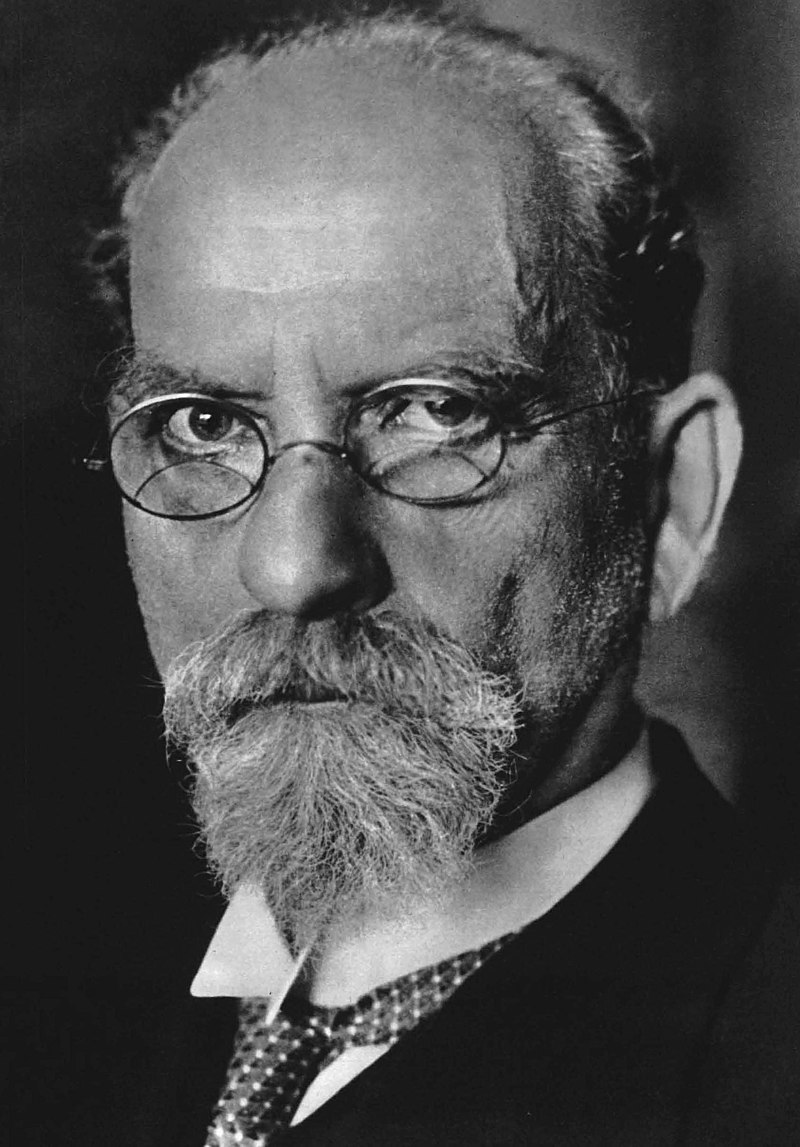
Edmund Gustav Albrecht Husserl was a towering figure in the world of philosophy, known as the founder of phenomenology, one of the most significant philosophical movements of the 20th century. Born on April 8, 1859, in Prossnitz, Moravia, Husserl’s intellectual journey began with a deep engagement in mathematics, which later paved the way for his profound philosophical contributions.
Early Life and Academic Background
Husserl’s early life was steeped in academia. He initially pursued studies in mathematics, a discipline that intrigued him due to its abstract nature and the precision it demanded. His mathematical background significantly influenced his later philosophical work, especially in his attempts to ground philosophy in a rigorous, scientific method. This influence is evident in the evolution of his thought, where the search for absolute certainty and universality became a central theme.
The Evolution of Husserl’s Thought
Husserl’s philosophical journey can be broadly divided into three phases: the psychologistic phase, the logicist phase, and the phenomenological phase. Each of these phases marks a significant shift in his thinking and a deepening of his philosophical inquiry.
The Psychologistic Phase
In the early stage of his career, Husserl was heavily influenced by the works of Franz Brentano, under whom he studied. This period, often referred to as his “psychologistic phase,” was characterized by an attempt to provide a psychological foundation for mathematical principles. His work during this time, particularly his 1891 book Philosophy of Arithmetic, reflects his efforts to establish a connection between subjective psychological processes and the objective universality of mathematical truths. However, Husserl soon recognized the limitations of this approach, particularly the challenge of reconciling subjective psychological experiences with the objective nature of mathematics.
The Logicist Phase
The limitations of his early work led Husserl to a new direction, which scholars refer to as his “logicist phase.” In this period, Husserl sought to ground mathematical principles not in psychology but in logic. This shift is most clearly seen in his Logical Investigations (1900-1901), a seminal work that aimed to establish the foundations of mathematics on logical rather than psychological grounds. Despite his efforts, Husserl continued to grapple with the problem of subjectivity—specifically, how subjective experiences could be reconciled with the universality and objectivity that logic demands.
The Phenomenological Phase
The culmination of Husserl’s intellectual journey was the development of phenomenology, a philosophical method that sought to address the limitations he encountered in his earlier work. Phenomenology, as Husserl envisioned it, was a rigorous scientific approach to philosophy that sought to describe the structures of consciousness as they present themselves to experience, without presuppositions. This method aimed to provide a “scientific” foundation for knowledge, one that could account for both the subjective and objective dimensions of experience.
Husserl’s phenomenology is perhaps best exemplified in his later works, such as Ideas for a Pure Phenomenology and Phenomenological Philosophy (1913), Cartesian Meditations (1931), and The Crisis of European Sciences and Transcendental Phenomenology (1936). These works explore the nature of consciousness, the role of intentionality in experience, and the ways in which subjective experiences are structured and given meaning.
Key Concepts in Husserl’s Philosophy
Husserl introduced several key concepts in his work, many of which continue to be influential in contemporary philosophy. Among these, the concepts of “epoché,” “intentionality,” and the “phenomenological reduction” are particularly significant.
Epoché and Phenomenological Reduction
The concept of epoché, or “suspension of judgment,” is central to Husserl’s phenomenological method. It involves a deliberate “bracketing” of all preconceptions and assumptions about the external world, allowing the philosopher to focus purely on the structures of consciousness. Through this method, Husserl sought to strip away the layers of interpretation and presupposition that typically cloud our experience, revealing the pure phenomena as they are presented to consciousness.
Closely related to epoché is the idea of the phenomenological reduction, a method by which the philosopher seeks to return to the “things themselves,” that is, to the phenomena as they are directly experienced. This process involves a deep and careful examination of consciousness, with the aim of uncovering the essential structures that underlie all experience.
Intentionality
Another foundational concept in Husserl’s philosophy is intentionality, the idea that consciousness is always “about” something—that it is always directed toward an object. This concept, which Husserl borrowed from Brentano, plays a crucial role in his phenomenology. For Husserl, all acts of consciousness, whether they involve perception, imagination, memory, or thought, are intentional—they are always oriented toward something other than themselves. This insight allowed Husserl to bridge the gap between subjectivity and objectivity, showing how the two are interrelated through the structures of intentionality.
Husserl’s Influence and Legacy
Husserl’s phenomenology had a profound impact on 20th-century philosophy, influencing a wide range of thinkers, from existentialists like Jean-Paul Sartre and Maurice Merleau-Ponty to structuralists and post-structuralists like Jacques Derrida. His work also laid the groundwork for the development of existential phenomenology, which explored themes such as human freedom, the nature of existence, and the relationship between self and world.
Perhaps the most famous of Husserl’s students was Martin Heidegger, whose work in Being and Time (1927) represents a significant departure from Husserl’s thought, even as it builds upon phenomenological methods. Heidegger’s emphasis on being and his critique of Husserl’s focus on consciousness would lead to a new direction in phenomenology, one that focused more on the ontological dimensions of human existence.
Historical Context and Nuances
Understanding Husserl’s work also requires a consideration of the historical context in which he wrote. Husserl lived and worked during a period of significant upheaval in Europe, including the decline of the Austro-Hungarian Empire, the rise of German nationalism, and the devastating impact of World War I. These events influenced his thinking, particularly his later work, which reflects a deep concern with the crisis of European science and the cultural disorientation of the modern world.
In his later years, Husserl became increasingly concerned with what he saw as the decline of European civilization, a theme that is prominent in his final major work, The Crisis of European Sciences and Transcendental Phenomenology. In this work, Husserl argues that the scientific and technological advancements of the modern world have led to a loss of meaning and a disconnect from the lifeworld—the pre-scientific world of everyday experience that underlies all scientific inquiry. For Husserl, the task of philosophy was to reconnect with this lifeworld and to restore a sense of purpose and direction to European culture.
The End of Husserl’s Life and His Enduring Fame
Edmund Husserl passed away on April 26, 1938, in Freiburg, Germany. Despite the challenges he faced in his later years, including the rise of the Nazi regime, which led to his marginalization due to his Jewish heritage, Husserl’s work continued to be influential. After his death, his manuscripts and notes were carefully preserved and are still studied by scholars today.
Husserl’s legacy is not only found in the continued study of his works but also in the way his ideas have permeated various fields beyond philosophy, including psychology, cognitive science, and even artificial intelligence. His exploration of consciousness, intentionality, and the structures of experience continues to inspire and challenge thinkers across disciplines.
Conclusion
Edmund Husserl remains a central figure in the history of philosophy, and his contributions have had a lasting impact on the way we think about consciousness, experience, and the nature of reality. His rigorous approach to philosophy, his commitment to uncovering the essential structures of experience, and his concern with the cultural and intellectual crises of his time all make him a philosopher whose work is as relevant today as it was in the 20th century.
Husserl’s phenomenology offers not just a method of philosophical inquiry, but a way of engaging with the world that seeks to reveal the richness and complexity of human experience. For those who seek to understand the depths of consciousness and the foundations of knowledge, Husserl’s work remains an indispensable guide.


