
Introduction
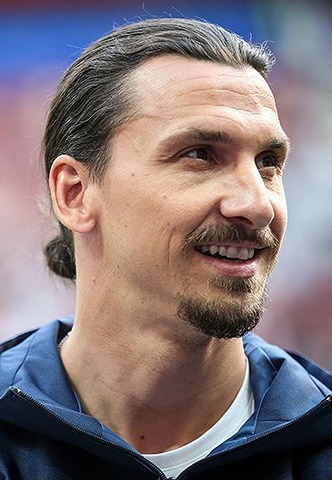
Zlatan Ibrahimovic, born on October 3, 1981, in Malmö, Sweden, is a name that resonates with football fans worldwide. Known for his towering presence, exceptional skills, and charismatic personality, Ibrahimovic has carved out an extraordinary career that spans several decades and includes stints at some of the world’s most prestigious football clubs. From his early days in Sweden to becoming a global icon, Zlatan’s journey is a tale of talent, perseverance, and an unyielding belief in his abilities.
In this comprehensive exploration, we will delve into the life and career of Zlatan Ibrahimovic, providing detailed insights into the key moments that have defined his journey. We will examine his rise to fame, the clubs that have shaped his career, and the personal and professional highlights that make him one of the most fascinating figures in the world of sports. We will also explore the nuances of his playing style, the historical context of his achievements, and how his larger-than-life persona has influenced the global perception of football.
Early Life and Beginnings in Football
Zlatan Ibrahimovic was born to a Bosnian father, Šefik Ibrahimović, and a Croatian mother, Jurka Gravić, in the multicultural city of Malmö. His upbringing in the tough neighborhood of Rosengård, known for its high immigrant population and socio-economic challenges, played a significant role in shaping his character and outlook on life. Despite the hardships, it was in the streets of Rosengård that Zlatan first fell in love with football, using the sport as an escape from the difficulties of his surroundings.
At the age of five, Zlatan received his first pair of football boots, marking the beginning of what would become an illustrious career. His early experiences on the football fields of Rosengård were far from ordinary. Zlatan quickly established himself as a prodigious talent, often playing with older boys and showcasing skills that belied his age. His competitive nature and determination to win were evident even then, traits that would later define his professional career.
By the age of 10, Zlatan was already making waves in the local football scene. Playing for a local team called Balkan, he once famously turned a 4-0 halftime deficit into an 8-5 victory by scoring all eight goals in the second half. This remarkable performance not only highlighted his natural talent but also his ability to rise to the occasion, a hallmark of his career.
The Path to Professional Football
Zlatan’s talent did not go unnoticed, and by the age of 13, he joined the youth academy of Malmö FF, one of Sweden’s most prestigious football clubs. Even at this young age, Zlatan had his sights set on a professional career, often telling those around him, “I won’t stay in Sweden for long.” His ambition and drive were clear, and it wasn’t long before he made his professional debut.
In June 2000, Zlatan played his first game for Malmö FF in the Superettan, Sweden’s second division. Despite Malmö’s relegation to the second tier, Zlatan’s performances caught the attention of scouts from around Europe. His combination of physical strength, technical ability, and flair made him a standout player, and it was clear that he was destined for bigger things.
By December 2000, Zlatan was attracting interest from several top European clubs. Arsenal manager Arsène Wenger was one of the first to try to secure his signature, even going so far as to offer Zlatan a jersey with his name and the number 9 printed on it. However, it was Dutch giants Ajax that ultimately won the race for his signature, making him the most expensive Swedish player at the time.
Rise to Prominence at Ajax
Zlatan Ibrahimovic’s move to Ajax in 2001 marked the beginning of his rise to international stardom. Ajax, known for its storied history and development of young talent, provided the perfect platform for Zlatan to showcase his abilities on a bigger stage. Under the guidance of manager Ronald Koeman, Zlatan quickly became a key player for the team, helping Ajax win the Eredivisie title in his first season.
During his time at Ajax, Zlatan’s game evolved significantly. He became known for his spectacular goals, including a memorable solo effort against NAC Breda in 2004, where he dribbled past five defenders before calmly slotting the ball into the net. This goal was later voted as the “Goal of the Year” and remains one of the most iconic moments of his career.
Zlatan’s performances at Ajax also earned him a call-up to the Swedish national team, where he made his debut in 2001. He quickly became a regular in the squad, scoring his first international goal in a World Cup qualifier against Azerbaijan. His performances for both club and country established him as one of the brightest young talents in European football.
The Move to Italy and Success with Juventus
In 2004, after a successful stint at Ajax, Zlatan made a high-profile move to Italian giants Juventus. The move to Serie A was a significant step up in his career, as he joined one of the most successful clubs in European football. Under the management of Fabio Capello, Zlatan thrived in the competitive environment of Italian football, helping Juventus win back-to-back Serie A titles in 2005 and 2006.
Zlatan’s time at Juventus was marked by his physical dominance, technical skill, and an ability to score crucial goals. He quickly became a fan favorite, with his performances earning him comparisons to some of the greatest strikers in the history of the club. However, his time at Juventus was also marred by controversy, as the club was embroiled in the Calciopoli scandal, which led to their relegation to Serie B and the stripping of their league titles.
Despite the turmoil, Zlatan’s stock continued to rise, and in 2006, he made another high-profile move, this time to Inter Milan. The move to Inter marked the beginning of a new chapter in Zlatan’s career, as he continued to establish himself as one of the best strikers in the world.
Dominance at Inter Milan
Zlatan Ibrahimovic’s time at Inter Milan from 2006 to 2009 was one of the most successful periods of his career. Under the management of Roberto Mancini and later José Mourinho, Zlatan became the focal point of Inter’s attack, leading the team to three consecutive Serie A titles. His ability to score goals from all angles, combined with his physical presence and technical skill, made him virtually unstoppable in the Italian league.
During the 2008-2009 season, Zlatan won the Capocannoniere award as the top scorer in Serie A, finishing the season with 25 goals. His performances were instrumental in helping Inter secure the Scudetto, and he was widely regarded as the best player in the league. However, despite his domestic success, European glory eluded Zlatan during his time at Inter, with the club failing to progress beyond the quarterfinals of the UEFA Champions League.
In the summer of 2009, Zlatan made a blockbuster move to FC Barcelona, one of the biggest clubs in the world. The transfer, which involved a swap deal with Samuel Eto’o, was one of the most talked-about moves of the year, and it marked Zlatan’s first venture into Spanish football.
The Barcelona Experience
Zlatan’s move to Barcelona in 2009 was met with great anticipation, as he joined a team that had just won the treble under manager Pep Guardiola. Barcelona’s style of play, based on possession and quick passing, was a stark contrast to the more physical and direct football Zlatan had been accustomed to in Italy. Despite this, Zlatan started his Barcelona career in fine form, scoring on his debut and continuing to find the back of the net regularly.
However, as the season progressed, tensions began to emerge between Zlatan and Guardiola. Zlatan’s more individualistic style of play often clashed with Guardiola’s team-oriented philosophy, leading to friction between the two. Despite scoring 21 goals in his debut season, Zlatan’s relationship with the manager deteriorated, and he was eventually loaned to AC Milan for the 2010-2011 season.
Return to Italy with AC Milan
Zlatan’s return to Italy with AC Milan marked a rejuvenation in his career. He quickly became the leader of the team, helping Milan win the Serie A title in the 2010-2011 season. His performances were characterized by his ability to score crucial goals, as well as his leadership on and off the pitch. Zlatan’s influence at Milan was immense, and he played a key role in helping the club regain its status as one of the top teams in Italy.
During his time at Milan, Zlatan also released his autobiography, “I Am Zlatan Ibrahimovic,” which became a bestseller and provided an in-depth look into his life and career. The book revealed his struggles, triumphs, and the mindset that had driven him to succeed at the highest level.
Paris Saint-Germain and Global Stardom
In 2012, Zlatan made another high-profile move, this time to Paris Saint-Germain (PSG), where he would become the face of the club’s ambitious project to dominate French and European football. Zlatan’s impact at PSG was immediate, as he led the team to four consecutive Ligue 1 titles and became the club’s all-time leading scorer.
During his time in Paris, Zlatan established himself as one of the most marketable athletes in the world, with his larger-than-life personality and on-field performances earning him a global fanbase. His time at PSG was also marked by numerous individual accolades, including multiple Ligue 1 Player of the Year awards and a place in the UEFA Team of the Year.
Late Career Success and Return to Milan
After successful stints at Manchester United, where he won the Europa League, and LA Galaxy, where he became a fan favorite in Major League Soccer, Zlatan returned to AC Milan in 2020. Despite being in his late 30s, Zlatan continued to defy age, delivering match-winning performances and helping Milan challenge for the Serie A title.
Zlatan’s return to Milan also saw him take on a mentoring role, guiding younger players and instilling a winning mentality within the squad. His influence both on and off the pitch was undeniable, and his ability to perform at the highest level well into his 40s is a testament to his dedication and professionalism.
Conclusion
Zlatan Ibrahimovic’s career is a remarkable story of talent, determination, and an unwavering belief in oneself. From the streets of Rosengård to the biggest stages in world football, Zlatan has consistently proven himself to be one of the greatest strikers of his generation. His journey is not just about the goals and trophies, but also about the impact he has had on the sport and the legacy he leaves behind.
As Zlatan continues to defy expectations and push the boundaries of what is possible, his story will undoubtedly inspire future generations of footballers. Whether it’s his iconic goals, his memorable quotes, or his larger-than-life persona, Zlatan Ibrahimovic’s place in football history is assured. He is not just a footballer; he is a global icon whose influence extends far beyond the pitch.


