
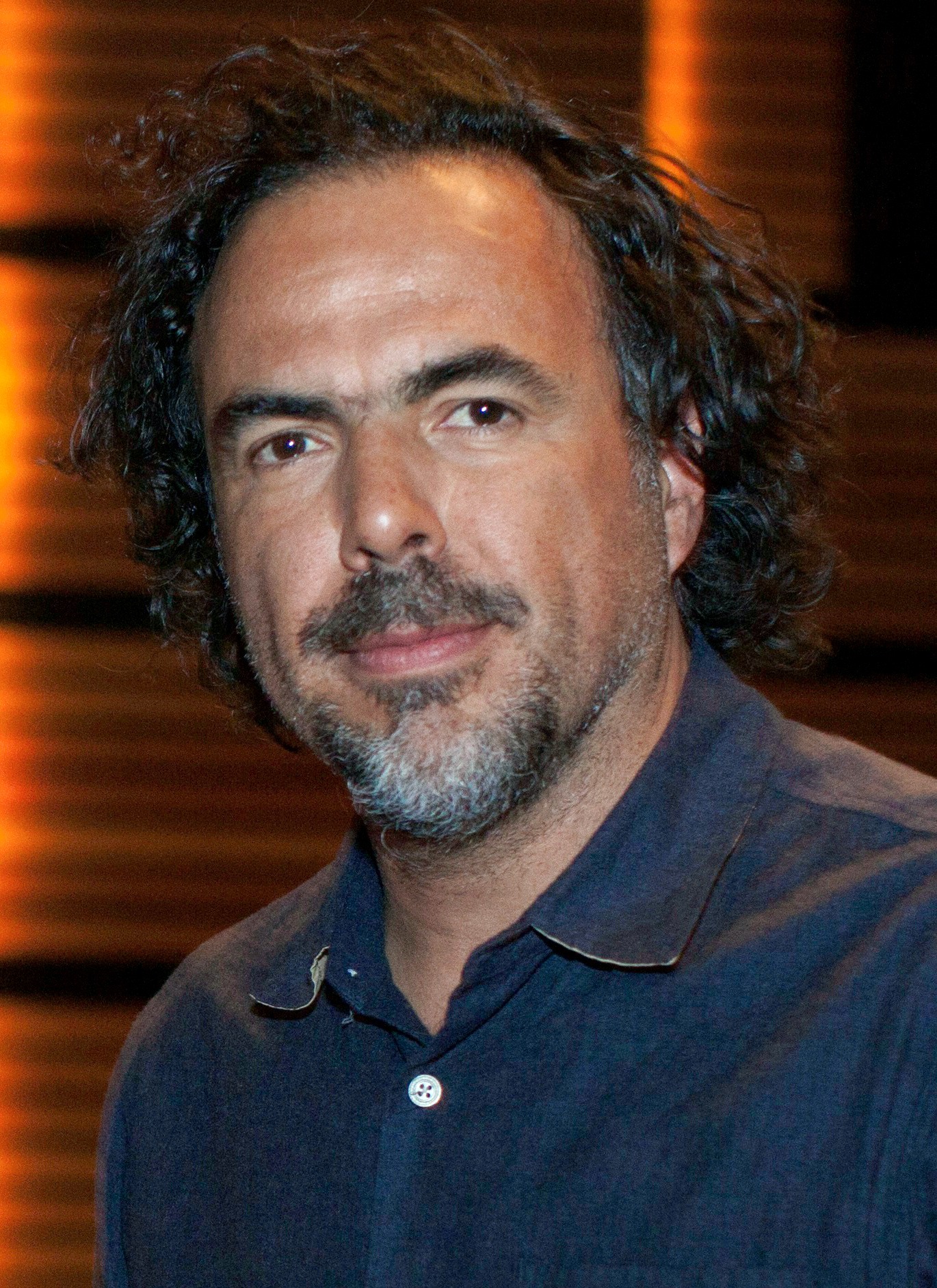
Alejandro González Iñárritu, born on August 15, 1963, in Mexico City, is one of the most influential and celebrated filmmakers of the 21st century. His journey from a middle-class neighborhood in the heart of Mexico’s capital to becoming an Academy Award-winning director is a testament to his talent, perseverance, and visionary approach to cinema. This article delves into the life, career, and significant milestones of Iñárritu, offering a detailed exploration of his contributions to film and his impact on global cinema.
Early Life and Struggles
Alejandro was born into a family that faced financial challenges despite his father, Héctor González Gama, holding a bank executive position. His childhood in La Colonia Narvarte, a bourgeois neighborhood near central Mexico City, was marked by economic difficulties that saw his family face bankruptcy after a financial collapse. His father, undeterred by these setbacks, started a business buying fruits and vegetables from the Central de Abastos market and selling them to local restaurants. This period of hardship would later influence Iñárritu’s storytelling, often characterized by themes of struggle and survival.
During his adolescence, Iñárritu sought adventure and new experiences, embarking on two voyages across the Atlantic as a deckhand on a cargo ship. These voyages, one at the age of 17 and the other at 19, exposed him to diverse cultures and environments, including a significant period spent in Africa. These experiences were not only physically demanding but also deeply transformative, shaping his worldview and artistic sensibilities.
Return to Mexico and the 1980s
Upon returning to Mexico, Iñárritu enrolled at the Universidad Iberoamericana, where he studied communication. In 1984, he began his career in media as a radio host at WFM, a popular radio station in Mexico City. Within a few years, he rose to become the station’s artistic director, transforming WFM into one of the most popular stations among young Mexicans. His work in radio during the late 1980s also included composing soundtracks for various Mexican films, marking the beginning of his foray into the world of cinema.
Breakthrough in the 1990s: Z Films and “Amores Perros”
Iñárritu’s ambition extended beyond radio, leading him to study theater under renowned Polish director Ludwik Margules. This theatrical education, coupled with his subsequent move to the United States where he studied film directing under Judith Weston in Maine and California, laid the foundation for his filmmaking career. In the 1990s, he co-founded Z Films with Raul Olvera, a production company aimed at producing television shows, commercials, short films, and feature-length movies. By 1995, Z Films had become the largest and most prominent production company in Mexico.
It was during this time that Iñárritu met Guillermo Arriaga, a writer and screenwriter with whom he would form a powerful creative partnership. Together, they worked on “Amores Perros” (2000), a film that took three years to complete and went through nearly forty drafts. “Amores Perros” is a gritty, raw portrayal of life in Mexico City, told through three interconnected stories. The film was a critical and commercial success, earning over sixty awards worldwide, including a nomination for Best Foreign Language Film at the Academy Awards and the Grand Prize at the Cannes Film Festival’s Critics’ Week. The film also marked the cinematic debut of Gael García Bernal, who would go on to become one of Mexico’s most prominent actors.
Hollywood Success: “21 Grams” and “Babel”
Following the success of “Amores Perros,” Iñárritu directed “Powder Keg” (2001), a short film that was part of BMW’s “The Hire” series, which also featured works by directors such as John Frankenheimer, Guy Ritchie, Wong Kar-wai, and Ang Lee. He then contributed to the collective film project “11’09″01 September 11” (2002), a reflection on the September 11 attacks, alongside other renowned directors like Sean Penn, Amos Gitai, and Ken Loach.
In 2003, Iñárritu released his second feature film, “21 Grams,” which he wrote with Guillermo Arriaga. The film, shot in the United States, stars Benicio del Toro, Sean Penn, and Naomi Watts. “21 Grams” was critically acclaimed and received several awards, including the Volpi Cup for Best Actor for Sean Penn at the Venice Film Festival and Academy Award nominations for Watts and del Toro.
Iñárritu’s next major project was “Babel” (2006), a film that weaves together four interconnected stories set in Japan, the United States, Mexico, and Morocco. Starring Cate Blanchett and Brad Pitt, as well as newcomers Rinko Kikuchi and Adriana Barraza, “Babel” premiered at the Cannes Film Festival, where Iñárritu won the Best Director Award. The film was nominated for seven Academy Awards, including Best Picture and Best Director, and won the Golden Globe for Best Drama.
The 2010s: A New Era of Acclaim
In the 2010s, Iñárritu continued to push the boundaries of cinema, exploring new themes and techniques. However, his collaboration with Guillermo Arriaga ended during this period, partly due to creative differences that came to a head in a controversial interview where Arriaga claimed he deserved more recognition for his contributions.
In 2010, Iñárritu directed “Biutiful,” a Spanish-language film starring Javier Bardem. The film, which tells the story of a dying man trying to secure a future for his children, was premiered at the Cannes Film Festival, where Bardem won the Best Actor Award. “Biutiful” was also nominated for the Academy Award for Best Foreign Language Film, further solidifying Iñárritu’s reputation as a master storyteller.
The Pinnacle of Success: “Birdman” and “The Revenant”
The turning point in Iñárritu’s career came with the release of “Birdman” in 2014. The film, a dark comedy-drama about a washed-up actor trying to revive his career on Broadway, starred Michael Keaton, Edward Norton, and Emma Stone. “Birdman” was a critical triumph, earning nine Academy Award nominations and winning four, including Best Picture, Best Director, Best Original Screenplay, and Best Cinematography. The film’s innovative use of long takes and its exploration of the blurred line between reality and fiction earned Iñárritu widespread acclaim.
Following the success of “Birdman,” Iñárritu embarked on an even more ambitious project: “The Revenant” (2015). Starring Leonardo DiCaprio and Tom Hardy, the film is a brutal, visually stunning survival story set in the 1820s American frontier. “The Revenant” was filmed in extreme conditions, with Iñárritu insisting on using natural light to enhance the film’s realism. The film was a commercial and critical success, earning 12 Academy Award nominations and winning three, including Best Director for Iñárritu, Best Actor for DiCaprio, and Best Cinematography. The film also won the Golden Globe for Best Drama and Best Director, further cementing Iñárritu’s status as one of the leading filmmakers of his generation.
Alejandro González Iñárritu’s Legacy
Alejandro González Iñárritu’s work is characterized by its intense emotional depth, innovative narrative structures, and a relentless pursuit of authenticity. His films often explore themes of human suffering, redemption, and the interconnectedness of lives, making him a unique voice in contemporary cinema. His ability to draw powerful performances from his actors and his commitment to pushing the boundaries of film as an art form have earned him a place among the great directors of all time.
As of today, Iñárritu continues to be an influential figure in the film industry, with his work inspiring a new generation of filmmakers. His journey from a young man seeking adventure on the high seas to a multiple Academy Award-winning director is a story of passion, perseverance, and the power of storytelling.
In the ever-evolving landscape of cinema, Alejandro González Iñárritu remains a beacon of artistic integrity and visionary filmmaking. His films, rich with cultural nuances and universal themes, continue to resonate with audiences worldwide, ensuring his legacy will endure for generations to come.


