
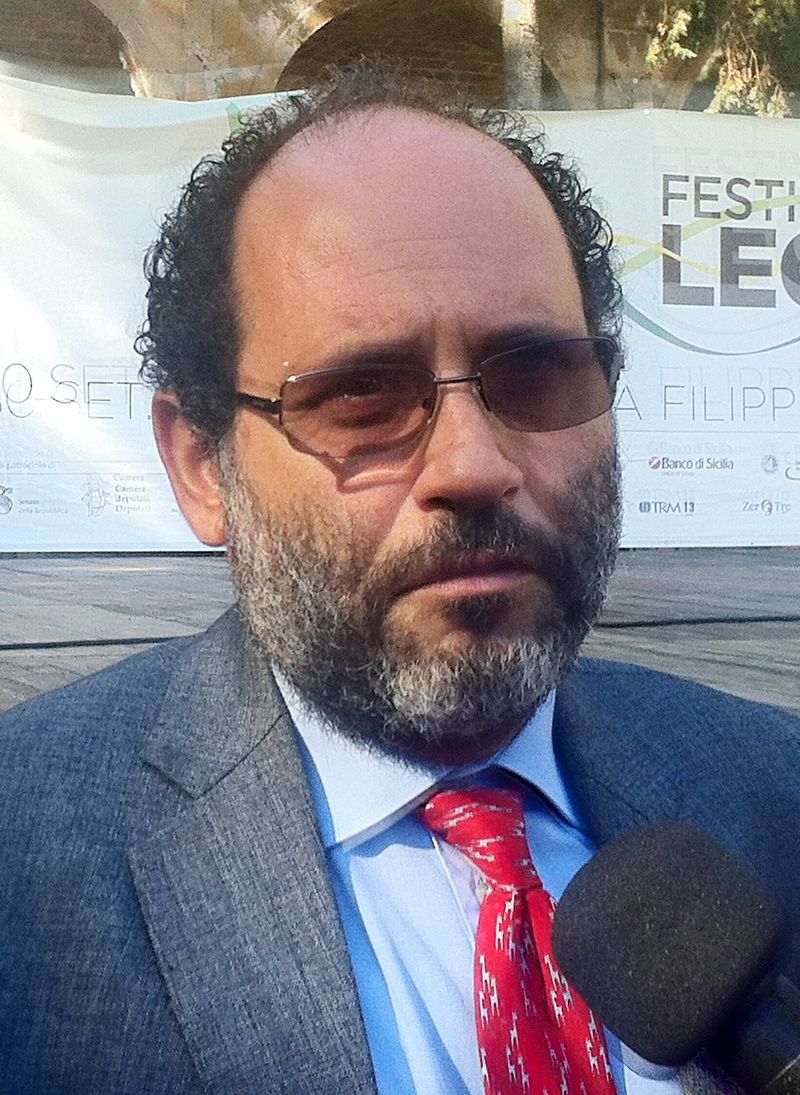
Antonio Ingroia, born on March 31, 1959, in Palermo, Italy, is a prominent figure in the Italian legal and political spheres. His career as a magistrate, particularly his work against organized crime, has garnered him national recognition. Ingroia’s life is marked by his dedication to justice, his involvement in high-profile legal cases, and his eventual foray into politics. This article provides a comprehensive overview of Antonio Ingroia’s life, his significant contributions to the legal system, and his transition into the political arena, reflecting on the broader implications of his work and influence.
Early Life and Legal Career
Antonio Ingroia was born in Palermo, a city that would later become central to his career and life’s work. After completing his legal education, Ingroia began his career as a judicial auditor in Palermo, a role that set the stage for his future in the Italian legal system. His early years in the judiciary were formative, as he worked closely with renowned anti-mafia judges Paolo Borsellino and Giovanni Falcone, two of Italy’s most revered figures in the fight against organized crime.
In 1987, Borsellino invited Ingroia to join him at the Marsala prosecutor’s office, where Ingroia began his in-depth work against the mafia. This period was crucial in shaping his understanding of organized crime and the intricate connections between the mafia, politics, and the economy. The assassination of Falcone and Borsellino in 1992 profoundly impacted Ingroia, further fueling his commitment to combating organized crime.
Rise to Prominence: The Fight Against the Mafia
Ingroia’s rise to prominence came in the 1990s and 2000s as he took on increasingly significant roles within the Italian legal system. In 1992, under Gian Carlo Caselli’s leadership, Ingroia became a deputy prosecutor in Palermo, where he played a pivotal role in numerous anti-mafia cases. One of the most notable was his involvement in the prosecution of Bruno Contrada, a senior officer in the Italian intelligence service, who was convicted of aiding the mafia.
Ingroia’s legal work often intersected with high-stakes political issues, particularly his investigations into the connections between mafia activities and Italian politicians. A prime example of this was the case against Marcello Dell’Utri, a senator from Silvio Berlusconi’s party, Forza Italia. Ingroia’s investigation alleged that Dell’Utri acted as a mediator between Northern Italy’s business interests and the Southern mafia, utilizing relationships with notorious mafia figures like the Graviano brothers and Salvatore Riina.
This case was one of the most significant of Ingroia’s career, leading to Dell’Utri’s conviction for external association with the mafia. The conviction, initially set at nine years, was later reduced on appeal, but the case cemented Ingroia’s reputation as a determined and fearless prosecutor. His work earned him both acclaim and criticism, the latter particularly from those who saw his actions as overly politicized.
Literary Contributions and Public Persona
Antonio Ingroia has also made substantial contributions to the literature on organized crime and justice. His writings often reflect his deep commitment to fighting the mafia and his insights into the complexities of Italian politics and society. In 1993, he published his first book, “L’associazione di tipo mafioso,” which provided an in-depth analysis of mafia-type associations under Italian law. This work was followed by several others, including “L’eredità scomoda. Da Falcone ad Andreotti. Sette anni a Palermo,” co-authored with Gian Carlo Caselli, which explored the challenges of continuing Falcone and Borsellino’s work in Palermo.
Ingroia’s literary output extended beyond legal analysis to include broader reflections on the state of Italian society and the persistent influence of the mafia. His 2009 book, “C’era una volta l’intercettazione,” critiqued the Italian political system and its attempts to undermine judicial investigations, particularly those involving wiretapping and surveillance.
As his public profile grew, Ingroia became a familiar face on Italian television, often appearing in discussions about justice, the mafia, and politics. His increasing media presence, coupled with his outspoken views, led to him being labeled as a politicized judge by some of his critics. Ingroia, however, embraced this label, describing himself as a “partigiano della Costituzione” (a partisan of the Constitution), underscoring his belief in the fundamental principles of justice and democracy.
Transition to Politics and Beyond
In 2012, Antonio Ingroia made a significant career shift, transitioning from the judiciary to politics. This move was partly motivated by his frustration with the limitations of the judicial system in effecting broader societal change and his desire to continue his fight against organized crime and corruption from within the political system.
Ingroia founded the political movement “Rivoluzione Civile” (Civil Revolution) and announced his candidacy for the office of Prime Minister in the 2013 Italian general election. His platform focused on anti-corruption, transparency, and the protection of constitutional rights. Despite his passionate campaign, Rivoluzione Civile failed to gain significant traction, and the party did not win any seats in Parliament. The poor electoral performance was a setback for Ingroia, leading him to reflect on the challenges of translating judicial success into political influence.
After the elections, Ingroia shifted his focus again, this time to the legal profession. In October 2013, he was sworn in as a lawyer, officially ending his career as a magistrate. This move allowed him to continue his advocacy for justice and the rule of law, albeit from a different angle. As a lawyer, Ingroia took on cases that aligned with his longstanding commitment to fighting organized crime and defending the rights of citizens.
In addition to his legal practice, Ingroia remained active in public discourse through his writing and media appearances. He continued to contribute to “Il Fatto Quotidiano,” one of Italy’s leading newspapers, where he served as an editorialist. His columns often focused on legal and political issues, providing critical analysis of ongoing developments in Italy.
Legacy and Impact
Antonio Ingroia’s career is a testament to his unwavering commitment to justice and the rule of law. His work as a magistrate, particularly in the fight against organized crime, has had a lasting impact on Italy’s legal landscape. Through his prosecutions, writings, and public advocacy, Ingroia has consistently highlighted the deep-seated issues of corruption and the mafia’s influence in Italian society.
Despite facing criticism and challenges, Ingroia’s legacy as a symbol of the anti-mafia movement remains strong. His transition to politics, while not as successful as his judicial career, demonstrated his willingness to engage with the political system in his quest for reform. His continued involvement in legal practice and public discourse ensures that his voice remains influential in the ongoing struggle for justice in Italy.
Ingroia’s story is one of dedication, resilience, and a profound belief in the power of the law to effect change. His career reflects the complexities of fighting organized crime in a country where such battles are fraught with danger, both personal and professional. Through his work, Antonio Ingroia has contributed to a broader understanding of the challenges facing Italy and has inspired others to continue the fight for a just and equitable society.
In conclusion, Antonio Ingroia’s life highlights the intersection of law, politics, and society in Italy. His contributions as a magistrate have been instrumental in the ongoing battle against the mafia, and his efforts to bring these issues into the political arena, though met with mixed success, underscore his commitment to justice. As a lawyer, writer, and public figure, Ingroia continues to influence the discourse on organized crime and corruption, leaving a legacy that will resonate for years to come.


