
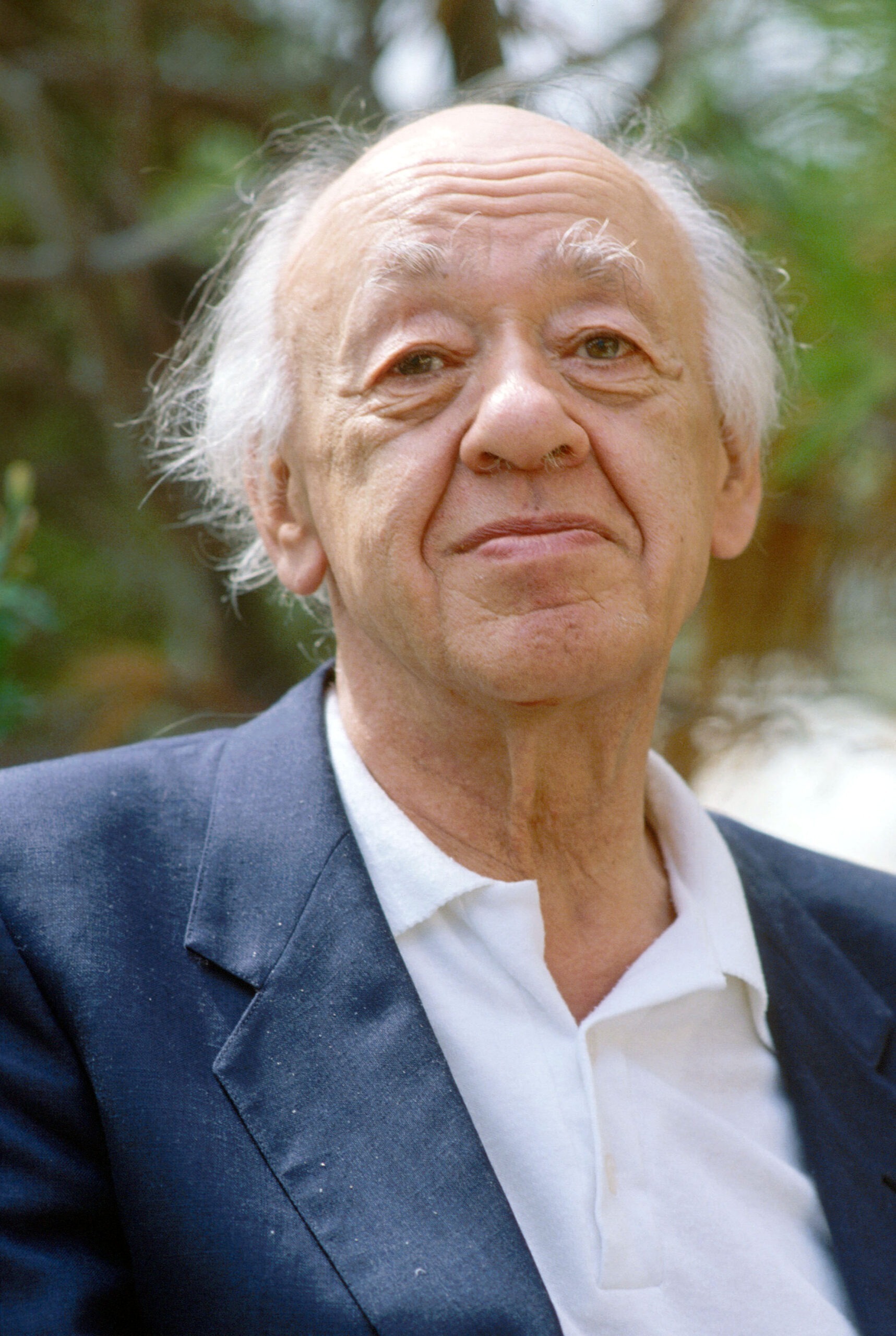
Eugène Ionesco (born Eugen Ionescu on November 26, 1909, in Slatina, Romania) stands as one of the towering figures in 20th-century literature, particularly within the realm of absurdist theater. His life journey, marked by a profound cultural duality and a relentless pursuit of artistic expression, is a testament to the complexities of identity, politics, and creativity in the modern era.
Early Life and Cultural Roots
Ionesco’s early years were shaped by a blend of Romanian and French influences. Born to a Romanian father and a French mother, Ionesco’s cultural identity was deeply intertwined with both countries. His family moved to Paris shortly after his birth, marking the beginning of a life characterized by movement between Romania and France.
In the aftermath of World War I, the family relocated to a small village in the Mayenne region of France due to Ionesco’s anemia. This period of his life, spent in the tranquility of the French countryside, provided the young Ionesco with a respite from the tumult of the outside world. However, it also foreshadowed the themes of isolation and alienation that would later permeate his work.
By the time he was a teenager, Ionesco had returned to Paris, where he wrote his first patriotic drama. This early foray into playwriting hinted at the future direction of his career. Yet, his life took another turn when his parents divorced in 1925, prompting him to move back to Romania. It was here that Ionesco completed his secondary education and immersed himself in Romanian culture, further complicating his sense of belonging and identity.
The 1930s: Intellectual Beginnings and Contradictions
The 1930s marked a period of intellectual exploration for Ionesco. Although he initially aspired to become an actor, he heeded his father’s advice and enrolled at the University of Bucharest. Here, he began to make a name for himself as a critic and poet. His literary critiques often targeted prominent Romanian writers like Camil Petresco, Ion Barbu, and Tudor Arghezi, showcasing his ability to navigate the complexities of literary theory and criticism.
Ionesco’s early critical writings, particularly his essay “Nol,” exemplified his fascination with contradictions and the coexistence of opposing ideas. This intellectual approach would later become a defining characteristic of his absurdist plays, where the boundaries between logic and illogic, reality and fantasy, are constantly blurred.
In 1934, Ionesco published his first major work, the essay “Nu,” which further established him as a promising voice in Romanian avant-garde literature. Two years later, he married Rodica Burileano, a union that would remain a constant in his otherwise tumultuous life.
The 1940s and 1950s: The Birth of Absurdist Theater
The outbreak of World War II and the rise of totalitarian regimes in Europe profoundly impacted Ionesco’s worldview. Between 1941 and 1944, he worked at the Romanian embassy in Vichy, France, a position that brought him into close contact with the political and social upheavals of the time. In 1950, Ionesco completed his first play, “The Bald Soprano” (La Cantatrice Chauve), which debuted at the Theatre des Noctambules in Paris.
Although the play initially received mixed reviews and limited public interest, it marked the beginning of Ionesco’s influential career in absurdist theater. “The Bald Soprano” exemplified the absurdity of human communication, a theme that would recur in many of his later works. The play’s lack of traditional plot structure and its nonsensical dialogue reflected Ionesco’s belief in the inherent absurdity of human existence.
Undeterred by the play’s initial reception, Ionesco continued to write and produce numerous other plays in the following years. Notable among these are “The Lesson” (La Leçon), “The Chairs” (Les Chaises), and “Amédée, or How to Get Rid of It” (Amédée ou comment s’en débarrasser). These works solidified Ionesco’s reputation as a leading figure in the Theater of the Absurd, a movement characterized by its focus on the irrationality of human existence and the futility of communication.
In the mid-1950s, Ionesco’s plays began to resonate more widely with audiences, particularly after “The Bald Soprano” was rediscovered and staged continuously at the Theatre de la Huchette in Paris. The success of these productions catapulted Ionesco to international fame, establishing him as a central figure in modern theater.
The 1960s and Beyond: Prolific Output and Political Engagement
The 1960s were a prolific period for Ionesco. Between 1960 and 1963, he produced a series of plays, including “Exit the King” (Le Roi se meurt), “The Killer” (Tueur sans gages), and “Rhinoceros” (Le Rhinocéros). The latter, which premiered in 1959, became one of his most famous and frequently performed works. “Rhinoceros” is a powerful allegory of the spread of totalitarian ideologies, where the inhabitants of a town gradually transform into rhinoceroses, symbolizing the dangers of conformity and the loss of individuality.
Ionesco’s work during this period reflected his deepening engagement with political and social issues, particularly his opposition to authoritarianism. The play’s protagonist, Bérenger, who resists the transformation, is often seen as a stand-in for Ionesco himself, embodying his belief in the importance of individual resistance to oppressive forces.
In addition to his theatrical work, Ionesco continued to write essays and participate in political activities. In 1989, he played a prominent role in a session of the European Parliament dedicated to the human rights violations committed under Romania’s communist regime. Three years later, he joined the Transnational Radical Party, an organization committed to promoting human rights and democracy worldwide.
Legacy and Influence
Eugène Ionesco’s impact on theater and literature is immeasurable. His plays, characterized by their exploration of the absurdity of human existence and the breakdown of communication, have influenced generations of playwrights and writers. Ionesco’s work is often compared to that of Samuel Beckett, another leading figure in the Theater of the Absurd. Together, they reshaped the landscape of modern drama, challenging audiences to confront the often-irrational nature of human life.
Ionesco’s plays are still widely performed today, and his influence can be seen in the works of contemporary playwrights and directors who continue to explore the themes of absurdity, alienation, and the struggle for meaning in an increasingly fragmented world.
Eugène Ionesco passed away on March 28, 1994, in Paris, at the age of 83. He was buried in the Montparnasse Cemetery, leaving behind a legacy that continues to inspire and challenge audiences worldwide.
Conclusion
Eugène Ionesco was not just a playwright; he was a thinker who used the stage to explore the most profound questions of human existence. His life and work remind us of the power of art to reflect the absurdities of the world around us and to challenge the status quo. Ionesco’s legacy lives on in the continued relevance of his plays, which speak to the universal human experience in a way that is both timeless and deeply resonant.


