
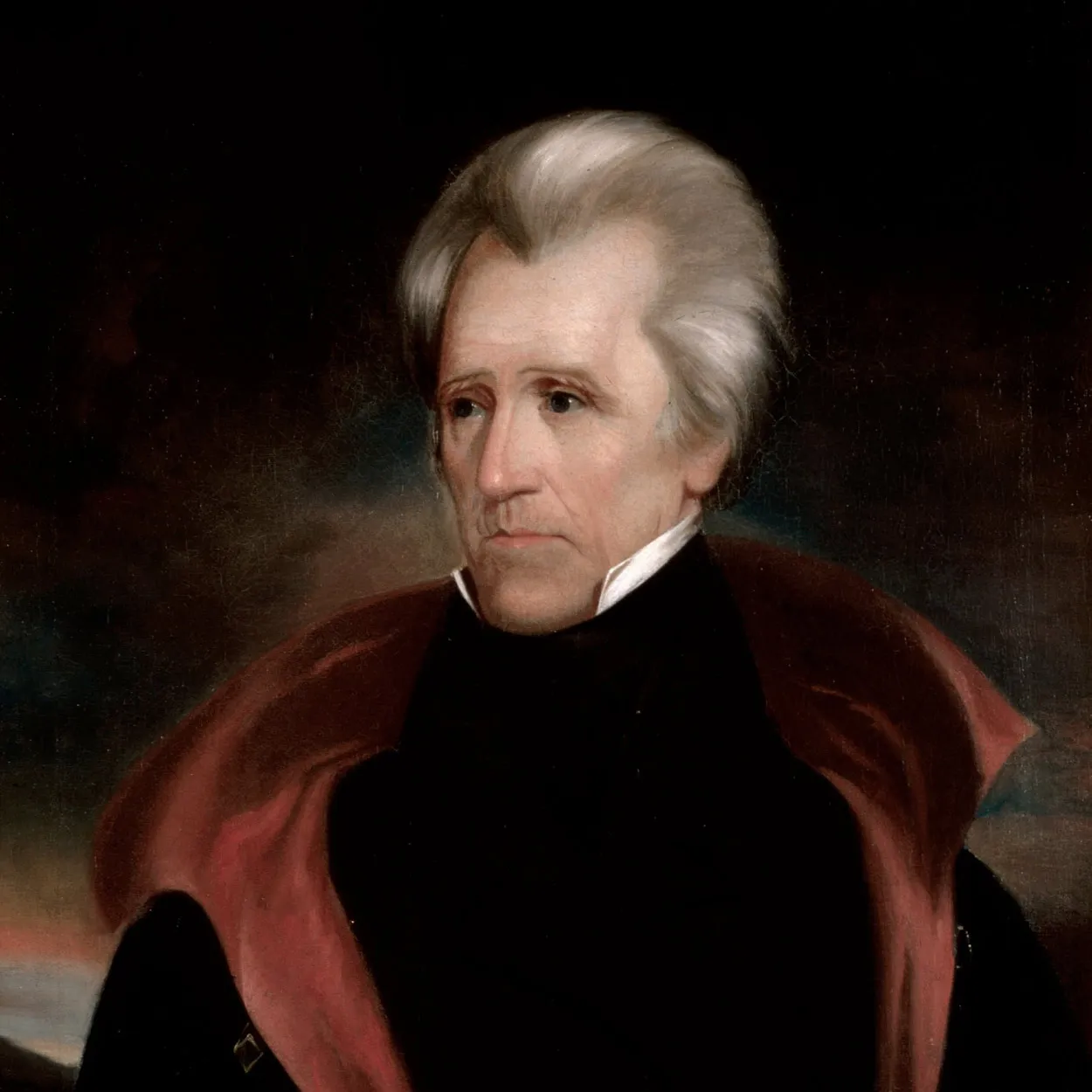
Andrew Jackson, the 7th President of the United States, is a figure whose life story is marked by both dramatic highs and lows. His rise from humble beginnings to national prominence reflects the complex and often turbulent nature of early 19th-century American politics. This comprehensive exploration delves into Jackson’s life, examining his early years, career highlights, presidency, and enduring legacy.
Early Life and Background
Andrew Jackson was born on March 15, 1767, in the Waxhaws region, located on the border between North and South Carolina. He was born into a family of impoverished Irish immigrants. His father, Andrew Jackson Sr., died just weeks before his birth, leaving his mother, Elizabeth Hutchinson Jackson, to raise him and his two older brothers alone. The family lived in a rough, frontier environment with little access to formal education, but Jackson’s mother managed to teach him basic reading and writing skills.
Jackson’s early years were marked by hardship. During the American Revolutionary War, when he was just 13, he was captured by British forces at the Battle of Hanging Rock. Both of his brothers died during the war, and his mother also passed away shortly after the conflict. Orphaned and alone, Jackson moved to Salisbury, North Carolina, where he began working as an apprentice to a saddler while continuing his legal studies.
Legal and Business Career
At the age of 20, Jackson was admitted to the bar and began practicing law. His career quickly gained momentum. He ventured into land speculation, and soon after, engaged in the slave and horse trade. His business ventures were complemented by his military service, initially against local Native American tribes.
Jackson’s legal and business success led him to Nashville, Tennessee, where he held several notable positions. In 1791, he became the district attorney for the area. His personal life also took a significant turn when he married Rachel Donelson Robards in 1794. Rachel had previously been married to Lewis Robards, but their divorce was not yet finalized at the time of their marriage, causing a scandal and legal complications.
Political and Military Rise
Jackson’s political career took off with his election to the Tennessee House of Representatives following the state’s admission to the Union in 1796. In 1797, he was appointed a judge on the Tennessee Supreme Court but found the sedentary role unfulfilling. He resigned in 1804 to focus on his role as a commander of the local militia.
In 1812, with the outbreak of the War of 1812, Jackson was appointed as a general in the U.S. Army. He played a crucial role in the conflict, particularly in the Battle of New Orleans in January 1815, where his forces achieved a decisive victory against the British. This battle, though fought after the Treaty of Ghent had been signed, cemented Jackson’s reputation as a national hero.
Presidential Campaigns and Presidency
Jackson’s fame from the War of 1812 translated into a strong political following. In the presidential election of 1824, he ran as a candidate for the Democratic-Republican Party but lost to John Quincy Adams in a contested outcome where Jackson won the popular vote but fell short in the Electoral College.
Jackson did not retreat from politics. He ran again in 1828 as the candidate for the newly formed Democratic Party. This time, he won the presidency, defeating Adams. Jackson’s presidency, which began on March 4, 1829, was characterized by significant reforms. He championed the “common man,” working to dismantle the entrenched elite structures of American politics. His administration introduced changes such as the secret ballot and increased the democratization of political offices.
One of Jackson’s most controversial policies was his approach to Native American relations, particularly his role in the Indian Removal Act of 1830, which led to the forced relocation of thousands of Native Americans in what became known as the Trail of Tears.
Legacy and Influence
Jackson’s presidency ended in 1837, and he retired to his estate, The Hermitage, near Nashville. He lived there until his death on June 8, 1845, at the age of 78. Jackson’s legacy is complex. He is remembered for his contributions to the development of American democracy and his staunch advocacy for the rights of ordinary citizens. However, his policies toward Native Americans and his ownership of slaves have also drawn substantial criticism.
His face is featured on the $20 bill, a testament to his lasting impact on American history. His life and career remain subjects of extensive study and debate, reflecting the multifaceted nature of his contributions to the United States.


