
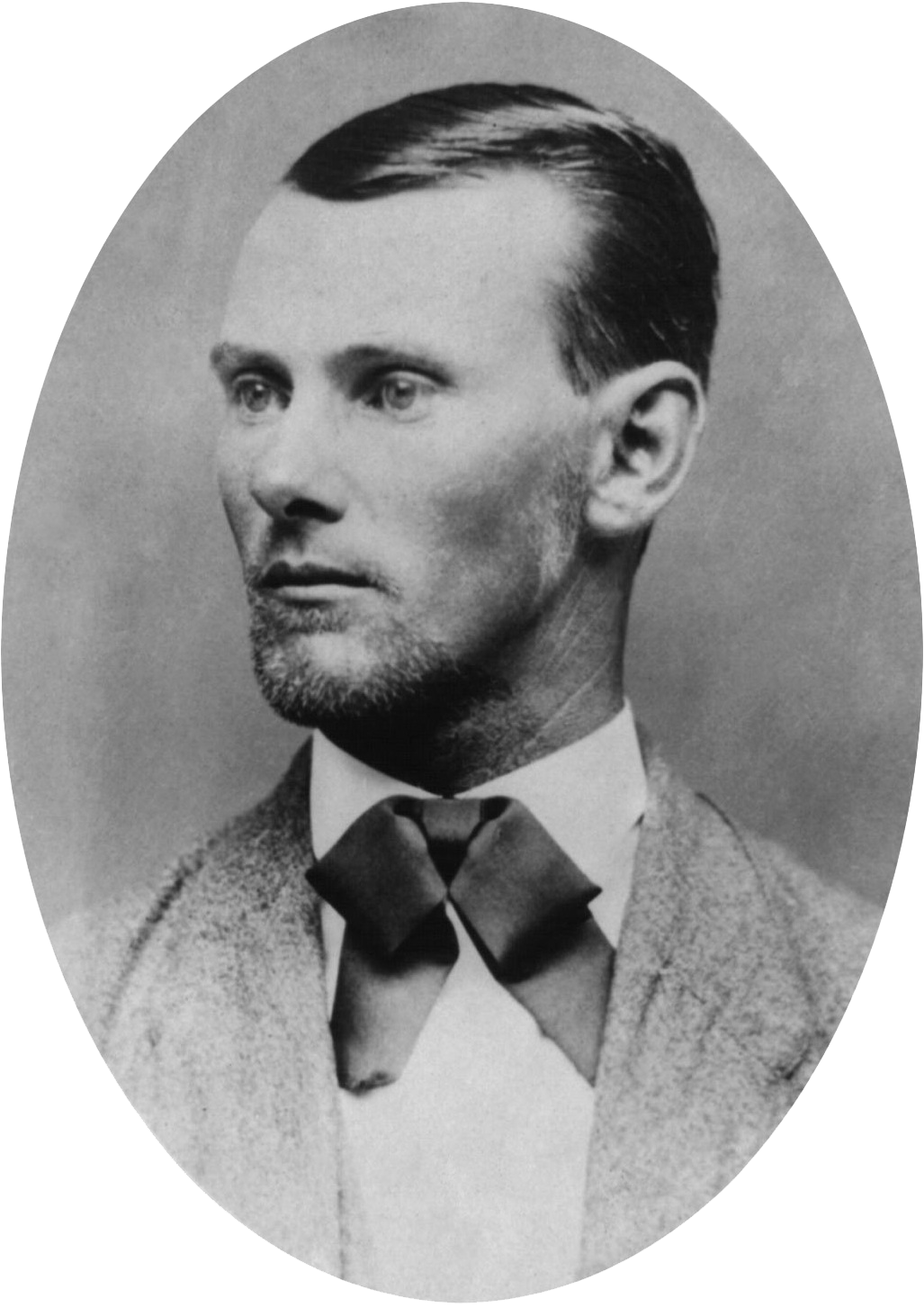
Jesse James is a name that has become synonymous with the American Wild West, representing both the lawlessness of the era and the romanticized image of the outlaw. Born on September 5, 1847, in Clay County, Missouri, Jesse James grew from a farm boy into one of the most infamous outlaws in American history. His life was marked by the Civil War, a relentless pursuit of vengeance, and a legacy that has been immortalized in folklore, literature, and film. This article delves into the life of Jesse James, exploring his rise to fame, key life highlights, and the historical context that shaped him.
Early Life and Family Background
Jesse Woodson James was born to Zerelda Cole and Robert Sallee James, a Baptist minister and hemp farmer. His father died when Jesse was only three years old, leaving his mother to remarry twice. The family’s farm in Clay County was located in the border state of Missouri, a region fraught with tension leading up to and during the Civil War. Missouri’s divided loyalties would play a significant role in shaping Jesse’s future.
Jesse’s upbringing was marked by the turbulence of the times. The region was a hotbed of conflict, with Union and Confederate sympathizers living side by side. The James family, like many in Missouri, were Southern sympathizers, and Jesse’s stepfather, Dr. Reuben Samuel, was tortured by Union soldiers who suspected him of harboring Confederate guerrillas. These events fueled Jesse’s deep-seated hatred for the Union and would influence his actions in the years to come.
Civil War and the Making of an Outlaw
At the age of 15, Jesse James joined a group of Confederate guerrillas led by William Quantrill, known as Quantrill’s Raiders. These men conducted brutal raids against Union forces and sympathizers, often using guerrilla tactics that included ambushes and massacres. Jesse quickly earned a reputation for his ruthlessness and effectiveness in battle.
The Civil War officially ended in 1865, but for Jesse James, the war never truly ended. The violence and lawlessness of the guerrilla warfare he participated in during the war laid the groundwork for his life as an outlaw. Along with his older brother, Frank James, Jesse refused to surrender to Union forces and instead continued to live by the gun.
Post-War Outlaw Activities
Following the Civil War, Jesse James and his brother Frank, along with other former Confederate guerrillas, turned to bank and train robbery as a means of survival. The first recorded robbery attributed to the James-Younger Gang was the Clay County Savings Bank in Liberty, Missouri, in 1866. This robbery was notable not just for its success but also for the killing of an innocent bystander, which set the tone for the gang’s future operations.
Jesse James quickly became the leader of the gang, which included his brother Frank, the Younger brothers (Cole, Jim, and Bob), and others. The gang carried out a string of bank and train robberies across several states, including Missouri, Kentucky, Iowa, Texas, and Minnesota. These robberies were often violent, with Jesse himself becoming notorious for his willingness to shoot anyone who stood in his way.
The Robin Hood Myth and Public Perception
Despite his violent methods, Jesse James became a folk hero to many, particularly in the South. The James-Younger Gang was seen by some as a group of modern-day Robin Hoods, fighting against the perceived injustices of the Reconstruction government and the powerful railroad corporations. This image was bolstered by sympathetic newspaper reports and dime novels that portrayed Jesse as a noble outlaw standing up for the common man.
However, the reality of Jesse James was far more complex. While he was certainly opposed to the Union and the Reconstruction policies that followed the Civil War, his motivations were more personal than political. Jesse’s primary goal was wealth and revenge, and he did not hesitate to kill to achieve these ends. The Robin Hood image was largely a creation of the press and the public’s desire for a hero, even if that hero was an outlaw.
Infamy and Pursuit by Law Enforcement
As Jesse James’ notoriety grew, so did the efforts to capture him. The Pinkerton National Detective Agency was hired by the railroads to bring Jesse and his gang to justice. The Pinkertons employed aggressive tactics, including a raid on the James family farm in 1875, which resulted in the death of Jesse’s half-brother Archie and the maiming of his mother, Zerelda. This raid only intensified Jesse’s resolve and further ingrained his hatred for the authorities.
Despite numerous attempts by law enforcement to capture the gang, Jesse James managed to evade capture for years. The gang’s ability to blend in with local populations and their deep knowledge of the terrain allowed them to stay one step ahead of their pursuers. However, as the years went on, the gang’s luck began to run out. Several members were killed or captured, and the Younger brothers were finally apprehended after a botched bank robbery in Northfield, Minnesota, in 1876.
The Death of Jesse James
By the early 1880s, Jesse James was living under an assumed name, Thomas Howard, in St. Joseph, Missouri. His gang was in disarray, and he had become increasingly paranoid about betrayal. On April 3, 1882, Jesse’s paranoia proved to be well-founded. Robert Ford, a member of his gang who had secretly made a deal with Missouri Governor Thomas T. Crittenden, shot Jesse in the back of the head while he was adjusting a picture on the wall in his home.
The death of Jesse James was met with shock and fascination across the country. The Ford brothers, Robert and his brother Charley, were initially hailed as heroes for killing the notorious outlaw, but public sentiment quickly turned against them. Many saw the manner of Jesse’s death—as he was unarmed and shot from behind—as cowardly, and the Fords were ostracized and eventually met tragic ends themselves.
Legacy and Myth
The legacy of Jesse James is a complicated one. On one hand, he was a violent outlaw responsible for numerous deaths and acts of terror. On the other hand, he became a symbol of resistance to the changes sweeping through the post-Civil War South, embodying the defiance of a defeated and disenfranchised people. His life and death have been the subject of countless books, movies, and songs, cementing his place in American folklore.
The myth of Jesse James has only grown in the years since his death. He has been portrayed as everything from a ruthless killer to a misunderstood hero, depending on the perspective of the storyteller. This duality reflects the complexities of the era in which he lived—a time of rapid change, deep divisions, and the lingering wounds of a bitter civil war.
Historical Context and Analysis
To understand Jesse James, it is essential to consider the historical context in which he lived. The Civil War and its aftermath left the United States deeply divided, with the South suffering economic devastation and social upheaval. The Reconstruction period saw significant tension between the federal government and Southern states, leading to widespread resentment and resistance among Southern whites.
Jesse James’ transformation from Confederate guerrilla to outlaw can be seen as a continuation of the guerrilla warfare that characterized much of the conflict in Missouri. The border state was a microcosm of the larger national struggle, with deep-seated animosities between Unionists and Confederates. For men like Jesse, the end of the war did not bring peace, but rather a shift in the means by which they fought.
The romanticization of Jesse James as a Robin Hood figure can also be traced to the broader societal changes occurring during this period. The rise of industrialization, the expansion of the railroads, and the increasing power of corporations created a sense of dislocation and disenfranchisement among many Americans, particularly in the rural South and West. In this context, Jesse James became a symbol of resistance to these forces, even if the reality of his actions was far from noble.
Conclusion
Jesse James remains one of the most enduring figures of the American Wild West. His life was a complex blend of violence, vengeance, and rebellion, set against the backdrop of a nation struggling to rebuild and redefine itself after the Civil War. While he was undoubtedly a criminal, his transformation into a folk hero speaks to the power of myth and the ways in which history can be shaped by storytelling.
The story of Jesse James is not just the tale of one man, but a reflection of the broader themes of resistance, justice, and the quest for identity in a rapidly changing world. His life and death continue to captivate the American imagination, offering a window into a tumultuous period in the nation’s history.


