
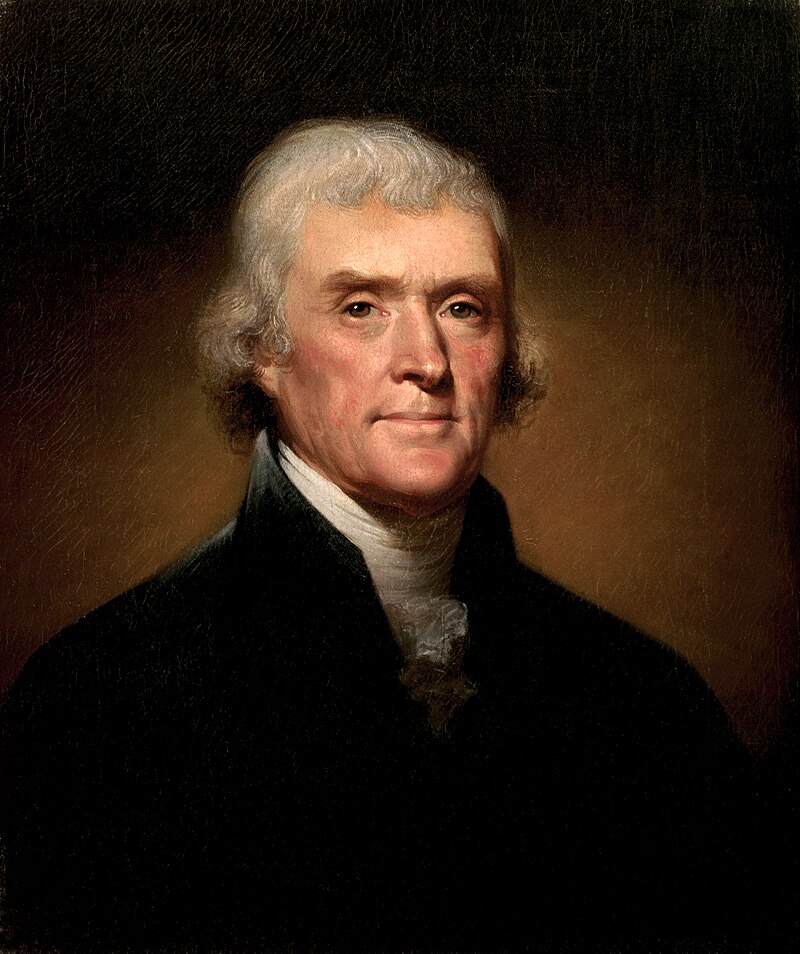
Thomas Jefferson, a towering figure in American history, was born on April 13, 1743, in Shadwell, Virginia. His contributions to the birth and development of the United States are both profound and enduring. From drafting the Declaration of Independence to serving as the third President of the United States, Jefferson’s life was a testament to the ideals of liberty, democracy, and intellectual curiosity. This article delves into his age, fame, and life highlights, providing detailed insights into the man who helped shape the American nation.
Early Life and Education
Thomas Jefferson was born into a prosperous Virginia family, the third of ten children. His father, Peter Jefferson, was a successful planter and surveyor, while his mother, Jane Randolph, came from one of the most prominent families in Virginia. Jefferson’s early education was overseen by tutors, and by the age of nine, he began studying Latin, Greek, and French. His formal education continued at the College of William and Mary in Williamsburg, where he excelled in his studies and developed a lifelong passion for learning.
By the age of 18, Jefferson had graduated from college and soon began his legal studies. He was admitted to the Virginia bar in 1767 and quickly gained a reputation as a skilled and principled lawyer. However, it was his growing interest in politics that would eventually lead him to the forefront of the American independence movement.
The Road to Independence
Jefferson’s political career began in earnest in 1769 when he was elected to the Virginia House of Burgesses. His advocacy for colonial rights against British imperial policies made him a leading figure in the revolutionary movement. His most notable contribution came in 1776 when he was selected to draft the Declaration of Independence. This document, adopted on July 4, 1776, not only declared the American colonies’ independence from Britain but also articulated the Enlightenment principles of individual rights and government by consent that would become the foundation of the new nation.
Jefferson’s eloquence and commitment to these ideals earned him widespread fame and established his reputation as one of the foremost intellectuals of his time. The Declaration of Independence remains one of the most revered documents in American history, and Jefferson’s role in its creation solidified his legacy as a champion of liberty.
Diplomatic Service and the Path to the Presidency
Following the American Revolution, Jefferson continued to serve his country in various capacities. From 1785 to 1789, he served as the American minister to France, where he witnessed the early stages of the French Revolution and deepened his appreciation for republican ideals. Upon his return to the United States, he became the first Secretary of State under President George Washington. In this role, Jefferson navigated the complex challenges of a young nation, including foreign relations and the burgeoning political divide between Federalists and Republicans.
In 1796, Jefferson ran for the presidency but was narrowly defeated by John Adams, becoming Vice President instead. However, in the election of 1800, he emerged victorious, becoming the third President of the United States. His presidency, which lasted from 1801 to 1809, was marked by significant achievements and challenges that would shape the future of the nation.
Presidential Legacy
Jefferson’s presidency was characterized by his commitment to limited government, individual rights, and the expansion of American territory. One of his most significant accomplishments was the Louisiana Purchase in 1803, which doubled the size of the United States and opened vast new territories for exploration and settlement. This bold move was somewhat controversial, as it tested the limits of executive power, but it ultimately secured the future growth of the nation.
During his presidency, Jefferson also faced the challenge of maintaining American neutrality during the ongoing conflict between France and Britain. His efforts to avoid entangling the United States in European wars were largely successful, though the Embargo Act of 1807, which sought to pressure Britain and France by restricting American trade, proved to be unpopular and economically damaging.
Jefferson’s vision for America was one of an agrarian republic, where independent farmers could thrive and where the power of the federal government would be kept in check. His belief in the importance of education and civic virtue led him to found the University of Virginia in 1819, a project that reflected his lifelong commitment to learning and the betterment of society.
Personal Life and Controversies
While Jefferson’s public life was marked by great achievements, his personal life was not without controversy. In 1772, he married Martha Wayles Skelton, with whom he had six children. Tragically, only two of their daughters survived into adulthood. Martha’s death in 1782 deeply affected Jefferson, and he never remarried.
One of the most enduring controversies surrounding Jefferson is his relationship with Sally Hemings, an enslaved woman at his Monticello plantation. Historical evidence strongly suggests that Jefferson fathered several children with Hemings, a fact that has sparked ongoing debates about his views on slavery and his personal conduct. Although Jefferson publicly condemned slavery and took steps to limit its spread, he continued to own enslaved people throughout his life, a contradiction that complicates his legacy.
Later Years and Death
After leaving the presidency in 1809, Jefferson retired to his beloved Monticello, where he devoted himself to his many interests, including agriculture, architecture, and education. He remained active in public affairs, corresponding with many of the nation’s leaders and continuing to influence the direction of American politics.
In his later years, Jefferson faced financial difficulties, largely due to the debts he had accumulated over his lifetime. Despite these challenges, he remained committed to his ideals and his vision for America. His final years were spent overseeing the construction of the University of Virginia, which he considered one of his greatest achievements.
Thomas Jefferson died on July 4, 1826, the 50th anniversary of the Declaration of Independence. Remarkably, John Adams, his longtime friend, and political rival, also passed away on the same day. Their deaths marked the end of an era in American history, as both men had played pivotal roles in the nation’s founding.
Legacy and Historical Significance
Thomas Jefferson’s legacy is complex and multifaceted. He is celebrated as a principal architect of American democracy, a visionary leader who articulated the ideals of freedom and equality that continue to inspire generations. His contributions to the founding of the United States, particularly through the Declaration of Independence and his presidency, have left an indelible mark on the nation’s history.
However, Jefferson’s legacy is also the subject of scrutiny and debate. His ownership of enslaved people and his relationship with Sally Hemings have raised important questions about the contradictions between his public ideals and his private life. As historians continue to explore these aspects of his life, Jefferson remains a figure who embodies both the promise and the complexities of the American experience.
In the broader context of American history, Thomas Jefferson’s influence extends beyond his lifetime. His writings, including the Declaration of Independence, the Virginia Statute for Religious Freedom, and numerous letters and essays, continue to be studied for their insights into the principles of democracy, governance, and human rights. Jefferson’s vision of a nation built on the foundations of liberty and justice has shaped the American identity and continues to resonate in contemporary political discourse.
Conclusion
Thomas Jefferson was a man of extraordinary intellect, vision, and contradictions. His life and career reflect the aspirations and challenges of a young nation striving to define itself. From his role in the American Revolution to his presidency and beyond, Jefferson’s contributions have had a lasting impact on the United States and the world.
As we reflect on Jefferson’s life, it is important to recognize both his achievements and the complexities of his legacy. He remains a symbol of the American ideals of freedom and democracy, even as we continue to grapple with the moral and ethical questions that his life presents. In understanding Thomas Jefferson, we gain a deeper appreciation for the history of the United States and the enduring challenges of living up to the principles on which the nation was founded.


