
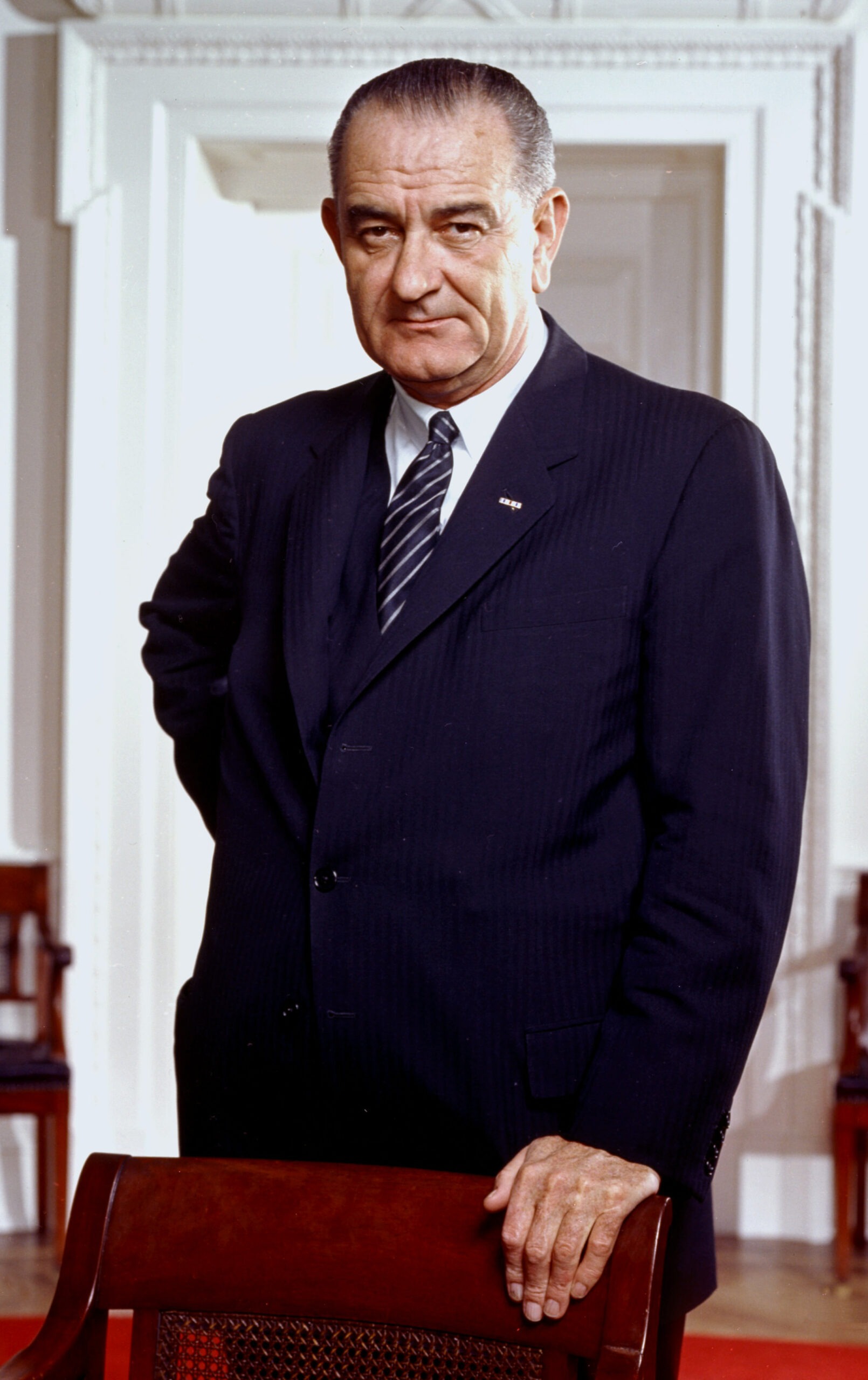
Lyndon Baines Johnson, often referred to as LBJ, was the 36th President of the United States. His presidency was marked by significant achievements and deep controversies, making him one of the most complex figures in American political history. Born on August 27, 1908, in a small town in Texas named after his grandfather, Johnson’s life journey from humble beginnings to the pinnacle of political power is a tale of ambition, resilience, and a deep commitment to public service.
Early Life and Education
Lyndon Johnson was born in Stonewall, Texas, to a family of farmers. His upbringing in rural Texas shaped much of his character and values. Johnson was deeply influenced by his father, Sam Ealy Johnson Jr., who served five terms in the Texas House of Representatives. From a young age, Lyndon showed a keen interest in politics and public service, traits that would define his entire life.
Johnson’s early years were not easy. He worked various jobs, including as a janitor, a farm laborer, and even a road crewman, to support his education. These experiences instilled in him a strong work ethic and a deep empathy for the struggles of ordinary Americans. Johnson attended Southwest Texas State Teachers College (now Texas State University), where he earned a degree in education. His time as a teacher in a small Mexican-American school in Cotulla, Texas, left a lasting impact on him, igniting his passion for education reform and social justice.
Entry into Politics: The Road to Washington
Lyndon Johnson’s political career began in earnest in 1931 when he moved to Washington, D.C., to serve as a congressional aide. His talent for networking and his relentless work ethic quickly earned him a reputation as a rising star in the Democratic Party. In 1937, Johnson returned to Texas and successfully ran for a seat in the U.S. House of Representatives, representing the 10th congressional district.
During his time in the House, Johnson became a staunch supporter of President Franklin D. Roosevelt’s New Deal policies, which aimed to provide relief, recovery, and reform in the wake of the Great Depression. His alignment with the New Deal helped solidify his position as a progressive Democrat, committed to using government power to improve the lives of the American people.
In 1948, Johnson took a significant step forward in his political career by winning a seat in the U.S. Senate after a highly controversial and narrowly decided election, often referred to as the “Box 13 scandal,” where allegations of vote fraud were rampant. Despite the controversy, Johnson quickly rose through the ranks, becoming the Senate Majority Leader in 1955. As Majority Leader, he was known for his extraordinary ability to navigate the intricacies of Congress, earning the nickname “Master of the Senate.”
Vice Presidency and Ascension to the Presidency
Lyndon Johnson’s national prominence grew when he was selected as John F. Kennedy’s running mate in the 1960 presidential election. While the two men had a complex and often strained relationship, Johnson’s presence on the ticket helped secure the support of Southern Democrats, contributing to Kennedy’s narrow victory.
As Vice President, Johnson was often sidelined by the Kennedy administration, but he remained a loyal and active supporter of the President’s agenda. However, his role would change dramatically on November 22, 1963, when President Kennedy was assassinated in Dallas, Texas. Johnson was sworn in as President on Air Force One just hours after Kennedy’s death, thrust into the highest office in the land under the most tragic of circumstances.
The Great Society: Ambitious Domestic Reforms
One of Lyndon Johnson’s most enduring legacies is his ambitious domestic policy agenda known as the “Great Society.” Building on the vision of his predecessor, Johnson sought to eliminate poverty and racial injustice in America through a series of sweeping legislative reforms. His Great Society programs aimed to improve education, healthcare, civil rights, and economic opportunity for all Americans.
Among the most significant achievements of the Great Society were the Civil Rights Act of 1964 and the Voting Rights Act of 1965. These landmark pieces of legislation outlawed racial segregation and discrimination in public places, employment, and voting, marking a significant victory for the Civil Rights Movement. Johnson’s commitment to civil rights, however, came at a political cost, as it alienated many Southern Democrats who had traditionally supported the party.
In addition to civil rights, Johnson’s Great Society included the establishment of Medicare and Medicaid, which provided health insurance to the elderly and low-income Americans, respectively. These programs were revolutionary at the time and remain pillars of the U.S. healthcare system today.
Johnson also focused on education reform, pushing through legislation like the Elementary and Secondary Education Act of 1965, which aimed to close the gap between rich and poor school districts. His War on Poverty included programs such as Head Start, which provided early childhood education to disadvantaged children, and Job Corps, which offered vocational training to young people.
The Vietnam War: A Presidency Under Siege
Despite his domestic successes, Lyndon Johnson’s presidency is often overshadowed by the Vietnam War, a conflict that would ultimately define his time in office and lead to his political downfall. Johnson inherited the Vietnam situation from the Kennedy administration, but under his leadership, U.S. involvement in the war escalated dramatically.
Johnson believed that containing communism in Southeast Asia was crucial to American interests and global stability. He authorized the deployment of hundreds of thousands of U.S. troops to Vietnam, leading to a protracted and increasingly unpopular war. As American casualties mounted and the war dragged on with no clear end in sight, public opinion turned sharply against the conflict and, by extension, against Johnson.
The war sparked widespread protests across the United States, particularly among young people and civil rights activists who opposed both the war and the draft. The Tet Offensive in 1968, a massive and coordinated attack by North Vietnamese forces, further eroded public support for the war and led to a crisis of confidence in Johnson’s leadership.
Facing growing dissent within his own party and declining public approval, Johnson made the shocking announcement on March 31, 1968, that he would not seek re-election. His decision was seen as an admission of the deep divisions the war had caused in American society and the toll it had taken on his presidency.
Retirement and Legacy
After leaving office in January 1969, Lyndon Johnson retired to his ranch in Stonewall, Texas. His post-presidential years were marked by a return to private life, but he remained deeply concerned about the direction of the country, particularly regarding civil rights and social justice. Johnson spent much of his retirement reflecting on his presidency, working on his memoirs, and engaging in philanthropic activities.
Lyndon Baines Johnson passed away on January 22, 1973, at the age of 64, from a heart attack. His death marked the end of an era in American politics, but his legacy lives on through the policies and programs he championed.
Johnson’s presidency remains a subject of intense debate among historians. On one hand, he is celebrated for his monumental achievements in civil rights, healthcare, and education. His vision of a Great Society has left an indelible mark on American society, with many of his programs still in place today.
On the other hand, Johnson’s legacy is deeply intertwined with the Vietnam War, a conflict that not only divided the nation but also overshadowed his domestic accomplishments. The war’s impact on American society and its role in shaping the political landscape of the 1960s and beyond cannot be overstated.
Conclusion
Lyndon Johnson’s life and career are a testament to the complexities of political leadership. He was a man of great ambition and deep conviction, who sought to use the power of the presidency to improve the lives of all Americans. His achievements in civil rights and social welfare represent some of the most significant advancements in American history.
Yet, Johnson’s presidency also serves as a cautionary tale about the limits of power and the consequences of military intervention. The Vietnam War not only cost countless lives but also left a lasting scar on the American psyche, one that continues to influence U.S. foreign policy to this day.
As history continues to assess Lyndon Baines Johnson, it is clear that his impact on the nation was profound. He was a president who sought to build a better, more just society, even as he grappled with the harsh realities of war and political division. His legacy is one of both great triumphs and deep tragedies, making him one of the most consequential figures in American history.


